
- South Korean officials found that children’s clothes from Temu and AliExpress contained toxic substances.
- Many fashion brands use toxic chemicals like PFAS and phthalates, which have come under increasing scrutiny.
- Consumers face less risk getting sick from these ingredients in clothing than textile plant workers do.
Editor’s note: This list was first published in August 2022 and has been updated to reflect recent developments.
Chinese fast-fashion companies are coming under renewed scrutiny for toxic chemicals, a problem that has plagued the fashion industry globally.
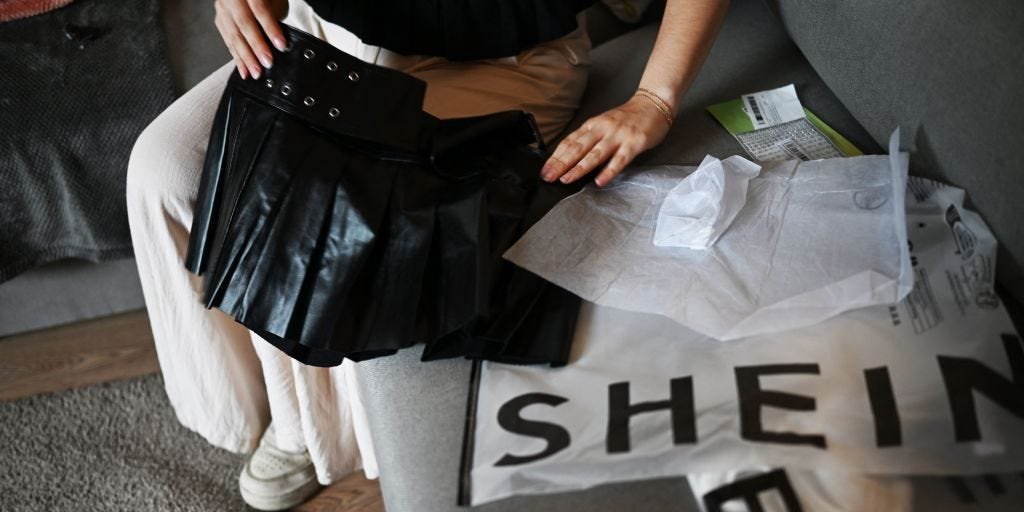
On Friday, Korean officials said they tested 26 pieces of children’s winter wear from Temu, AliExpress, and Shein and found that seven contained toxic substances like phthalate plasticizers, lead, and cadmium.
A children’s jacket from Temu contained 622 times the legal limit for phthalate plasticizers, a chemical compound that makes plastics more flexible. Spokespeople for AliExpress and Temu said the products were removed, while a Shein spokesperson said the tested products were in compliance with regulations.
This is not the first time South Korea has found toxic chemicals in items from Chinese fast-fashion brands. In August, the Seoul Metropolitan Government found phthalates in some pairs of shoes, with one particular pair containing 229 times the legal limit. The same investigation revealed that sandal insoles sold by Temu contained 11 times more lead than legally permissible.
And in an earlier investigation in May, Seoul officials said that they tested a pair of Shein shoes, and found that it contained 428 times the permitted levels of phthalates, according to the AFP.
Experts said that many large clothing brands like Lululemon, Old Navy, and REI have been found to contain toxic chemicals in their clothes. While these chemicals are used at relatively low levels, exposure to toxic substances over time can elevate a person’s risks of serious health conditions, such as asthma and kidney damage.
“It’s not just people are exposed to one on a regular day,” Alexandra McNair Quinn, a chemical sustainability consultant and founder of Fashion FWD, a nonprofit educating consumers about toxic chemicals in clothes, told BI in 2022. “It’s the accumulation of all of these exposures in a regular day can be very harmful.”
Why chemicals are so pervasive in fashion
The use of chemicals like PFAS and lead is “fairly common” within the fashion industry, Marty Mulvihill, a general partner with Safer Made, a venture capital fund that invests in firms reducing exposure to harmful chemicals.
Yoga pants and gym leggings sold by Lululemon and Old Navy contained PFAS, according to testing done by consumer health activist blog Mamavation. Outdoor apparel brands Columbia, REI, and L.L. Bean received either a D or F grading for PFAS by Fashion FWD, a non-profit educating consumers about toxic chemicals in clothes.
(In 2022, REI and L. L. Bean reiterated their commitment to product safety in statements to BI. Columbia, Lululemon, Old Navy, and Shein did not respond to BI’s requests for comment at the time.)
A 2012 sample of clothes from popular retailers detected phthalates in 31 garments, and lead had been found in baby bibs sold in Walmart and Babies R Us, BI previously reported.
Quinn said manufacturers can add these chemicals to make them waterproof or stain-resistant, and soften ink on screen prints. Lead is sometimes found in low-cost pigments and inks, as well as zippers, and chromium can make leather more pliable.
Exposure to toxic chemicals builds up over time
Habibur Rahman / Eyepix Group/Future Publishing via Getty Images
Exposure to substances like lead and phthalates may directly harm people manufacturing clothes more than consumers, said Scott Echols in 2022. Echols is a senior director at the ZDHC Foundation, which works with companies to limit their chemical footprint.
The sustainable fashion analytics firm Common Objective estimated in 2018 that 27 million people working in fashion supply chains worldwide might suffer from work-related illnesses or diseases, including skin and respiratory conditions.
Plus, the exposure to toxic chemicals builds up over time, Quinn said. Not only are these chemicals in clothing, they exist in our food, water, makeup, and personal care products.
“PFAS don’t just go away, they’re around for very, very long time and they’re very harmful to the environment and to human health,” Quinn said. “The government needs to develop a preventative approach where products don’t go on the market until they’re proven safe.”
How to spot chemicals in clothes, including lead, flame retardants, and ‘forever chemicals’
Quinn told BI that toxic chemicals used to make clothes include:
- Chromium, used in leather products that can weaken the immune system and lead to liver and kidney damage.
- Phthalates, which are used to soften the ink on screen prints. BI’s Andrea Michelson reported phthalates has been linked to early deaths in American adults, especially due to heart disease, and can disrupt the body’s hormones.
- Brominated flame retardants, which are sometimes found in children’s pajamas to protect them from house fires. These chemicals, which are banned in Europe, can change thyroid functions and shift the way the body processes fats and carbs. Researchers are studying whether a link exists between flame retardant exposure and ADHD, BI previously reported.
- PFAS, also known as “forever chemicals,” are a group of lab-grown chemicals that don’t break down in the environment and are linked to a host of health conditions like liver damage, asthma, and chronic kidney disease. The substance is water resistant and can be found in waterproof or stain-resistant gear, Quinn said.
- Lead, a low-cost pigment or sometimes used as a cheap metal for zippers. Significant childhood lead exposure can lead to long-term developmental problems.
How to avoid chemicals in clothes
Washing new clothing is an important step in reducing residual substances, including potential toxins. Use hot water if the clothes’ instructions allow it.
To avoid purchasing clothing with PFAS, check your label for materials like Gore-Tex or Teflon, which could signal that the chemicals were used in the fabric. But the bigger concern is how those clothes affect the world around us.
“The biggest issue associated with consumer products isn’t necessarily the direct exposure that we get from the products, but what gets released into the environment when those products are produced,” Jamie DeWitt, the director of the Environmental Health Sciences Center at Oregon State University, told BI in 2019.
In 2023, Laura Hardman, then the director of the Ocean Wise Plastic Initiative at the Ocean Wise Plastic Lab in Vancouver, Canada, told BI that she buys clothing made from natural fibers and dyes for her and her child.
“A lot of people make sure their babies’ clothes are organic, cotton, and made with child-friendly dyes, but they’re not aware of their own clothing. Your baby is probably sucking on your clothes more than she’s sucking on hers,” said Hardman, who now works with Dubai-based consultancy Sustainability Excellence.
