
Not very long ago, if you asked someone what they thought about data centers, they might have asked you what a data center is.
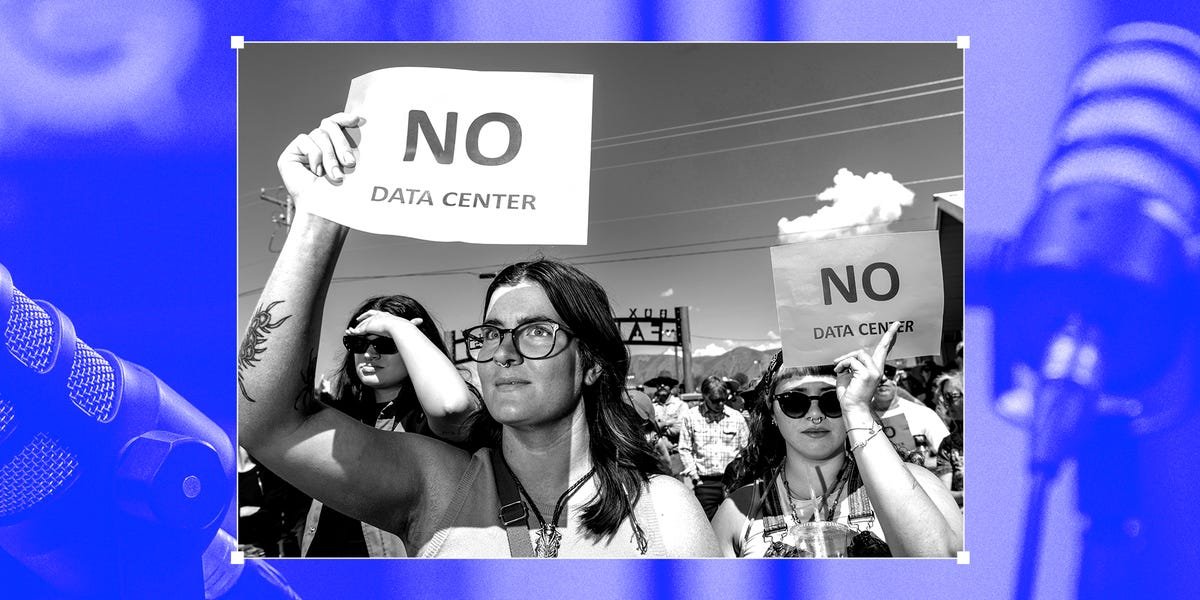
Now, an overwhelming majority of Americans know exactly what you’re talking about, and they’re against it. The anti-data center sentiment is so strong it has flipped politicians who were data center advocates into opposers in less than a year.
How did that happen? There are lots of theories — including one that says China is using social media to try to dupe Americans. But David Weigel thinks it’s simpler: He says Americans are simply uneasy about tech in general — and very uneasy about tech they think will take their jobs.
Weigel, a longtime politics reporter who’s now at Semafor, spends a lot of his time on the road, talking to voters and politicians. He connects the anti-data center movement to a general unhappiness with the tech industry and technology, and he says that’s manifesting in all kinds of political contests this year. We discussed all of that — including the anti-Flock camera movement that has sprung up very recently, as well as Elon Musk’s plan to re-involve himself in politics this fall, in my Channels podcast.
The following is an edited excerpt of our conversation:
Peter Kafka: People have been talking about the backlash against tech for some time. But this seems like the first year it is really showing up in political races. What’s behind the anti-tech sentiment we’re seeing so much of these days?
David Weigel: There is a sense of dread about things moving more quickly that there was not before.
You can go back to polling in the ’90s and the 2000s, and find people overjoyed at the thought of traveling with smartphones, or their kids going to schools with screens and laptops.
The implication of wiring everybody was that they were going to be more productive, they were not going to be distracted, wasting time and going into subcultures or sinning and gambling all the time. The reality, which I guess was predictable if you read enough science fiction, has been disappointing to a lot of people.
And the most passionate advocates of AI have been explaining why this is going to replace the jobs people do right now, the comfortable jobs that people do in their air-conditioned offices or do at home. This is going to replace them, and what’s gonna come after that?
That’s definitely the magma underneath all these plates moving.
The anti-data center sentiment is really stunning. Anywhere from two-thirds to three-quarters of Americans say they don’t want a data center in their backyard. That’s a bipartisan consensus, and it also seems very sudden. What tipped it over so quickly?
I started covering the backlash last September and October last year. The only political manifestation you saw of this (then) was in Northern Virginia. You started seeing candidates of both parties in Loudoun County races saying, “Our state has been too giving to these data companies. They are taking our electricity. Our bills are going up because of these companies, and they’re making our lived-in environment worse. I’m going to stop them.”
And now people like Greg Abbott in Texas and Josh Shapiro in Pennsylvania, who had been pro-data center, have turned around.
It just felt like there was a bunch building up, and then a dam broke, more than one particular thing.
So Virginia’s where this started, and it wasn’t obvious that these politics were gonna be replicated around the country. But data centers are seen as a stand-in for higher electric bills. At the same time as those Virginia elections were happening [last fall], there were these elections in Georgia for Public Service Commission, and Democrats turned that into a referendum on data centers: They’re building too many, and they’re driving your costs up.
That was kind of the impetus that [led to some] Republicans, who are much more on the hook for these pro-data center policies, dialing back.
In some corners of the internet, they look at this sudden shift, and they conclude it’s because of a China psyop: China doesn’t want us to have data centers, so they are manipulating public sentiment.
And OpenAI has said, “Hey, we found some Chinese users creating some meme posts,” and last week Twitter/X said the same thing.
Do you have any sense that this discussion is being clouded by outside actors?
I’m sure it is. But people were not glomming onto this and getting angry about this because of Chinese bots or Chinese accounts.
I’m sure they exist. I’ve not seen them myself. Are they in the stream of content that’s saying these things are terrible? Sure.
But this [argument] seems to be pretty conveniently backfilled by Republicans who want to build these centers. It’s a good tactic by people who want to build data centers to say the anger at this is being fueled by foreign bots.
This is clearly organic. The first people angry about this were the existing Not In My Backyard organizations in Northern Virginia that were against building out anything in Northern Virginia. They were against building the data centers before it was cool. So you can’t tell them that they only care about this because of the Chinese Communist Party.
A pro-data center argument that seems like it should work to me is: These things will save you money or give you money. Like the teachers in Louisiana getting $50,000 bonuses because of a Meta data center. Why do you think that pitch is not breaking through?
The most obvious reason is that it doesn’t come with the promise of improving your livelihood. This gets pinned on Sam Altman, but they all do it: All the techno futurism and optimism from the leaders of these companies — it asks people to envision a future where their jobs are replaced.
What is the populist case for this stuff?
