
This article is an on-site version of our FirstFT newsletter. Subscribers can sign up to our Asia, Europe/Africa or Americas edition to get the newsletter delivered every weekday morning. Explore all of our newsletters here
Good morning and welcome back to FirstFT. Here’s what we’re covering today:
-
The US administration’s leaking of sensitive military information
-
Retail investors ‘buy the dip’
-
Trump slaps tariffs on Venezuela’s trading partners
-
Home Depot’s growth strategy
The sharing of sensitive military information on the commercial messaging app Signal has shocked many in Washington and raised questions about who was responsible and whether anyone will be held accountable.
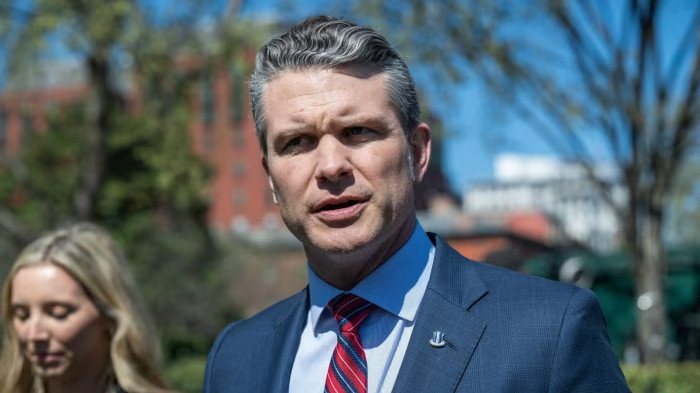
What happened? Top US officials, including vice-president JD Vance and defence secretary Pete Hegseth, were among members of a Signal chat group called “Houthi PC Small Group” that accidentally shared classified details about last week’s military strikes on Yemen with Jeffrey Goldberg, editor-in-chief of The Atlantic magazine. Goldberg was added to the chat by Mike Waltz, the national security adviser.
Will anyone be held accountable for the breach? Although this was one of the most glaring national security breaches in recent US history it is unclear if it will ever be investigated by the federal law enforcement agencies. The DoJ declined to comment on the breach last night. The FBI referred any questions to the Pentagon, which did not respond to a request for comment. There was no indication from the administration that anyone would be held accountable. Some legal experts said the disclosure of sensitive military planning information on a commercial messaging app was potentially illegal.
What does the leak tell us about the administration? It highlighted the extent to which Vance is positioning himself in internal foreign policy discussions as a staunch isolationist. It also confirmed the depth of the loathing for Europe among White House administration officials and its “freeloading” at a time when they are questioning the value of Nato and moving to launch a transatlantic trade war. Here’s more of the findings.
-
More on this story: In an article for The Atlantic, Jeffrey Goldberg explains how he came to be included in a chat group with top US officials.
And here’s what else we’re keeping tabs on today:
-
Economic data: The commerce department issues annual revisions to US wholesale inventories and sales through January 2025 while The Conference Board updates its consumer confidence index. Mexico’s January retail sales are also released.
-
Federal Reserve: Governor Adriana Kugler speaks at an event in Washington while the New York Federal Reserve Bank’s president John Williams speaks at a banking conference in New York.
-
Congress: The director of national intelligence and leaders of the CIA, FBI, NSA and DIA testify before the Senate Select Committee on Intelligence. A US Senate panel holds confirmation hearings for the nominees to be ambassadors to Israel and Panama.
-
Germany: The 21st Bundestag meets for its inaugural session after the February 23 elections.
Five more top stories
1. Retail investors have pumped almost $70bn into US stocks this year even as professional money managers are slashing their exposure to the market on fears over Donald Trump’s policies. Net inflows from retail investors into US equities and exchange traded funds have registered $67bn in 2025, down from the $71bn in the final quarter of 2024, according to data provider VandaTrack. “Respect the dip, be the dip, BUY THE DIP!” said one member of an online discussion dedicated to investing.
2. Donald Trump said the US would impose a 25 per cent tariff on all imports from any country that buys oil from Venezuela, a move that could disrupt crude markets and sharply raise levies on goods from China and India. The announcement came days ahead of the president’s planned unveiling of a new tariff regime on US trading partners and amid a chaotic trade policy rollout marked by reversals and U-turns.
3. Greenland’s government has publicly dressed down US President Donald Trump, saying it had not invited any American officials to the Arctic island amid widespread anger over Washington’s attempts to woo Nuuk. Richard Milne has more on the statement about the planned “private visit” this week.
4. Exclusive: China is considering including services in a multibillion-dollar subsidy programme to stimulate consumption, according to officials and academics. The potential support for travel, tourism and sports would come in addition to an existing “trade-in” programme for goods such as mobile phones or cars. Here’s more on Beijing’s efforts to boost weak domestic demand.
-
Big Read on China: A painful shift away from low-cost, labour-intensive production could have repercussions for Chinese stability and growth.
-
Chinese AI start-ups: The country’s top groups are re-evaluating their strategies as they race to remain competitive following DeepSeek’s success.
5. Israel’s military has drawn up plans to reoccupy Gaza in a bid to finally defeat Hamas. The new military leadership, with the unofficial backing of Israeli far-right ministers, has formulated an extreme proposal to fight the militant group, said several people briefed on the plans.
Today’s Big Read

The Paul Weiss settlement with the White House has fuelled fear in recent days that more executive orders targeting US law firms could follow. Elon Musk attacked New York’s Skadden Arps over the weekend, boosting speculation it could be next. Lawyers at WilmerHale have told allies they are also fearful. The Financial Times spoke to more than 30 corporate lawyers for this story to report on the mood in the industry.
We’re also reading and listening to . . .
-
Jair Bolsonaro interview: Brazil’s hard-right former president has called for “support from abroad” as the country’s Supreme Court decides whether to put him on trial.
-
Mexico: The US would suffer from the blowback if it impoverished its southern neighbour, argues Gideon Rachman.
-
British Airways: The UK flag carrier is hoping to regain its halo with a new first-class seat, writes John Gapper.
-
White-collar juniors: Business models may need to change if novices lose opportunities to learn when AI takes over their work, writes Sarah O’Connor.
Chart of the day

Home Depot is viewed as a bellwether for the US economy. With interest rates on pause and a slowing housing market business is tough for the $360bn retailer. But as they wait for the housing downswing to pass, executives are pinning growth on three strategies.
Take a break from the news . . .
From the Hamptons to Hawaii, homes for those with agricultural or equestrian aspirations and a budget of up to $23mn.

Recommended newsletters for you
One Must-Read — Remarkable journalism you won’t want to miss. Sign up here
Newswrap — Our business and economics round-up. Sign up here
