
Unlock the White House Watch newsletter for free
Your guide to what the 2024 US election means for Washington and the world
Two of Donald Trump’s most controversial cabinet nominees look set to be confirmed by the US Senate after a clutch of Republican party holdouts backed the president’s picks.
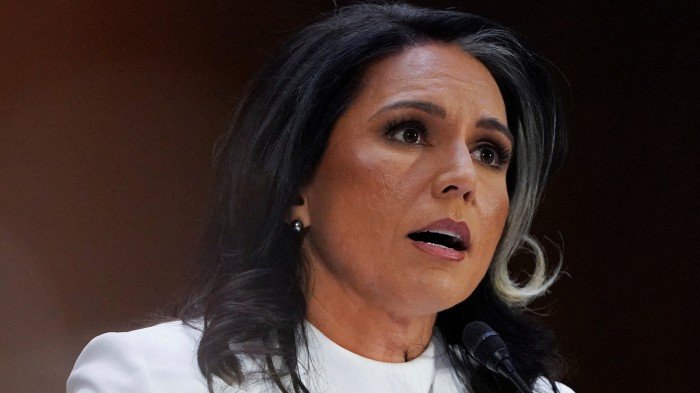
Tulsi Gabbard and Robert F Kennedy Jr passed crucial committee votes on Tuesday, clearing the way for them to be confirmed as Trump’s director of national intelligence and health secretary, respectively.
Both candidates had provoked fierce opposition, including from members of Trump’s own Republican party.
But after testy hearings and the interjection of Elon Musk, would-be rebels fell in line, notching up a significant win for the president and paving the way for both nominees to be confirmed on the senate floor.
The Senate select committee on intelligence voted nine to eight to advance Gabbard’s nomination, while the Senate finance committee voted 14 to 13 to move ahead with Kennedy’s.
Both votes were along party lines with all Republicans voting in favour. The nominations will be put to full Senate votes in the coming days.
Republican Senator Bill Cassidy, a former medical doctor who chairs the Senate health committee, was seen by Kennedy’s allies as a possible rebel in the tight vote, but he opted to give the nominee the nod.
Cassidy wrote on X before the vote that he had held “very intense conversations” with Kennedy and the White House, including with vice-president JD Vance, in the run-up to the vote.
“With the serious commitments I’ve received from the administration and the opportunity to make progress on the issues we agree on, like healthy foods and a pro-American agenda, I will vote yes,” said Cassidy.
With Cassidy falling in line behind Kennedy, it is now likely his confirmation will pass the full Senate vote, even if three other Republican senators rebel.

Possible dissenters include Mitch McConnell, Susan Collins and Lisa Murkowski, who voted against the nomination of Pete Hegseth as defence secretary in a deadlocked vote that was broken by the vice-president.
Meanwhile, Gabbard, a former Democratic congresswoman from Hawaii, faced intense questioning over her past support for Edward Snowden, who is wanted by Washington for espionage after leaking classified documents, as well as her dealings with Syria’s ousted president, Bashar al-Assad, and her alleged sympathies for Russian President Vladimir Putin.
Two senators — Collins and Todd Young — had expressed particular concern over her stance on Snowden and had been seen as potential holdouts in the committee vote.
Young’s support came after Musk, a powerful Trump ally, branded him a “deep state puppet” on X. After a phone call with the Indiana senator, Musk deleted the post and described him as a “great ally in restoring power to the people”.
Kennedy’s nomination to run the sprawling health department, which has a budget of $1.9tn and oversees 13 divisions and agencies, including medicines regulator the Food and Drug Administration, has prompted concern from public health officials and pharmaceutical industry insiders owing to his vaccine scepticism and contentious views on a number of health issues.
Kennedy told senators last week that he was “not anti-vaccine or anti-industry” but instead he was “pro-safety”.
When asked about his scepticism of the MMR vaccine — he has repeated a debunked claim that the jab was linked to autism — Kennedy said: “I just want to follow the science, and if the science says I am wrong about what I’ve said in the past, as I said, I will publicly apologise.”
However, Trump appeared to endorse his claims on Tuesday, posting on his Truth Social platform: “20 years ago, Autism in children was 1 in 10,000. NOW IT’S 1 in 34. WOW! Something’s really wrong. We need BOBBY!!!”
In the minutes following the vote on Kennedy, the XBI ETF index of biotech stocks dropped nearly 2 per cent.
