
This article is an on-site version of our Swamp Notes newsletter. Premium subscribers can sign up here to get the newsletter delivered every Monday and Friday. Standard subscribers can upgrade to Premium here, or explore all FT newsletters
From the amazing success Elon Musk has had in cosying up to Donald Trump, it would be easy to think the next US administration is going to be the most tech-friendly ever. But watching the key appointments in Washington over the past few weeks, it feels to me like some parts of Big Tech are still in for a bumpy ride.
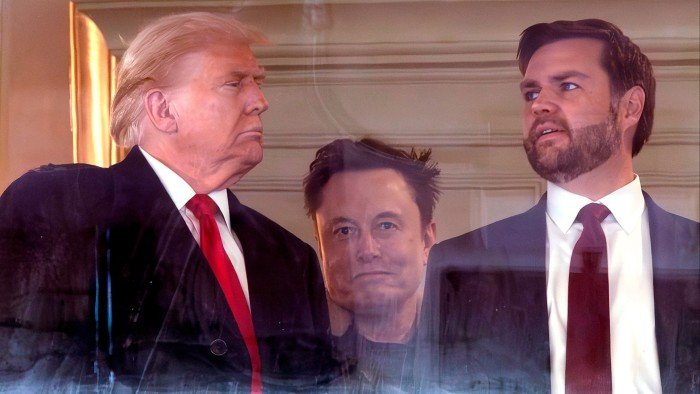
Musk certainly has the president-elect’s ear, and he’s brought other techies into Washington on his coattails. His techno-libertarianism seems to be resonating with Republicans, some of whom seem overawed by his star power, and Trump has toned down his criticism of electric cars and expressed awe of SpaceX’s rockets.
But staffing decisions show that incoming vice-president JD Vance is likely to be a strong voice on tech policy, and his populist approach sets up an uneasy balance with Musk. Vance was a protégé of venture capitalist Peter Thiel, who has been outspoken at times in his criticism of the biggest tech companies (he called Google’s relationship with China treasonous). Add in the deep distrust in the Republican party towards Big Tech, and it’s likely some companies are in for a tough time.
Not that Silicon Valley hasn’t had plenty to cheer about. That includes last week’s news that Federal Trade Commission chair Lina Khan will be replaced. Her attempt to shape a more activist US approach to antitrust was despised by tech leaders across the board, whatever their political leaning.
The person picked to replace her, Andrew Ferguson, has been more open to the idea of mergers. He also doesn’t believe in regulating artificial intelligence. Take those two positions together, and a consolidation in the AI industry may be coming (think Microsoft buying OpenAI and Amazon picking up Anthropic).
On the other hand, Ferguson has been more wary of the monopoly power of Big Tech, so it’s likely he’ll press ahead with the FTC’s cases against Amazon and Meta. And over at the Department of Justice, which has cases against Google and Apple, the opposition looks even stronger. Gail Slater, who’s been named to run the antitrust division, is an experienced competition lawyer and, most recently, an adviser to Vance.
That said, Slater’s likely boss at the DoJ, attorney-general nominee Pam Bondi, might moderate the agency’s zeal on antitrust. The lobbying firm Bondi worked for, Ballard Partners, represented Google and Amazon.
Vance’s influence can also be seen in the naming earlier this month of venture capitalist and podcast host David Sacks as the new administration’s main adviser on AI and crypto. Just before his appointment, Sacks called on his podcast for Google to be broken up.
The other important factor in all of this is the deep Republican distrust of Big Tech over claims of censorship. Ferguson seems much more passionate about this issue than about matters to do with tech competition.
Trump signed an executive order late in his first term that was designed to limit the legal protections tech companies have when they moderate content. Ferguson could very well use that to go after Google and Facebook, arguing that they have lied to their users that they were taking a balanced approach to content moderation when in fact they were politically bias.
The early test of all of this is going to be how the White House deals with Google, the company most in the crosshairs on both antitrust and alleged censorship. A judge found that the company maintained an illegal monopoly on search in the first Big Tech antitrust decision and is due to rule next summer on a DoJ effort to force it to sell off its Chrome browser, among other stringent penalties.
In normal circumstances, with a more business-friendly Republican administration, you might expect a quick settlement of the case. That’s what happened in 2001, when the new Bush administration ended the government’s effort to break up Microsoft.
But there will be influential voices in and around the administration pressing for harsh penalties. If Republicans believe that Google is politically biased against them and fear its future influence, then using antitrust law to try to cut it down to size would be one way to deal with the problem.
Rana, how does it feel to you? I know you’ve been very much in favour of Khan’s efforts to breathe life into moribund US antitrust policy. Do you reckon the cases against Big Tech will roll on, or are they off the hook?
Recommended reading
-
The FT’s George Hammond profiles David Sacks, the latest outspoken South Africa-born tech investor and entrepreneur to get an important role in the next Trump administration.
-
George and other FT writers also describe how Elon Musk’s closeness to Trump has become a headache for OpenAI’s Sam Altman, his arch-rival in the pursuit of human-level AI.
-
In the Boston Review, Evgeny Morozov laments that our main uses of digital technology were shaped by the cold war, followed by a period of neoliberalism. Against that background, he argues, there wasn’t much chance that a powerful new technology like AI would be dedicated to the cause of human flourishing, rather than to familiar objectives like the relentless pursuit of efficiency.
Rana Foroohar responds
Richard, you bring up a very important point, one that mirrors the largest question about Trump 2.0 — will it be the financial types (Wall Street and the tech bros) in charge, or the populists? As I wrote in my own column today there’s reason to think that Trump will want to please the populists — we’ll see some interesting legislation introduced this week, for example, co-sponsored by his incoming national security adviser Mike Waltz, that will argue for subsidising the US shipbuilding industry. That’s an easy win for red states and the base, and it has popular support.
But the topic you lay out pits the populists against the state of the financial market itself. Tech stocks have driven the US boom over the last few decades, and AI in particular has been the driving story recently. No matter how influential Vance is, or how well meaning any new agency appointees are, it’s hard for me to imagine Trump allowing America’s tech “national champions” to be hit by serious antitrust action that would have any material impact on their valuations. Yes, these companies have been perceived as being left-leaning, and Republicans have their concerns about political censorship. But as we can tell from all the happy tweets from the major tech CEOs that followed Trump’s victory, Silicon Valley is willing to shift political allegiance depending on where the power is. Indeed, I fear in Trump 2.0 we may end up with the worst of both worlds — tech companies willing to take content direction from the White House, and weaker antitrust policy that strangles the next generation of start-ups as the dominant platforms get bigger and even more powerful.
Your feedback
We’d love to hear from you. You can email the team on swampnotes@ft.com, contact Richard on richard.waters@ft.com and Rana on rana.foroohar@ft.com, and follow them on X at @RanaForoohar and @RichardWaters. We may feature an excerpt of your response in the next newsletter
Recommended newsletters for you
Trade Secrets — A must-read on the changing face of international trade and globalisation. Sign up here
Unhedged — Robert Armstrong dissects the most important market trends and discusses how Wall Street’s best minds respond to them. Sign up here
