
Good morning. What will markets do in response to this weekend’s news that the Trump administration will levy heavy tariffs on Canada, Mexico and (to a lesser degree) China? Unhedged doesn’t know, other than the obvious point about weakness in the Canadian and Mexican currencies. With the Trump II administration, there is always more uncertainty. Are these tariffs meant to provoke concessions, after which they will be rolled back? The President has held out the possibility that action on immigration and drug smuggling might lead to a climbdown. He has also, however, suggested that the solution would be for Canada to become a US state, and that any retaliation (which is already happening) would result in even steeper tariffs.
So far, the stock and bond markets have responded to tariff ambiguity by mostly ignoring the whole thing. Will today be the day that becomes impossible?
If the tariffs are sustained, the pundit consensus is that they will slow US growth a bit, increase US inflation a bit, reduce the probability of rate cuts this year, and increase tax revenue; and that all this will keep the dollar rising, hurt stocks, and increase short-term rates. That makes broad sense, and early indications are that is just what we will see today. But very little would surprise us. We’ll be watching homebuilders (Canadian lumber) and carmakers (Mexican parts) closely. Email us and tell us what else we should be tracking: robert.armstrong@ft.com and aiden.reiter@ft.com.
Canadian oil
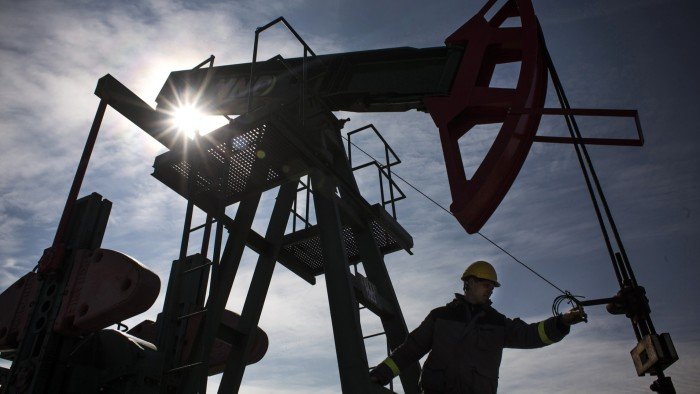
When thinking through the negative impacts of these tariffs on the US, the first cause for alarm is oil.
In 2024, Canadian oil was 55 per cent of US oil imports, and about 23 per cent of total US oil consumption. In our earlier piece on the Canada/Mexico tariffs, we downplayed oil, and said that oil markets, big and global as they are, would probably adjust. Having read up a bit, we are no longer so sure.
While oil is a global market, it relies heavily on local infrastructure and, as Europe experienced after shutting Russian pipelines at the start of the war in Ukraine, supply chains take time to adjust. Oil prices remained elevated for months after the start of the Ukraine war, and the price impact was greater in Europe (Brent) than in the US (WTI) even after new seaborne routes were established.
In the case of the US and Canada, there is a lot of infrastructure in place, including thousands of miles of pipelines and refineries in both countries. And US refineries are specifically tuned for heavier, cheaper Canadian oil. From Rory Johnston at the Crude Chronicles:
Canada accounts for more than half of total US crude oil imports because (i) Canadian heavy crude is structurally cheaper, (ii) US refineries have spent decades investing in technologies designed to process these grades, and (iii) there is significant physical infrastructure (read: pipelines) that would take time and gobs of money to shift materially.
The Trump administration presumably understands this — and the political risks involved in higher US energy prices — and so kept the tariffs on Canadian oil at 10 per cent. But even at 10 per cent, the tariffs may depress growth or increase inflation. And the pain may be felt by US industrial companies in particular. Todd Fredin, a former executive at Motiva Enterprises, a fuel distributor owned by Saudi Aramco and Shell, emailed us the following:
[US tariffs on Canadian oil are] also a headwind to US industrial policy, since this is [an oil] price increase solely confined to the US, while the global price is likely slightly lowered. With the higher relative cost of energy in the US and the unpredictability of US fiscal and labour policies, new industrial investment might not be as certain.
The tariffs start tomorrow.
(Reiter)
Big ticket discretionary goods spending looks bad
The preliminary US GDP report, out last week, was pretty good; real GDP grew 2.3 per cent. It has been both an Unhedged mantra and the consensus among economists that the growth is driven by the unstoppable American consumer. In the fourth quarter, spending on goods, which has been wobbly since the end of the pandemic, was strong. Durable goods, a volatile category, grew at a 12 per cent annualised rate between the third and fourth quarter, and 3.3 per cent for the year.
Cars represent more than a quarter of all durable goods spending, and car sales were robust last year (up almost 3 per cent). But, looking at the results of companies that make other sorts of durable goods, especially more expensive items, I’m wondering where the incremental spending on durable goods spending we see in the national numbers is going.
-
It’s not going to Motorcycles at Harley-Davidson, where North American sales were down 10 per cent last quarter.
-
It’s not going to power boats at MasterCraft, where sales were down 31 per cent; or to other boat brands at the retailer MarineMax where same-store sales were down 11 per cent.
-
It’s not going to fancy cookware at Williams-Sonoma, where comparable sales were down 3 per cent.
-
It’s not going to swimming pools at Pool Corporation, where sales were down 3 per cent (and new pool construction was worse than that)
-
It’s not going to mattresses at Temper Sealy, where sales fell 1 per cent in North America.
-
It’s not going to Washing Machines at Whirlpool, where North American sales fell 2 per cent.
The list goes on. Looking across makers and retailers of big-ticket discretionary goods, it is hard to find one where US sales are growing recently (the furniture brand RH had a good quarter, after a bumpy few years). Is all of this down to a hangover from pandemic overspending on goods, the Amazon effect, or a frozen housing market? Or is there something else going on here that we ought to pay attention to? Send us your thoughts.
One Good Read
When Taiwan sneezes, US homebuyers catch a cold.
FT Unhedged podcast

Can’t get enough of Unhedged? Listen to our new podcast, for a 15-minute dive into the latest markets news and financial headlines, twice a week. Catch up on past editions of the newsletter here.
Recommended newsletters for you
Due Diligence — Top stories from the world of corporate finance. Sign up here
Free Lunch — Your guide to the global economic policy debate. Sign up here
