
Explaining his nomination of Russell Vought for the position of director of the Office of Management and Budget, President-elect Donald Trump wrote (“Donald Trump Picks Scott Bessent as Treasury Secretary,” Financial Times, November 23, 2024):
Russ knows exactly how to dismantle the Deep State and end Weaponized Government, and he will help us return Self Governance to the People.
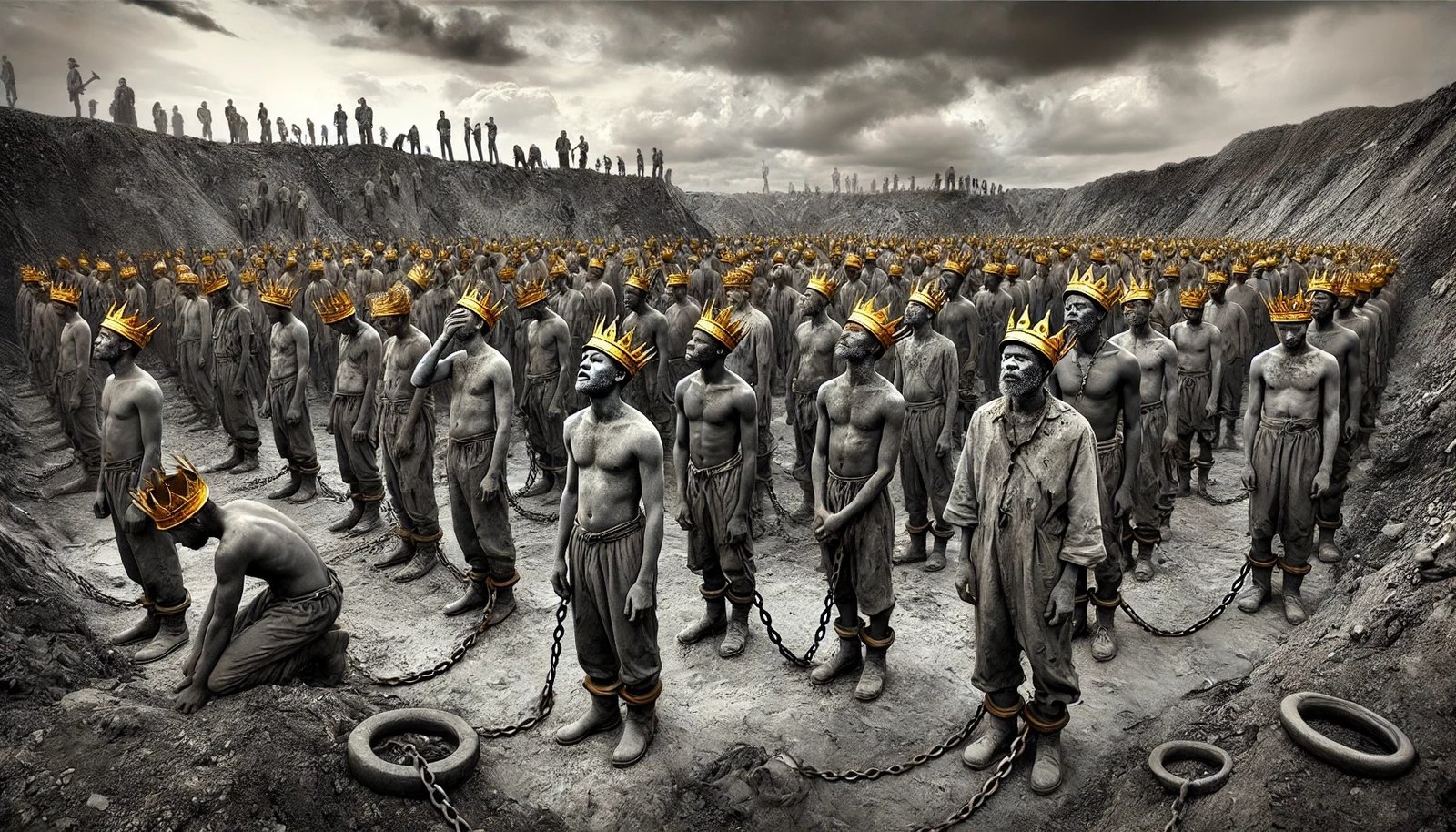
What rational sense can we make of the idea of self-governance of the people? Let’s first note that the word “governance” is often used to launder the coercive element of “government,” the former concept apparently emphasizing the abstract process instead of the governors and their victims. But let’s ignore this diversion and take “self-governance” and the traditional “self-government” as synonymous. We can distinguish four meanings of the expression “self-government (or self-governance) of the People.”
First, an intuitive meaning is that “the People” governs itself. Or is it “himself” or “herself”? That question suggests that the expression makes no rational sense except if “the People” is a sort of social organism or anthropomorphic being that can think or do things—and of which an individual is just a cell. Such conceptions of society have inspired or justified totalitarianism in different ages of mankind. For a development of this approach, see my “The Impossibility of Populism,” The Independent Review, Summer 2001.
Incidentally, the underlying definition of populism I use and whose implications I pursue is not far from the accepted definition in economics and political science: see Cass Mudde and Cristóbal Rovira Kaltwasser, Populism: A Very Short Introduction (Oxford University Press, 2017). Or consider Manuel Funke et al., “Populist Leaders and the Economy” (American Economic Review 113-12 [2023]), who, in explaining the definition they use for their econometric database, write:
More precisely, populists typically depict ‘the people’ as a suffering, inherently good, virtuous, authentic, ordinary, and common majority, whose collective will is incarnated in the populist leader.
Academic students of populism emphasize that right and left versions of the regime exist, historically and theoretically.
A second, less Frankensteinian, meaning of the self-government of the people takes it as a majoritarian government of the (plural) people’s members. How can this mean anything else than the majority somehow self-governing itself and, more clearly, ruling over a minority that is itself governed by others? A fable by the late philosopher Robert Nozick is worth recalling (see his 1974 book Anarchy, State, and Utopia, pp. 290-292). You are among the 10,001 slaves of a brutal master. At some point, the master becomes nicer with his slaves (including you), stops beating them, and takes their needs, merit, and other such factors into account when assigning their tasks. He then reduces their workweek to three days. He later even allows them to go and work on the open market provided they give him three-sevenths of their wages. He still keeps the power to call them back to the plantation in case of emergency and to restrict their rights to engage in certain personal activities (mountain climbing or cigarette smoking, for example) that could reduce their productive capacities. But continuing the process of liberalization, your master ends up allowing his other 10,000 slaves— that is, excluding you—to discuss among themselves and vote on all the decisions he previously made, including what proportion of the slaves’ earnings, including yours, will go into some common fund and how the money will be used. One day, the 10,000 benevolently decide that you may yourself vote when their votes are tied 5,000 to 5,000 (which never happens). Finally, the 10,000 decide to let you throw your ballot with theirs before they are counted. All the 10,001, now including you, democratically make all the decisions they want regarding the lives of everybody. Nozick’s question: Where in that sequence did you stop being a slave?
A third meaning of self-government is that each individual who makes up the people, understood in the plural sense of the several individuals, self-governs himself or herself. This worthy ideal was recognized as feasible, at least partially, by the 18th-century discovery of spontaneous social order. The literal self-government of individuals represents the ideal of classical liberalism and its later extension into the various theories of individualist anarchism (like those of Murray Rothbard, David Friedman, and Anthony de Jasay). These two broad liberal strands are arguably best represented today by respectively, on one side, James Buchanan and the school of Constitutional Political Economy, who recognize an ultimate veto to each and every individual in a political society; and, on the other side, that of liberal anarchism, by Anthony de Jasay, who argues for the total liberty of each individual over his contracts and his property.
Let me illustrate with a simple but paradigmatic case of liberal self-government: the liberty of an individual or his suppliers and middlemen to import, say, dolls from a Chinese producer if the parties, importer and exporter, reach a mutually beneficial agreement. The fact that the foreign party to such an agreement does not benefit from self-government in his own country, although unfortunate, does not change the definition of self-government for the party who lives in a free country. It is very unlikely that Mr. Trump espouses the third meaning of the self-government of the people.
The only remaining possibility for the meaning of the expression would be a sort of religious incantation or something like an AI hallucination produced by some frequent alignment of words in the zeitgeist.
******************************

Citizen-kings self-governed by themselves
