
The AI arms race is a sprint to build the best model — or so you thought.
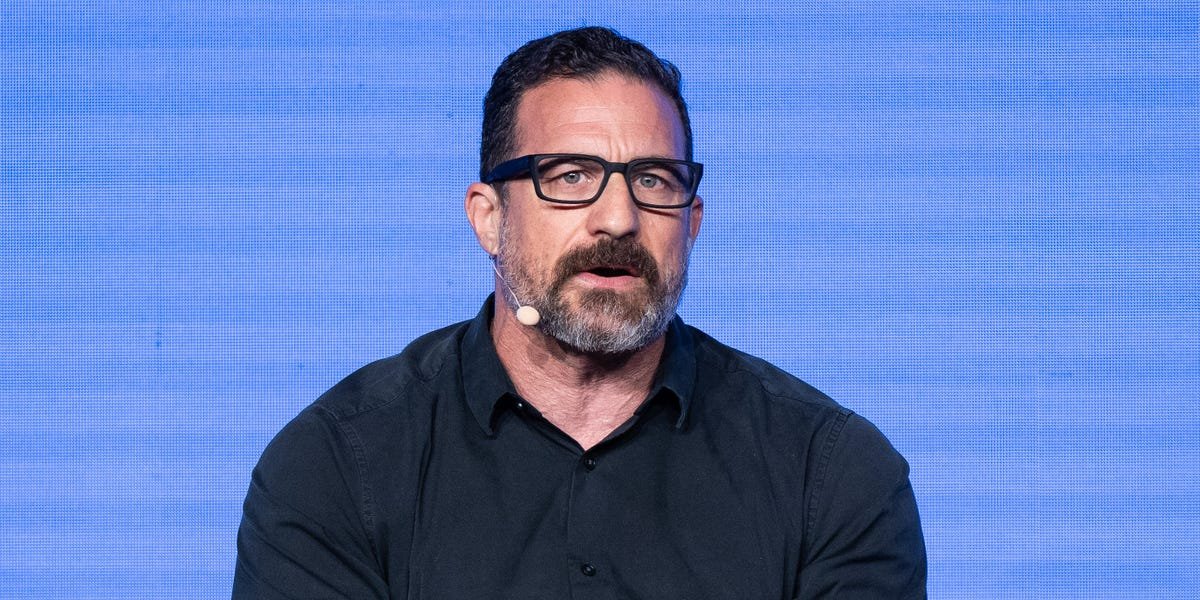
Andrew Huberman, the Stanford neuroscientist and podcaster, said that tech companies, including OpenAI, Meta, and Anthropic, will ultimately become biotech companies, pursuing ways to read and alter brain activity without implants.
“The goal is to be able to read and write from your brain non-invasively,” he said in an episode of “Invest Like The Best” released on Tuesday.
That could mean tools that help people fall asleep, learn, focus, or regulate stress, he said. More provocatively, he imagines devices that could selectively increase motivation while someone tackles difficult work, then turn that state off so they can recover afterward.
“A non-invasive device where you could literally turn up — crank up — your level of motivation” is where the technology is headed, he said.
“That’s what the real arms race of AI is about,” he added.
OpenAI, Meta, and Anthropic did not immediately respond to requests for comment.
The opening act
That future is still a long way off, but early versions of consumer neurotech are already here.
Neurable sells headphones that monitor focus and fatigue, while Mave, Halo Neuroscience, and LIFTiD market brain-stimulation headsets intended to improve concentration.
Sona, Truvaga, and Pulsetto sell vagus-nerve-stimulation wearables designed to help users wind down and manage stress.
None can yet reliably dial a worker’s motivation up or down in the precise, AI-personalized way Huberman imagines.
He expects the shift to begin with consumer sleep technology, including devices that measure and influence eye movements or the autonomic nervous system. Eventually, he said, eye masks, implants, and perhaps one day glasses and wristbands could offer more direct ways to influence a person’s mental state.
He predicted that some entrepreneurs could soon consider implantable vagus-nerve stimulators, which can affect alertness and have clinical uses, as readily as they consider cosmetic piercings.
Bryan Johnson, the longevity entrepreneur behind Blueprint, is among Pulsetto’s high-profile users. In his Netflix documentary, “Don’t Die,” he said he uses it for 10 minutes if he wakes in the night because it puts him back to sleep “pretty quickly.”
Huberman acknowledged the obvious concern: whether people would make “their entire brain” vulnerable to noninvasive control. He said safety mechanisms would need to be built into such devices.
Still, he is broadly optimistic. Existing tools such as caffeine, medication, exercise, and breathwork are blunt ways of changing the brain, he said. The next wave will be more personalized and precise, with AI learning which level of stimulation produces focus or motivation for a particular person, he said.
“We’re going to start shifting brain states into focus, into modes for learning,” Huberman said. “And we’re going to start doing it with technologies.”
