
Given a choice between the rule of law and the law of rulers, I’d choose the former every time. That’s even true if I happen to agree with the ideology of the people who are currently in change. Thus I’ve consistently opposed “court packing”, regardless of which party is in power at the time.
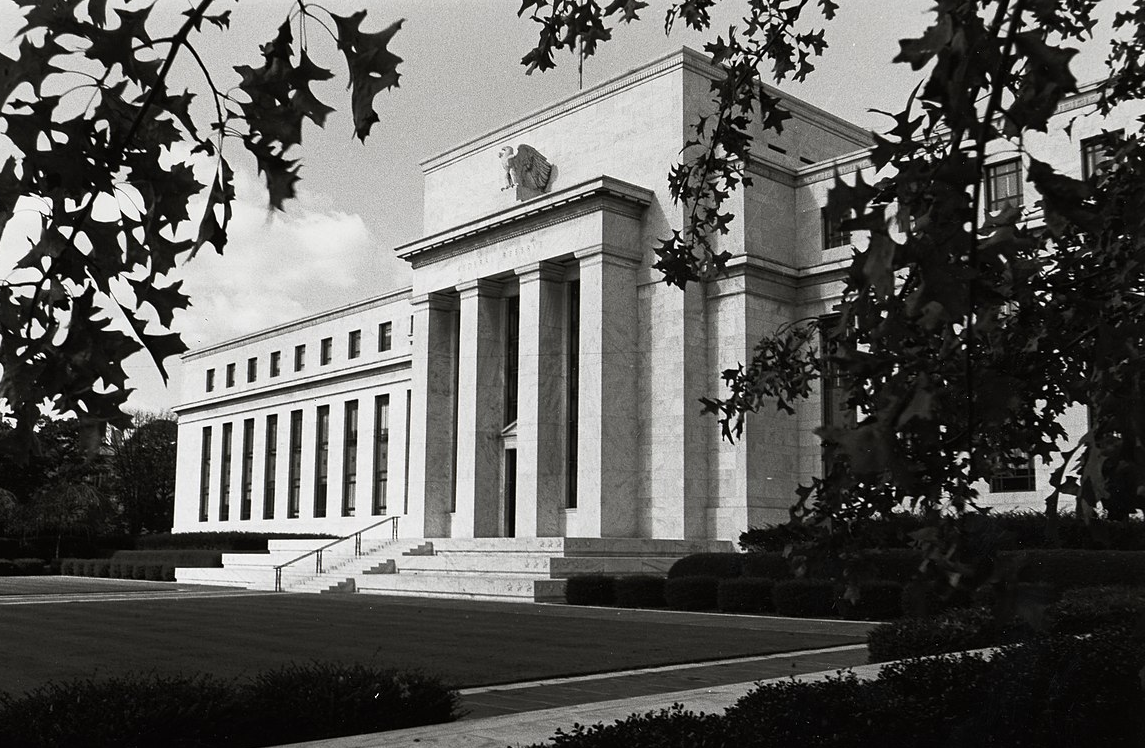
One little known aspect of Fed rules is that the interest rate on bank reserves is technically set by the seven member Federal Reserve Board (not the 12 member FOMC). The president appoints the members of the Reserve Board, but not the 5 reserve bank presidents that also serve on the FOMC.
In practice, the FOMC has a sort of “gentleman’s agreement” to allow all 12 members to vote on where to set the IOR, as it has become the key tool of policymakers, but technically only the Reserve Board members have a vote. Benn Steil has an article in Barron’s discussing how President Trump might use that loophole to reshape the Federal Reserve:
Section 505 of former Sen. Richard Shelby’s (R., Ala.) draft 2015 Financial Regulatory Improvement Act would have transferred the authority to set the interest rate on reserves to the FOMC, and would therefore have restored the full committee’s ability to control short-term rates generally. Ironically, it was Democrats who objected to the Act, on the grounds that the Reserve Bank presidents serving on the FOMC were quasi-private appointments. But unless and until such an act is passed, the Board, and not the FOMC, will have the effective power to control rates.
Here is where President Trump comes in.
The most important way for him to control both the Board and the FOMC remains replacing Chair Powell—if that is possible. But it is not the only way. Two appointees from Trump’s first term remain on the board: Christopher Waller and Michelle Bowman. Incoming Vice President JD Vance recently cited Bowman favorably. She has been widely mentioned as a successor to Democratic appointee Michael Barr as vice chair for supervision when his term (as vice chair, but not governor) expires in July 2026. Democratic appointee Adriana Kugler’s term expires in January 2026, after which Trump can replace her with a loyalist. Should Waller and Democratic appointees Barr, Philip Jefferson, and Lisa Cook decide to pursue other opportunities before their Board terms expire, Trump would have yet more room to control the Board and its power over rates.
The Democrats were reluctant to give the regional bank presidents more power, as that group has occasionally tended to be a bit more hawkish than the Reserve Board members. But be careful what you wish for. If you give more power to a subgroup that is more directly controlled by the executive branch, the results may not be to your liking when that branch of government is controlled by the opposition party.
One more example is worth thinking about. Congress gave the president wide discretion over setting tariff rates at a time when the president (in both parties) tended to be more supportive of free trade than was Congress. They probably never envisioned that a future president might use that power to enact a dramatic increase in tariff rates. Here’s the Yeutter Institute:
While the U.S. Constitution grants to Congress the power to levy tariffs on goods, Congress has delegated some of that power to the Executive Branch over time. The U.S. Constitution states in Article I, Section 8 that “The Congress shall have the Power to lay and collect Taxes, Duties, Imposts and Excises.” Congress passed general tariff legislation until the early 1930s. However, in a move to grant more flexibility to the President to revitalize global trade in the midst of the Great Depression, Congress gave the Executive Branch the power to negotiate tariff reductions within levels pre-approved by Congress through the Reciprocal Trade Agreement Act of 1934. President Franklin D. Roosevelt became the first President to have the authority to levy tariffs and negotiate bilateral trade agreements without the approval of Congress.
There’s a reason why the framers gave Congress the power to set tax rates and tariffs.
(0 COMMENTS)
Source link
