
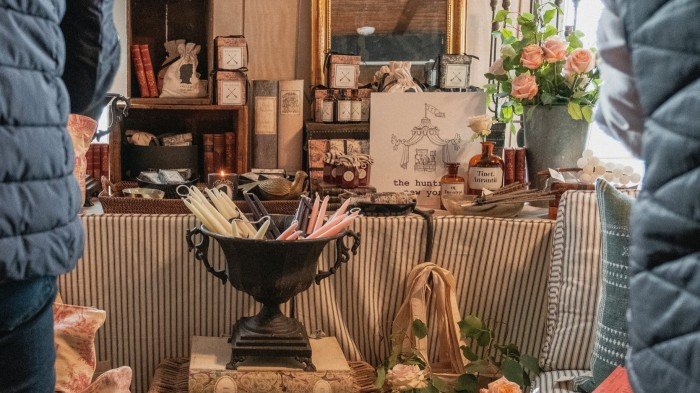
In a small boutique in Dallas in spring, British homeware designer Louise Roe stacked her handmade splatterware plates high on tables laid with hand-embroidered linens, surrounded by rattan plant pots, ceramics and ornaments. She was creating “a market atmosphere” for her one-day trunk show — a kind of upmarket Tupperware party. As customers came in, she offered a glass of champagne, a sandwich and a scone, and explained the design and making process behind her business, Sharland England. Many bought 16-piece dinner sets. “Texans love to host,” says Roe. “One man I talked to for about an hour ended up buying so much, I had to call the factory to ask them to restart production to fulfil his order.”
Trunk shows have a long history; American fashion houses such as Bill Blass, retailers including Saks Fifth Avenue, and the luxury ecommerce site Moda Operandi have all used them to engage with harder-to-reach customers who are eager for a slice of private glamour. But recently, British homeware designers have started tapping into the trend, packing up their wares and setting up around the States to connect with a new audience.
This year Roe did three trunk shows, travelling to Dallas, Montecito, in California and San Francisco, with another coming up in early November in Brooklyn. The ceramicist Deborah Brett has held trunk shows in Los Angeles, with a trio planned for the Hamptons next year including two dinners in private homes. The designer Henry Holland is currently in the US with his new fabric range, and the designer Flora Soames has held trunk shows in Dallas and Southampton, with more trips planned to Palm Beach, Dallas and Atlanta early next year. “It’s good old-fashioned peddling your goods,” she says. “It’s a lot of work, it’s exhausting, and I feel like a travelling circus at times with my huge bag of fabric swatches, but it’s very rewarding.”


The business opportunity is golden. “Trunk shows are a low-risk, high-reward model,” says interiors consultant Alice Warwick. She adds that post-Brexit, “many UK interiors businesses lost a significant portion of their European customer base, but the US market offers a strong opportunity with its greater disposable income compared to the UK.” Indeed, the UK interiors design industry was worth £1.6bn in 2023, according to a market report by IbisWorld, a figure that has declined 0.3 per cent per year on average between 2018 and 2023. In comparison, the US market size was $25.1bn and has grown 2.9 per cent per year over the same period.
“The volumes are so much larger,” Soames says of the buying power of her top-end clients. Along with bigger homes and multiple properties, Soames says there’s an exuberance to the way certain tribes of Americans like to decorate. “They really go for it: they might buy fabric for the walling, the curtains, the sofas and the armchairs. There’s also a tendency to redecorate, often. My own tatty old sofa wouldn’t cut it in many of these houses.”
Alice Sykes, a fashion and interiors PR, has organised six trunk shows in the US, taking 10 independent British designers including the Cotswolds-based rattan furniture makers, Hadeda. The last was a garden party at her sister Lucy Sykes’ house in Bridgehampton in Long Island, “a charming, old-fashioned whaling cottage that exudes a timeless elegance reminiscent of an English countryside retreat,” according to Alice, where 80 customers came across two days. Part of the appeal to an American audience is a nostalgic English aesthetic. “American audiences seem particularly excited to experience the innovation and craftsmanship,” Sykes says. “These trunk shows offer a chance to discover and connect with English brands.”

Christina Juarez, a New York-based communications and strategist for the design industry, agrees. “There’s definitely an increasing appetite,” she says, noting that her own apartment in New York veers towards the look. “We’ve had that pared-back, beige, Californian look trending for so long now, and I think people want to stand out. The British aesthetic does a good job of pulling together different things with heritage, meaning, colour and pattern in a loose, unstructured way.”
Holland sees himself as a beneficiary: “The market here is evolving from the minimalist modern look and palette.” Customers also, he adds, crave the niche; something that makes them seem original: “People are excited to see smaller, independent and younger brands.”
Juarez adds that younger Americans are more interested in artisanal products, such as Soames’ fabrics, printed and woven in British mills, and Brett’s ceramics designed in her London studio and made by her or craftspeople in Stoke-on-Trent. Storytelling is key. “Explaining the different firing processes and temperatures, and how I make the pieces, gets people really interested,” Brett says.
Despite having a whole world of shopping at our fingertips, Juarez says consumers want to see the product in real life, and mourn the loss of the numerous “amazing homeware stores in New York in the late 1990s and early 2000s”. She feels that customers miss being able to see and hold an item. “Consumers love to meet a seller, hear about how maybe they changed careers, or made this in their backyard.” In a digital world, “it’s a connection.”


Then there is the charm of sellers themselves. Louisa Tratalos, founder of fabric brand Colours of Arley, says that customers at Sykes’ Hamptons trunk show in July loved hearing her story. The daughter of a Cheshire fabric mill owner, she created a business selling striped fabric made from recycled plastic bottles, which customers can create in custom colourways. Her fabric has been used by interior designers for stores, including several RIXO shops, and hotel chains, along with private clients. She brought a fabric colour chart and enjoyed snipping off samples to show her trunk show clients how to combine stripe colours. “They loved the theatre of it,” she says.
Her 64-year-old father, Adrian, was equally fascinated with his daughter’s sales tactics. “His mind was slightly blown. When he started his business, if you wanted to sell in the US, you had to communicate by fax or an expensive call, shipping would take ages, and so it just wasn’t a consideration for him.” In comparison, Louisa already has an interested American audience thanks to her 61,400-strong Instagram page; 30 per cent of her customers are now from the US, she says. “A few people who had seen I was doing a trunk show jumped in their cars and drove for two hours just to come and meet me.”

The costs of trips can mount up. “I’m envious of those who just have fabrics to take over,” say Brett. “What costs money is the shipping, and my stuff weighs a tonne.” She says that she takes over enough stock to sell there and then — small pieces like bud vases and her ceramic match boxes — as well as pieces that customers can then order online. Roe has a US-based warehouse but says: “What really works well is negotiating with a store that will take and sell the stock after a trunk show; often people do want to pop back and buy more.”
While it might all sound a bit tinpot — a bit “fete at a village hall” — the brands say the trunk shows are an important revenue stream. Roe’s have directly led to 10 per cent of Sharland England’s total sales, but also a “halo effect, where we saw an increase in website sales, US press interest and trade inquiries” directly afterwards that has led to a 186 per cent increase in US business for the brand, Roe says. Now 66 per cent of sales are in the US.
Trunk shows can make a significant difference for these small brands. In spring, Juarez co-organised her first show, The Ticking Tent, with Benjamin Reynaert, bringing together 30 personally vetted sellers to set up stall in Valley Rock Inn & Mountain Club owned by 1stdibs founder Michael Bruno in New York state. She had ticking fabric donated by Schumacher to create a bespoke entrance tent and sold tickets from $25 — many bought by interior designers. Each vendor made between $10,000 and $40,000 that day, she says, and the second Ticking Tent event which took place last weekend went very well too, with early bird tickets costing $150, and with 57 vendors. “I saw loads of industry contacts that I hadn’t seen in years, who were saying, “Can’t talk; have to shop.”
Find out about our latest stories first — follow @ft_houseandhome on Instagram
