
Most Semiconductors, the silicon microchips that run everything from TV remote controls to humanoid robots are exempt from the slew of tariffs rolled out by the Trump administration last week. But that’s not the end of the story for the industry which also powers the immense shift in computing toward artificial intelligence that’s already underway, led by the US.
There are roughly $45 billion worth of semiconductors (based on 2024 totals gathered by Bernstein), that remain tariff-free — $12 billion of which comes from Taiwan, where AI chip leader Nvidia manufactures. But, the AI ecosystem requires much more than chips alone.
Data centers and the myriad materials and components required to generate depictions of everyone as an anime character are not exempt. For instance, an imported remote-controlled toy car with chips in both components would need an exception for toys, to avoid fees.
“We still have more questions than answers about this,” wrote Morgan Stanley analysts in a note sent to investors Thursday morning. “Semiconductors are exempt. But what about modules? Cards?”
As of Friday morning, analysts were still scratching their heads as to the impact, despite the exemption.
“We’re not exactly sure what to do with all this,” wrote Bernstein’s analysts. “Most semiconductors enter the US inside other things for which tariffs are likely to have a much bigger influence, hence secondary effects are likely to be far more material.”
AI needs lots of things that aren’t exempt
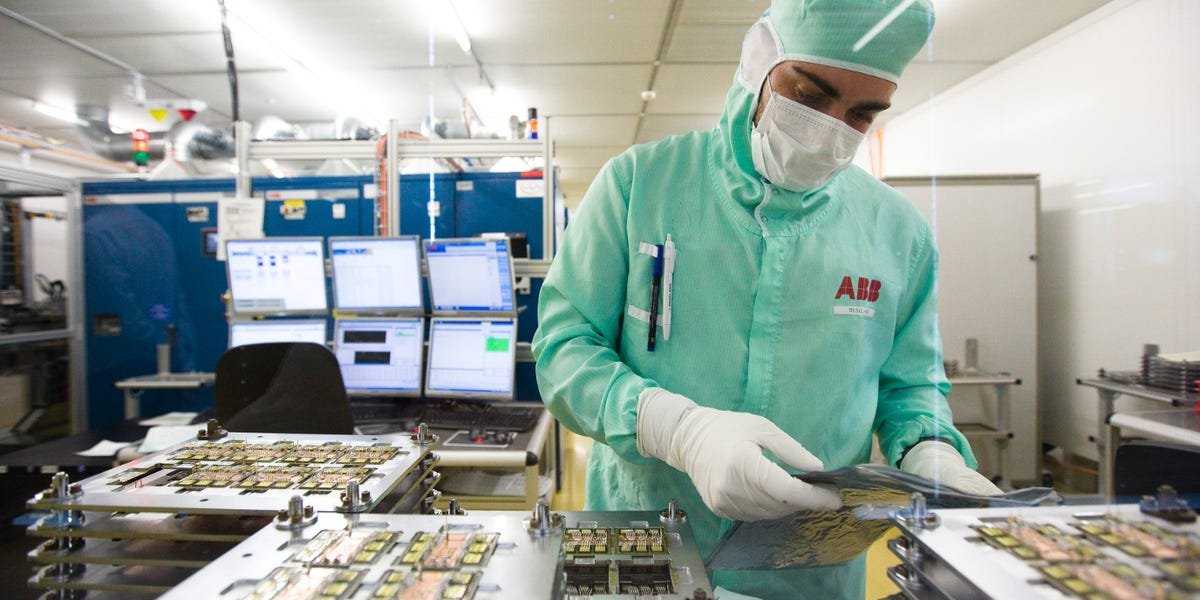
Nvidia designs chips and software, but what it mainly sells are boards, according to Dylan Patel, chief analyst at Semianalysis. Boards contain multiple chips, but also power delivery controls, and other components to make them work.
Related stories

Business Insider tells the innovative stories you want to know
Business Insider tells the innovative stories you want to know
“On the surface, the exemption does not exempt Nvidia shipments as they ship GPU board assemblies,” Patel told Business Insider. “If accelerator boards are excluded in addition to semiconductors, then the cost would not go up much,” he continued.
These boards are just the beginning of the bumper crop of AI data centers in the works right now. Server racks, steel cabinets, and all the cabling, cooling gear, and switches to manage data flow and power are mostly imported.
A spokesperson for AMD, which, like Nvidia, produces its AI chips in Taiwan, told BI the company is closely monitoring the regulations.
“Although semiconductors are exempt from the reciprocal tariffs, we are assessing the details and any impacts on our broader customer and partner ecosystem,” the spokesperson said in an email statement.
Nvidia declined to comment on the implications of the tariffs. But CEO Jensen Huang got the question from financial analysts last month at the company’s annual GTC conference.
“We’re preparing and we have been preparing to manufacture onshore,” he said. Taiwanese manufacturer TSMC has invested $100 billion in a manufacturing facility in Arizona.
“We are now running production silicon in Arizona. And so, we will manufacture onshore. The rest of the systems, we’ll manufacture as much onshore as we need to,” Huang said. “We have a super agile supply chain, we’re manufacturing in so many different places, we could shift things,” he continued.
In addition to potentially producing chips in the US, it’s plausible that companies, including Nvidia, could do more of their final assembly in the US, Chris Miller, the author of “Chip War” and a leading expert on the semiconductor industry told BI. Moving the later steps of the manufacturing process to un-tariffed shores, which right now include Canada and Mexico as well as the US, could theoretically allow these companies to import bare silicon chips and avoid levies. But that change would come with a cost as well, Miller said.
With retaliatory tariffs rolling in, US manufacturers could find tariffs weighing down demand in international markets too.
Supply chain shifts and knock-on effects
Semiconductor industry veteran Sachin Gandhi just brought his startup Retym out of stealth mode last week, with a semiconductor that helps data move between data centers faster. Technology like his has been most relevant to the telecom industry for decades and is now finding new markets in AI data centers.
Retym’s finished product is exempt from tariffs when it enters the US, but the semiconductor supply chain is complex. Products often cross borders while being manufactured in multiple steps, packaged, tested, and validated, and then shipped to the final destination.
A global tariff-rich environment will probably bring up his costs in one way or another, Gandhi told BI. End customers like hyperscalers and the ecosystem of middlemen who bundle all these elements together and sell them will figure out how to cover these costs without too much consternation to a point, he said.
“Demand is not particularly price sensitive,” wrote Morgan Stanley analyst Joe Moore Thursday.
AI is already an area where companies appear willing to spend with abandon. But, it’s also maturing. Now, when companies are working to put together realistic estimates for normal business metrics like return on investment, unit economics, and profitability, tariffs risk pushing that down the road, potentially years.
Have a tip or an insight to share? Contact Emma at ecosgrove@businessinsider.com or use the secure messaging app Signal: 443-333-9088
