

Solana co-founder Anatoly Yakovenko urged Bitcoin to accelerate quantum-resistant upgrades, warning there’s a 50% chance of a quantum breakthrough within five years that could compromise existing cryptographic security.
Speaking at the All-In Summit 2025, Yakovenko said Bitcoin should migrate to quantum-resistant signature schemes as AI acceleration makes the timeline from research to implementation “astounding.”
His warning aligns with growing industry concerns about quantum computers’ ability to break elliptic curve cryptography, which protects Bitcoin wallets.
Current quantum machines have around 1,000 qubits, but experts estimate thousands or millions would be needed to threaten crypto security.
Tech giants, including IBM, Google, and Microsoft, are pushing massive development timelines with some targeting millions of qubits within the coming decade.
Vulnerable Bitcoin Holdings at Risk
Cybersecurity experts estimate approximately 30% of Bitcoin’s circulating supply, roughly 6-7 million BTC worth hundreds of billions of dollars, remains vulnerable to potential quantum attacks.
These coins sit in older Pay-to-Public-Key addresses or reused Pay-to-Pubkey-Hash formats that expose public keys directly on the blockchain.
In an interview with Cryptonew, David Carvalho, CEO of Naoris Protocol and a former ethical hacker, warned that adversaries may already be implementing “harvest now, decrypt later” strategies.
These attacks involve collecting encrypted blockchain data today for future decryption once quantum computers become capable enough.
In response to the growing threat of this technology, El Salvador took proactive steps in September, splitting its 6,284 BTC national reserve across 14 separate addresses to reduce exposure to quantum attacks.
The redistribution followed security experts’ recommendations to avoid single-address storage that concentrates risk when public keys become visible through transactions.
Major financial institutions have also begun acknowledging quantum risks. BlackRock highlighted quantum computing threats in Bitcoin ETF filings, while Tether CEO Paolo Ardoino warned about inactive wallet exposures.
Industry Timeline Estimates Converging on Late 2020s
Multiple quantum computing experts have narrowed their estimates for when quantum computers could break Bitcoin’s security to the late 2020s or early 2030s.
Dating back to 2017, researchers, including Divesh Aggarwal and Gavin Brennen, initially warned that elliptic curve cryptography could be broken “as early as 2027.”
However, Gavin Brennen from Macquarie University recently updated his assessment, noting that required quantum computer sizes have dropped from 10-20 million qubits to around one million.
“Quantum computers pose a threat to blockchains, primarily by attacks on digital signatures, and cryptocurrencies should get started sooner rather than later to upgrade their systems to use post-quantum cryptography before their asset valuations are threatened,” Gavin said.
Gavin also shared that “French startup Alice & Bob estimates that specialized [quantum computers] with just 126,000 physical qubits could crack 256-bit elliptic curve signatures.”
According to a Cryptonew interview in April, John Lilic, CEO of Telos and an early Ethereum contributor, has stopped making deals involving tokens after 2027 or 2028 based on his quantum timeline research.
He warned that quantum attacks will appear innocuous initially, resembling dormant wallets becoming active rather than obvious security breaches.
The convergence of AI with quantum computing has accelerated development timelines beyond earlier predictions.
Microsoft’s recent chip breakthroughs prompted claims that quantum computing is now “years, not decades” away.
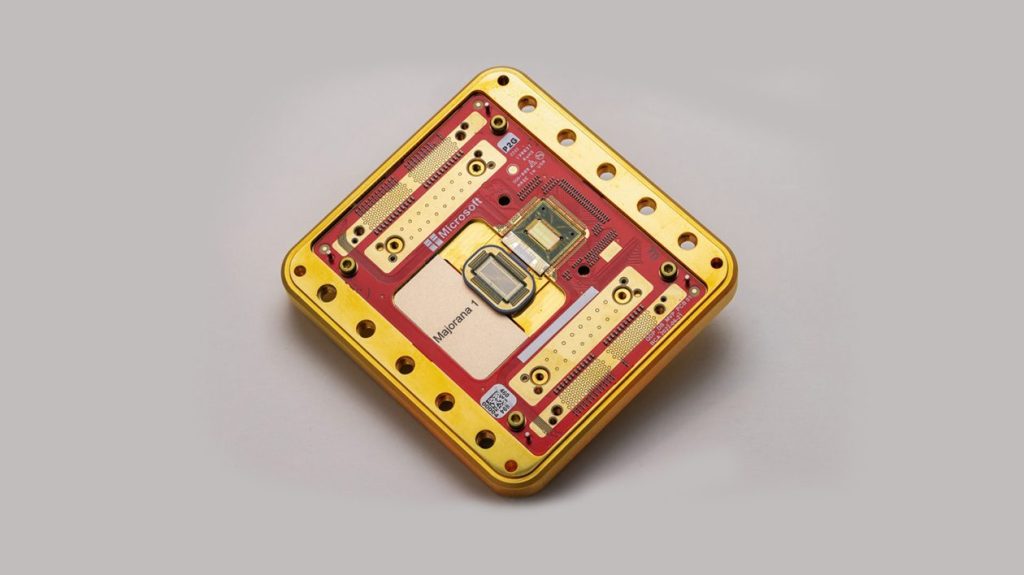
Amazon and Google have also reportedly made similar aggressive timeline commitments with their respective quantum initiatives.
IBM is also planning to build 100,000-qubit chipsets by decade’s end, while PsiQuantum targets one million photonic qubits within the same timeframe.
These developments have prompted Yakovenko and others to emphasize the urgency of preparing cryptographic defenses before quantum capabilities mature.
Migration Challenges and Post-Quantum Solutions
Upgrading Bitcoin to quantum-resistant cryptography requires enormous coordination challenges for decentralized networks.
Unlike centralized institutions that can update SSL certificates overnight, blockchain networks require consensus from all participants, including inactive users and legacy wallet holders.
The National Institute of Standards and Technology finalized three main post-quantum digital signature standards in 2024: CRYSTALS-Dilithium, FALCON, and SPHINCS+.
However, implementing these algorithms requires hard forks, which Bitcoin’s decentralized governance structure makes it difficult to coordinate quickly.
Quantum-resistant algorithms typically require larger key sizes and more processing power, which can slow transaction times and increase computational requirements for mining operations.
These performance tradeoffs complicate the transition while quantum threats loom closer.
However, Carvalho recommends phased migration approaches, including dual-signature transactions that combine current ECDSA signatures with post-quantum proofs.
This allows testing quantum-safe infrastructure while maintaining compatibility with existing systems until full transitions become necessary.
As it stands now, the immediate focus remains on defensive preparations, rather than speculations on when.
The post Solana’s Yakovenko Warns Bitcoin Has 5 Years to Prepare for Quantum Computing Threat appeared first on Cryptonews.
