
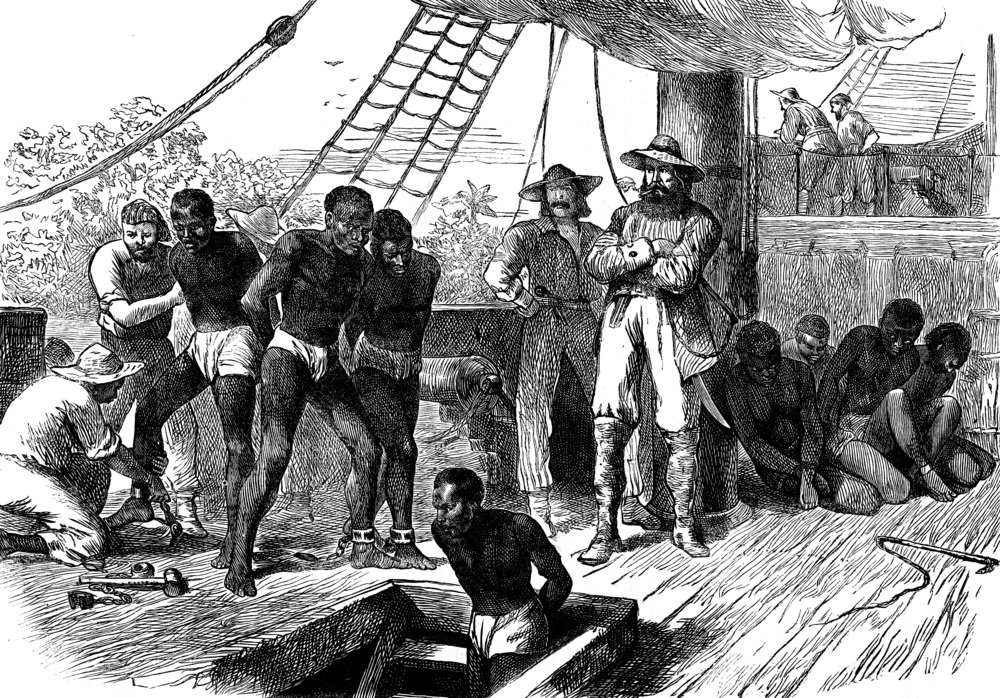
A recent virtual reading group explored “what ifs” around the Reconstruction period. One avenue we explored was whether monetary compensation could have prevented the U.S. Civil War. The British compensated slaveholders in 1837 after the 1833 abolition of slavery. In 1862 the United States paid loyal slaveholders $300 per enslaved person freed as compensation for abolition in the District of Columbia. In both cases, slavery was abolished without bloodshed.
That “What if?” still looms large. Our group discussed Claudia Goldin’s “The Economics of Emancipation”, which estimated the cost of voluntary emancipation by giving enslaved people sufficient funds to purchase their freedom. (This would, of course, have failed to compensate the people to whom the greatest wrong was done: enslaved people.)
We also talked about Richard K. Vedder’s “The Slave Exploitation (Expropriation) Rate”, which attempts to calculate how much more economic value enslaved people produced than they were “compensated” for via the cost of their care.
There’s value to understanding that slavery isn’t just unjust, but also expensive. Still, questions of sufficient compensation for slaveholders and just compensation for freedmen miss something important if they try to stand alone. We can be led astray by focusing on what we imagine we can measure and forgetting what we’re actually trying to understand.
We’re better served considering some of the questions Liberty Fund is so keen on asking and consulting the reliable information available. Let’s apply a few of Liberty Fund’s favourite thinkers and some readings from this group.
Putting on my Hayek hat: we don’t and can’t know the prices that either side here would have accepted because the choice was never put to them. The data do not exist for us to perform these calculations. The market was too corrupted by slavery.
What would Adam Smith say? The estimates of marginal product used to calculate exploitation are underestimates that would short-change freedmen as compensation for lost earnings. Smith says that the “liberal reward for labour” is what results in the industriousness and higher production of labourers. This goes beyond the simple motivation to work harder for good wages. Without the benefits of free labour, enslaved people would have been discouraged or prohibited from increasing their human capital; they were not rewarded for moving to—sometimes they were not allowed to move to—the jobs that solved the problems they thought they could solve best. Even if we could be sure the data were good, the realized marginal product and hours worked of enslaved workers could not be the counterfactual for which they would need to be compensated.
Counterfactuals are hard even when we’re talking about contemporary situations! They seem insurmountable when talking about 19th-century American slave labour.
If we have good reason to consider the available data extremely speculative, it might be more fruitful to more general observations about liberty, responsibility, and power.
Smith had observations not just about slavery but about the motivation to sustain a slave society like the one sought by the Confederate South. He did not think that economic incentives would be sufficient to overcome that “The pride of man makes him love to domineer, and nothing mortifies him so much as to be obliged to condescend to persuade his inferiors.” (WN III.ii) We have good reason to think that such economic considerations were never—or at least not anytime soon—going to cut it in the Southern states. We read some of that evidence in our reading group.
We learn more about the (implausibly low!) economic price the freedmen would have accepted after emancipation and Union victory by reading what they asked for (e.g., Freedmen of Edisto Island, South Carolina, to Andrew Johnson). While I’m sure they would have been happy to be fully compensated, were that even possible, what mattered most was freedom, not money. They wanted emancipation (which they got) and the means to secure it over the long term (which they did not).
We should also think of power and freedom rather than money to help us see that the exploitation of slaves was complete, not varied depending on how much value was extracted from them and how comfortably they were kept.
From one of the most important passages in Wealth of Nations: “The blacks, indeed, who make the greater part of the inhabitants both of the southern colonies upon the continent and the West India islands, as they are in a state of slavery are, no doubt, in a worse condition than the poorest people either in Scotland or Ireland. We must not, however, upon that account, imagine that they are worse fed, or that their consumption of articles which might be subjected to moderate duties, is less than that of the lower ranks of people in England.” (WN V.iii)
It does not matter what “wages” were paid to enslaved labourers when considering how exploited they were because the exploitation was not merely economic. There is no material compensation sufficient to make slavery just or eliminate its exploitation.
We learn more about whether there was any price Confederates would have accepted by reading what they saw as their goals after Confederate defeat (Pollard, The Lost Cause; Black Codes of Mississippi and South Carolina). We could also look beyond our readings to the Confederate constitution. Not only the war, but the violence of the Redeemers and the century of segregation and despotism that they brought about and maintained despite the economic cost are difficult to explain if what Confederate southerners wanted was money. They are easy to explain if what they were worried about was power and domination.
It is tempting to believe that there could be an amount of money that would have produced an economically just outcome, avoided the Civil War, and made things right with people who were enslaved. If there were, it would make the enormity of the horrors of war and slavery scientific, rational, and understandable. But at the end of the day, these estimates are more of an interesting exercise for a certain type of model-tinkerer than they are helpful as a matter of understanding what practical opportunities were missed by Lincoln, the Union, or the American government during Reconstruction.
—
This piece is adapted from my comments in the recent VRG, Reconstruction: What if Lincoln Lived? If this kind of discussion appeals to you, check out the list of upcoming reading groups at the Online Library of Liberty.
