
Worried about the AI bubble? A new report suggests AI was not the main leg propping up the economy in 2025.
Macro Research Board Partners, an economic research platform, published a report in January that contradicted the popular belief that AI is the main driver of GDP and that the “narrowly concentrated” and “extremely vulnerable” growth would tank the entire economy once it falters.
“In short, without an AI boom, there would have certainly been less GDP growth last year, but there would also be fewer imports, so that overall real growth would still have been decent,” wrote economic strategist Prajakta Bhide, who authored the report.
Bhide told Business Insider that personal consumption, meaning the spending of everyday people, was still the main pillar of GDP growth in 2025, and that despite the amount of investment in AI infrastructure, a lot of high-tech equipment is imported, and imports do not contribute to GDP.
The main categories that count toward GDP are personal consumption, private domestic investment, government spending, and net exports.
“Consumers continue to be the backbone of the economy,” Bhide told Business Insider. “Aggregate income growth is lower than it used to be, and so is job growth, which affected consumer sentiments. But there is a divide between what consumers say they feel and what they say that they’re going to do versus what they actually go and do.”
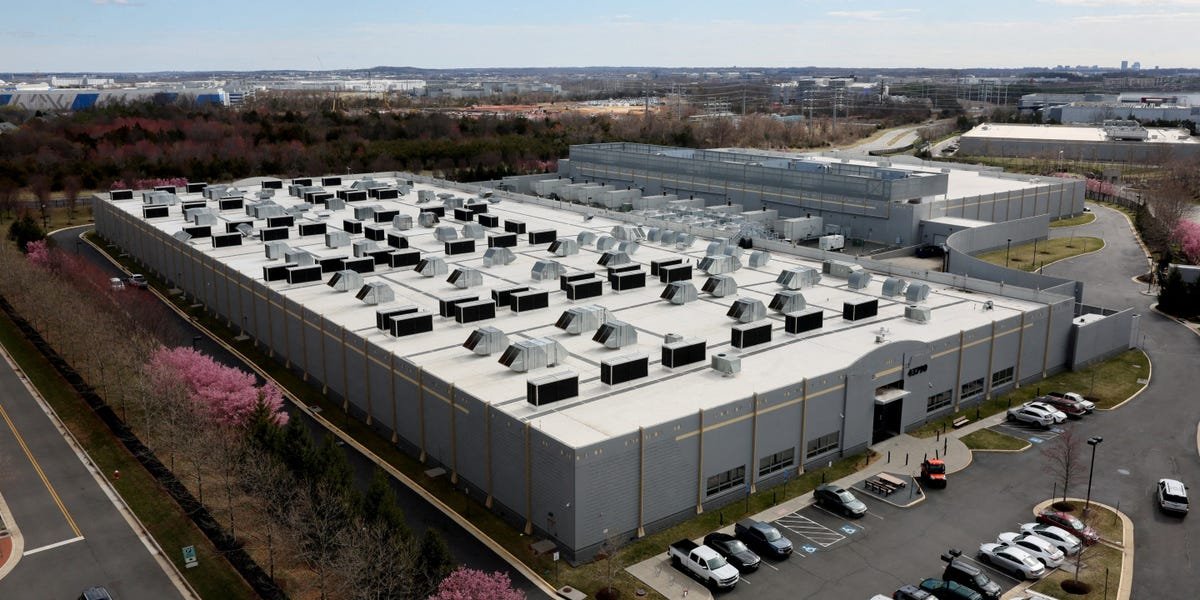
AI growth was an important secondary driver of GDP growth, the report found, but that is mostly from software investment, while the contribution of data centers is “negligible.”
“Although a negative shock to the optimism around AI implies a risk to GDP growth,” Bhide wrote in the report, “the more realistic (and smaller) estimate of AI’s growth impact after adjusting for imports dispels the popular notion that the US economy would falter without it.”
Beyond the GDP, concerns about the AI bubble are also tied to the stock market and people’s retirement funds. America’s eight most valuable public companies, including Nvidia, Alphabet, and Apple, are all betting heavily on AI and are worth $22 trillion altogether.
Business Insider has previously reported that historically, a pullback in consumer spending has rarely been the trigger for an economic downturn. Instead, spending typically weakens only after job losses mount and when a recession is already well underway.
