
Remember pivot to video?
For those of you who weren’t paying attention to the media industry a decade ago: That was when publishers spent an enormous amount of time and money trying to turn themselves into video-makers, in the hopes of cashing in on a Facebook-fueled traffic and revenue bonanza.
That one didn’t pan out.
But now publishers are trying it again, making videos that live on their own sites and are designed to travel on the internet. You can see a very prominent example of this right now over at The New York Times, which routinely shows you videos of its reporters talking about the news on its homepage.
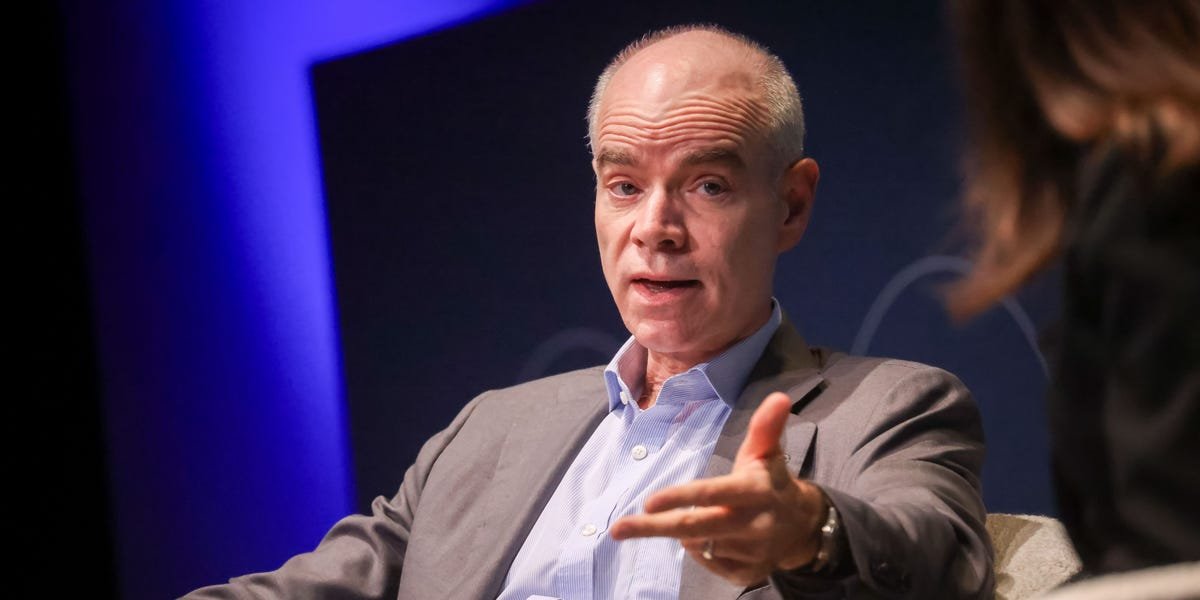
“It’s as big a transformation as the print-to-digital transformation” that kicked off a couple decades ago, says Joe Kahn, the Times’ top editor.
Unlike like the last video push — done in large part at the behest of Facebook, which provided all kinds of incentives for publishers to make video — the Times doesn’t view video as a money-maker, for now.
Instead, Kahn says his company simply has to make video — because that’s what news consumers want. And not making New York Times video means that they’ll watch something else instead.
“We will always provide good journalism in text form,” he told me in an interview this week. “But the idea that we can just continue to refine the text form as people’s viewing habits shift, I think is kind of head in the sand.”
Kahn and I talked about a lot of other topics during our chat, which you can hear in its entirety on my Channels podcast. Among them: How Kahn processes continual critiques of the Times for over- or underplaying different stories; how the revelation that Dianna Russini, the former star reporter at the Times-owned Athletic, was making $800,000 a year was going over with his staff; and why Kahn is less interested than other media leaders in integrating Substackers and other creator economy types into the Times.
The following is an edited excerpt of our conversation:
Peter Kafka: There’s a ton of video on the Times site right now. Is that for existing readers? Is it to bring in new readers?
Joe Kahn: It’s the biggest and most important transformation that’s underway now in the newsroom — what we believe is our own proprietary formula for integrating great video journalism with the rest of our journalism.
I believe it has the potential to allow us to bring really good quality, original reporting to a much larger audience than we currently have.
Does that mean more people will come to the Times because there’s video on it? Or is it that the video will be distributed on TikTok and Reels?
Both. It’s a way to push journalism out to a wide demographic of curious people out there on the internet, who prefer to get news and information in short-form video, with a direct conversational approach from an expert journalist. Or to be taken to the scene of a news event and exposed directly to what that individual is seeing and reporting at the time.
It’s traveling very well on TikTok and Instagram and YouTube Shorts. But it’s also performing very well on our own site.
Is the profile of someone who’s watching video on The New York Times different than someone who’s reading The New York Times?
On our own site, no. We’re getting really good reaction from subscribers who are reading and watching.
Off platform, I do think we are reaching an audience that is not habituated to reading long-form journalism — but is very open to having a journalist, who has spent days, weeks, sometimes months reporting on a certain subject, give them a two- or three-minute summary of that work. In two or three minutes, you can convey quite a bit of really valuable information.
Those are doing enormously well in people’s feeds, and are introducing people to our journalists and the work that they’re doing.
It’s long-arc work. It’s not part of the link economy the way Google Search was.
You don’t believe people are watching a New York Times video on TikTok and then moving over to the Times site to read more?
We know that people who discover journalism through Google will come and interact with that journalism directly, and some of those become habituated readers.
There’s less of a direct pathway for these videos. But we’re not worried about that in the moment.
What we’re worried about is making sure that we compete with really good-quality journalism on these platforms, which are otherwise being inundated with slop.
You want to be there saying, “We’re The New York Times, we’re delivering good information. You may not show up on our site for a long time, but we want you to know we’re here.”
I agree with that.
And you’re not monetizing that.
There’s no immediate way to monetize that, and we’re not worried about monetizing it now.
I believe strongly that as people get more exposed to high-quality reporting and information on their feeds, in the form that they want, they’ll want more of that.
It will raise their expectations for what good reporting is. It will differentiate us from influencers who are not doing original reporting, and it will help seed the environment for quality news and information.
Journalists have all kinds of different skills. What happens to reporters who are not good on camera, or not comfortable on camera, or don’t want to be on camera? How should they be thinking about their careers?
There will be plenty of reporters who don’t have a video presence. We’re not insisting that everybody does.
At the moment, we have a little bit of the opposite problem. The demand to have video to accompany the good journalism that we’re doing is exceeding the supply of it that we can do.
People are knocking on your door and saying, “I wanna be on camera.”
We’re adding scores of video journalists on all the news desks in order to have more ability to do video-first journalism.
An individual journalist and a couple of editors can produce a piece of text journalism. You have to multiply that times two or three to get a video that’s two minutes long, that’s integrating graphics, that’s integrating clips.
You’ve been at this job for the last four years, and you’ll have it for another four years. What’s at the top of your to-do list for that stretch?
The transformation of The New York Times newsroom into what I expect will be the leading multimedia news organization, where we’re providing journalism in multiple forms — including video-first forms that serve a much larger readership — is massive.
It’s as big a transformation as the print-to-digital transformation that I and many others were involved in for the last 15 or 20 years. This is as big a structural adjustment for us and a priority in terms of our journalistic storytelling as that.
I’m surprised to hear you put that much emphasis on it. I would think, “Alright, you’ve got a dedicated team that makes videos, and some of your reporters will be on camera.”
It’s going to touch every part of the newsroom, and the way that we do a large subset of our stories.
I think that we need to be prepared. We will always provide good journalism in text form. But the idea that we can just continue to refine the text form as people’s viewing habits shift, I think is kind of head in the sand.
We’re in a race against time to make sure that good-quality journalism competes with AI-generated slop and influencer-generated non-original journalism out there on the internet. It’s imperative for us to be able to translate the good work that we’re doing into the forms that people want to consume their journalism in.
And if in the next four years — it’s going to take a lot longer to realize it at scale — but if in the next four years we can make a really important down payment on integrating into the core of The New York Times, I’ll consider that to be a pretty significant transformation of the place.
