
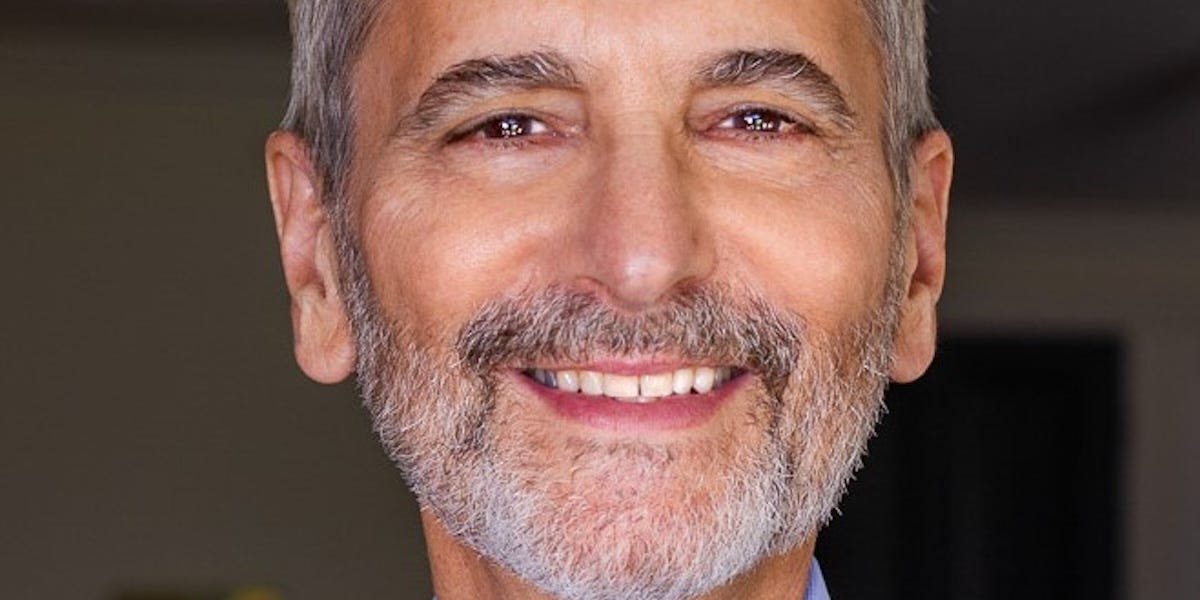
Throughout a long career in researching the brain and Alzheimer’s disease, Dr. Gary Small picked up a few longevity habits of his own.
“When you’re in this field for so many years, it’s hard to resist following your own advice,” Small, a neuroscientist and psychiatrist based in Los Angeles, told Business Insider.
Small, who has a psychiatry practice focusing on memory loss and is a professor of psychiatry at UCLA, said that age is the biggest risk factor in developing Alzheimer’s.
“Thanks to modern medicine, we’re living longer,” he said. “The rub is that our brains weren’t engineered to function well that long.”
Still, he said lifestyle factors play a significant role in decreasing your risk of cognitive decline. Particularly, the ones that reduce obesity in midlife decrease your risk for Alzheimer’s and dementia in late life.
Small, who is also the director of behavioral health breakthrough therapies such as developing a psychedelic treatment for depression at Hackensack Meridian Health, shared a few of the habits he follows to protect his brain as he ages.
He includes walking and balance training in his workout routine
Dr. Gary Small
Small tries to fit in some exercise every single day.
Besides being beneficial to your overall health, he said, frequent movement also elevates your mood from the endorphins. Exercise may also increase levels of brain-derived neurotrophic factor (BDNF), a protein involved in the survival and growth of nerve cells.
Small, who has a gym in his house, focuses on cycling for his cardio and simple strength training with resistance bands and dumbbells.
Additionally, he incorporates more walking into his day. When he lived in New Jersey, he’d take the stairs to his office or purposefully park a longer distance away. Now that he lives in Santa Monica, he and his wife love that they can walk to restaurants or run errands.
He also prioritizes improving his balance. “As you get older, if you trip and fall, that’s not going to be good,” he said, risking potential fractures affecting the brain. “Anything you can do to strengthen your glutes is really important as you age.” He personally incorporates movements such as lunges and standing on one foot with his eyes closed.
He focuses on protein and splits entrees with his wife
lacaosa/Getty Images
Small said that no diet is one-size-fits-all.
He keeps it simple: “With every meal, I try to have a healthy protein and a healthy carbohydrate,” he said, to feel fuller for longer. He also tries to snack on whole foods over ultraprocessed ones, as higher consumption of the latter is associated with a risk of quicker cognitive decline.
A typical day looks like a fried egg, cheddar cheese, and sourdough toast for breakfast; a turkey sandwich, chicken salad, or soup for lunch; salmon or the occasional steak with salad for dinner, and fruit for snacks. For carbohydrates, he prefers to eat sprouted whole-grain and whole-grain breads because they provide complex carbohydrates, high fiber, and a lower impact on blood sugar; or sourdough bread because it has a lower glycemic index and enhanced nutrient absorption.
He also tries to avoid overeating at night and likes to split entrees with his wife, which reduces calorie intake and may lower inflammation. Chronic inflammation in the brain is a risk factor for Alzheimer’s.
Mostly, he tries not to be too rigid with his diet, which he said is unsustainable for most people. “People generally do have their cheaties,” he said. “You have that bit of dessert or you have the cheeseburger — I don’t do that every night, but that can be fun.”
His sleep hacks include audiobooks and box breathing
Andrii Lysenko/Getty Images
Just like regular exercise and a whole-foods-focused diet, Small said that getting enough sleep also lowers inflammation.
“A good night’s sleep is critically important for the aging brain,” Small said, including clearing amyloid, natural proteins in the brain that can harmfully build up over time and are associated with memory loss and cognitive decline.
He also said it’s common to have lighter sleep as you age.
When he wakes up in the middle of the night, he tries to do box-breathing exercises — slow, deep breaths that affect the vagus nerve and can create a calming sensation. He also likes putting on an audiobook, his favorite genres being literary and historical fiction, as well as autobiographies from comedians.
“When you are a kid, you like to have a bedtime story,” he said. “It’s a way of getting yourself out of your head and just drifting off somewhere else to get back to sleep.”
Staying positive and relaxed
Jacob Wackerhausen/Getty Images
Small said having a positive mindset can be a huge asset for healthy aging.
When working as the director of the UCLA Longevity Center, he noticed that older patients who thought positively could adapt to challenges such as a sprained ankle and remain mobile.
In Small’s case, he’s naturally a “glass half-full” person. “I’ve had a fortunate life where I haven’t had major hits growing up, had a relatively stable family life and friendships and did well. I’m very grateful for that,” he said.
At the same time, even he isn’t immune to gloomier thoughts. “It’s a challenging world,” he said. “If I notice myself going too negative, I try to pull myself in another direction.”
Most crucially, he tries not to stress too much, including over his lifestyle. He said it’s easy for people to fixate on getting exactly seven hours of sleep or 10,000 steps a day, but those numbers aren’t universally perfect metrics for everyone. Plus, dementia and Alzheimer’s are still impacted by genetics and age.
“You try to take as much responsibility as you can, but realize it’s not all in your control,” he said. He said being super strict with himself also feels too tedious.
“I want to live longer; I just don’t want to feel like life is longer, torture myself too much.”
