
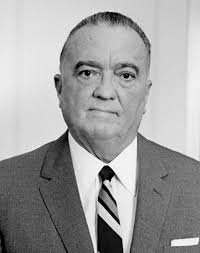
by Corbin K. Barthold, Law & Liberty, January 9, 2025.
Excerpt:
Now legislators, both state and federal, are going the other way. They’re introducing, supporting, and (only, so far, at the state level) enacting bills that impose age-verification requirements on social media platforms and adult websites. Current online age-verification techniques erode digital privacy: they create vectors for learning users’ identities and snooping on their browsing habits. Online age-verification laws increase the chances that, one day, we’ll have a Bork tapes-style scandal for real.
The point of online age verification is to protect children. But online age verification works only if everyone does it. On the Internet, nobody knows you’re an adult until you prove it (to the extent possible; all online age-verification systems can be gamed). To establish your age, you must tender some kind of personal data, thereby placing it at risk of exposure. Online age-verification laws thus burden the First Amendment rights of adults, by hampering their ability to post and view material on the Internet in anonymity. (They often burden the First Amendment rights of children, too, for example by excluding all minors from online spaces high schoolers are old enough to enter.) The courts have issued a string of preliminary injunctions blocking such laws from taking effect.
New York Times, January 7, 2014.
A tribute to some gutsy people, in particular a married couple with 3 children. If they had been caught, they might never have seen their children for more than an hour at a time until their children were teens or even adults.
In this video, you’ll learn about COINTELPRO.
by Liz Wolfe, Reason, January 9, 2025.
Excerpt:
Back in 2017 and 2018, when wildfires raged throughout the state, a lot of insurers drastically scaled back their coverage. Those wildfires had cost them $23 billion in total, about twice as much as the companies had collected in premiums over that same time period, and many of the companies decided some of these places were simply too costly to insure.
Premiums, after all, are not arbitrary; they reflect risk. Teams of actuaries spend a lot of time trying to understand what prices to offer homeowners in any given area. Unfortunately, in California, the insurance commissioner—an elected official, Ricardo Lara—must approve premium increases. Lara generally won’t approve high premium increases, which leads to the predictable outcome of insurers pulling out. Something Lara is also seeking to, uh, “fix” via government coercion.
“For the first time in history we are requiring insurance companies to expand where people need help the most,” he announced last month. “Major insurance companies must increase the writing of comprehensive policies in wildfire distressed areas equivalent to no less than 85% of their statewide market share,” he continued.
Yes, you understand this correctly: He thinks bullying private insurers into covering costly wildfire-prone areas (as opposed to allowing them to accurately price risk) will result in more coverage for homeowners. Look forward to, when it gets costly enough, State Farm and the like totally pulling out of the whole state. Lara, contra his own hubris, can’t force the financials to work. (Somehow, many progressives cannot comprehend this cycle of cause and effect.)
For more on price controls, see Hugh Rockoff, “Price Controls,” in David R. Henderson, ed., The Concise Encyclopedia of Economics.
by George F. Will, Washington Post, January 8, 2025.
Excerpt:
Nippon has promised to pay $5 billion more than the company’s market capitalization. And to keep U.S. Steel’s headquarters in Pittsburgh. And to give $5,000 bonuses to the company’s steelworkers. And to abide by all union contracts. And to let the U.S. government reject any reductions in U.S. Steel’s production capacity. And to spend $2.7 billion modernizing what Biden delusionally calls “this vital American company,” which has withered by becoming dependent on U.S. government tariffs, subsidies and “Buy American” rules.
by Ilya Somin, Reason, January 8, 2025.
Excerpt:
Yesterday, the House of Representatives passed the Laken Riley Act (LRA), in a 264-159 vote. This legislation – named after a student killed by an undocumented immigrant – is often sold by proponents as a tool for combatting murderers and sex offenders. In reality, it focuses on detaining undocumented immigrants charged with theft-related crimes, including minor ones. It also includes a Trojan horse provision making it easier for states to challenge a variety of programs that make legal migration easier. These policies are unjust, and likely to impede genuine crime-fighting efforts more than they help them.
The main provision of the Laken Riley Act requires mandatory federal detention of any undocumented immigrant who “is charged with, is arrested for, is convicted of, admits having committed, or admits committing acts which constitute the essential elements of any burglary, theft, larceny, or shoplifting offense.” Notice that the provision is triggered by a mere arrest or charge, and does not require any proof of guilt beyond that. Moreover, even the most minor forms of theft, burglary, or shoplifting qualify. If a migrant is arrested on suspicion of stealing a dime or a paperclip from a store, that’s enough to trigger mandatory detention. Ditto if he or she is charged with even the most minor theft-related offense.
Two comments:
First, it’s too bad that Ilya has fallen into the trap of referring to an illegal alien as “undocumented.” “Undocumented” is the current euphemism for “illegal.” Euphemisms that distort should be avoided. I wouldn’t be surprised if many illegal aliens had documents such as birth certificates. They simply don’t have the document required by law.
Second, I remember reading someone, a Congressman or a pundit, saying that it’s usually a bad idea to vote for a piece of legislation named after someone. This is a case in point.
by Matthew Rozsa, Reason, January 10, 2025.
Excerpt:
Even if Trump utterly fails in these geopolitical gambits, the fact that he is trying in the first place shows his hand. In his second term, Trump plans on using his executive powers to expand America’s global empire. By contrast, Cleveland spent his second term trying to roll back America’s then-nascent imperialist ambitions—and did so without flinching when genuine strength in our foreign policy was needed.
The standout story from Cleveland’s presidency involves Hawaii. When he returned to office in 1893, Cleveland was greeted with a treaty that had been presented to the Senate for the annexation of Hawaii. Newspapers across the land waxed poetic about how the American flag would soon wave in the Hawaiian breeze, but few journalists questioned the official story about how this land had come into our possession. They were told the Hawaiian natives had willingly betrayed their own monarch, Queen Liliuokalani, by replacing her rule with that of white foreigners (mostly Americans).
Cleveland suspected there was more to it. He knew that sugar plantation owners and other wealthy business interests were suspicious of Liliuokalani, who wanted to reduce foreign influence in her country. Once those Americans learned she was planning concrete policies toward achieving this goal, American jurist Sanford Dole and U.S. Minister to Hawaii John Stevens led a conspiracy to dethrone her. By the time Cleveland took office, they had succeeded in doing so (with the unwitting aid of American locals who believed they had support from Washington) and were only awaiting the Senate’s ratification of an annexation treaty to consummate their plot.
Note: The related pic is of J. Edgar Hoover of the FBI.
