
Close Menu
    What's Hot

    My 10-Year-Old Started a Vending Machine Business

    June 6, 2026

    I Visited 3 European Countries in 8 Days: What I Did Wrong, Right

    June 6, 2026

    Real estate stocks shine as traders switch to defensives from tech

    June 6, 2026
    Facebook X (Twitter) Instagram
    Hot Paths
    • Home
    • News
    • Politics
    • Money
    • Personal Finance
    • Business
    • Economy
    • Investing
    • Markets
      • Stocks
      • Futures & Commodities
      • Crypto
      • Forex
    • Technology
    Facebook X (Twitter) Instagram
    Hot Paths
    Home»Markets»Crypto»JPMorgan, Citi, and Bank of America Just Built a Tokenized Payment Network to Kill Stablecoins
    Crypto

    JPMorgan, Citi, and Bank of America Just Built a Tokenized Payment Network to Kill Stablecoins

    Press RoomBy Press RoomJune 6, 2026No Comments4 Mins Read
    Facebook Twitter Pinterest LinkedIn Tumblr Email
    Share
    Facebook Twitter LinkedIn Pinterest Email

    Author

    Ahmed Barakat

    Author

    Ahmed BarakatVerified

    Part of the Team Since

    Aug 2025

    About Author

    Ahmed Balaha is a journalist and copywriter based in Georgia with a growing focus on blockchain technology, DeFi, AI, privacy, digital assets, and fintech innovation.

    Share


    Fact Checked by

    CryptoNews Editorial Team

    Author

    CryptoNews Editorial TeamVerified

    Part of the Team Since

    Sep 2018

    About Author

    The CryptoNews editorial team is composed of seasoned writers specializing in cryptocurrency and blockchain technology. Their expertise ensures comprehensive, accurate, and insightful content for…

    Last updated: 

    June 6, 2026

    Modern bank vault revealing blockchain network representing tokenized deposit infrastructure

    JPMorgan, Citi, Bank of America, and Wells Fargo are building a shared Tokenized Deposit Network to challenge stablecoins. It goes through The Clearing House, targeting a first-half 2027 launch, and the Federal Reserve is the audience that matters most.

    The stated pitch is efficiency: instant 24/7 settlement, programmable payments, blockchain-speed money movement.

    The actual pitch is control: if banks own the tokenized settlement layer, there is no political or structural opening for a government-issued retail CBDC, and no oxygen left for stablecoin issuers in the institutional payment stack.

    Discover: The Best Crypto to Diversify Your Portfolio

    Stablecoins Killer? Tokenized Deposits vs. Fedwire, What the TDN Actually Does and Why Banks Want It Now

    A tokenized deposit is not a new asset. It is a regular bank deposit recorded on a shared ledger instead of a siloed bank ledger, same credit risk, same regulatory treatment, same accounting standards. What changes is the settlement infrastructure.

    Fedwire and RTP operate on batch cycles or near-real-time windows with hard cutoffs. The TDN settles on-chain, continuously, including weekends and federal holidays.

    That gap is exactly where stablecoins built their corporate use case. Treasury teams running cross-border settlements in USDC don’t care about monetary philosophy; they care that Circle’s rails run on Sunday at 2 a.m. and JPMorgan’s don’t.

    🚨 JUST IN: JPMorgan, Citi, Bank of America and Wells Fargo are building a shared blockchain to keep deposits from leaving the banking system.

    The Clearing House will run it. Target launch is the first half of 2027.

    Interestingly, this appears led by being defensive rather… pic.twitter.com/eZK4c93nzB

    — Simon Taylor (@sytaylor) June 5, 2026

    The TDN closes that gap without moving a dollar outside the regulated banking system.

    The infrastructure exists in fragments already. JPMorgan’s Kinexys platform processes institutional payments via JPM Coin on a private blockchain.

    The bank also launched a tokenized deposit token on Base, Coinbase’s public Layer 2, for institutional clients earlier in 2026, targeting cross-border payments, intraday liquidity, and programmable payouts. Citi’s Token Services runs real-time digital transfers between New York, London, and Hong Kong.

    The TDN is the interoperability layer that connects these siloed bank efforts into a single institutional liquidity pool, a Regulated Settlement Network at US banking scale.

    David Watson, CEO of The Clearing House, said the project is “a big move for the lenders” and that the industry faces a “radically different” future around on-chain payments.

    That framing is accurate. It is also strategically convenient because the banks proposing this network are the same institutions that would be most damaged by either a government-run CBDC or a stablecoin that captures institutional dollar flows.

    The CBDC End-Run: Why the Regulatory Timing Is Not Coincidental

    Congressional appetite for a Federal Reserve-issued retail CBDC is close to zero. Surveillance concerns, political branding, and opposition from both parties have effectively stalled any direct CBDC push. Banks know this, and the TDN is calibrated to exploit it.

    If the private sector delivers 24/7 tokenized dollar settlement through regulated bank deposits, the policy argument for a government-issued digital dollar collapses.

    The Fed gets a modernized payment infrastructure without the political liability of issuing a retail CBDC. Banks get to keep deposits inside their system. The stablecoin issuers get squeezed. Everyone in the regulated banking system wins, except Tether and Circle.

    The CLARITY Act’s advance through Washington adds a second pressure vector. Banks remain opposed to CLARITY Act provisions that leave room for interest-bearing features on stablecoins, products that would compete directly with bank deposit rates.

    A working TDN makes that fight easier: if banks already offer programmable, blockchain-native deposits with FDIC-equivalent protections, the political case for allowing non-bank stablecoin issuers to pay yield weakens considerably.
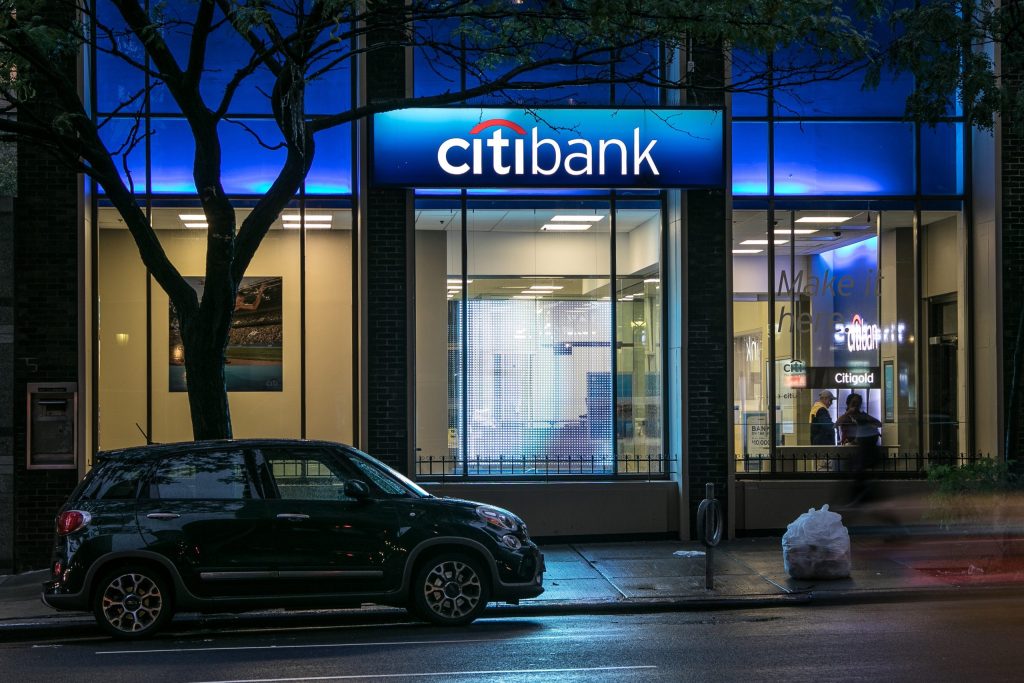
    JPMorgan, Citi, Bank of America, and Wells Fargo are building a shared Tokenized Deposit Network to challenge stablecoins.

    Citi’s head of services, Shahmir Khaliq, framed the network as “another step that effectively cements” the role banks play in financing, money management, and capital markets. That is not a product description. That is a territorial claim.

    What banks are actually protecting is the monetary transmission layer, the infrastructure through which dollar liquidity flows from the Federal Reserve into the real economy. If that layer tokenizes on bank-owned rails, they retain gatekeeper status in a blockchain-native financial system.

    Discover: The best pre-launch token sales


    Share. Facebook Twitter Pinterest LinkedIn Tumblr Email
    Press Room

    Related Posts

    Arthur Hayes Just Dumped His Entire Zcash Position After a Bug That Could Have Allowed Counterfeit ZEC for 4 Years

    June 5, 2026

    Sentiment Turns Negative Again – Why Divine Ray ICO With Live Product Beats Waiting

    June 5, 2026

    Bitcoin Tests February Lows as Institutional ETF Inflows and Layer 3 Infrastructure Capture Market Interest

    June 5, 2026
    Leave A Reply Cancel Reply

    LATEST NEWS

    My 10-Year-Old Started a Vending Machine Business

    June 6, 2026

    I Visited 3 European Countries in 8 Days: What I Did Wrong, Right

    June 6, 2026

    Real estate stocks shine as traders switch to defensives from tech

    June 6, 2026

    Top 15 US States With the Highest Income

    June 6, 2026
    POPULAR
    Business

    The Business of Formula One

    May 27, 2023
    Business

    Weddings and divorce: the scourge of investment returns

    May 27, 2023
    Business

    How F1 found a secret fuel to accelerate media rights growth

    May 27, 2023
    Advertisement
    Load WordPress Sites in as fast as 37ms!

    Archives

    • June 2026
    • May 2026
    • April 2026
    • March 2026
    • February 2026
    • January 2026
    • December 2025
    • November 2025
    • October 2025
    • September 2025
    • August 2025
    • July 2025
    • June 2025
    • May 2025
    • April 2025
    • March 2025
    • February 2025
    • January 2025
    • December 2024
    • November 2024
    • April 2024
    • March 2024
    • February 2024
    • January 2024
    • December 2023
    • November 2023
    • October 2023
    • September 2023
    • May 2023

    Categories

    • Business
    • Crypto
    • Economy
    • Forex
    • Futures & Commodities
    • Investing
    • Market Data
    • Money
    • News
    • Personal Finance
    • Politics
    • Stocks
    • Technology

    Your source for the serious news. This demo is crafted specifically to exhibit the use of the theme as a news site. Visit our main page for more demos.

    We're social. Connect with us:

    Facebook X (Twitter) Instagram Pinterest YouTube

    Subscribe to Updates

    Get the latest creative news from FooBar about art, design and business.

    Facebook X (Twitter) Instagram Pinterest
    • Home
    • Buy Now
    © 2026 ThemeSphere. Designed by ThemeSphere.

    Type above and press Enter to search. Press Esc to cancel.