
Unlock the Editor’s Digest for free
Roula Khalaf, Editor of the FT, selects her favourite stories in this weekly newsletter.
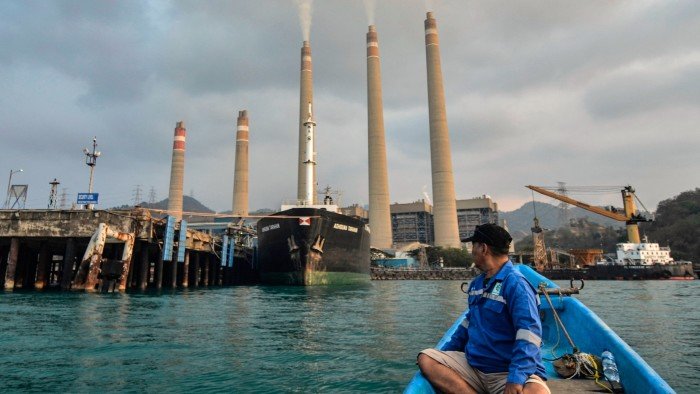
Indonesia will struggle to meet its ambitious plan to retire coal power plants within 15 years without a dramatic policy overhaul and a surge of investment for renewable energy infrastructure in one of the world’s largest carbon emitters, experts warn.
In November, Indonesia’s President Prabowo Subianto vowed to phase out coal plants and build more than 75 gigawatts of renewable energy capacity by 2040. He also said Indonesia would achieve net zero emissions by 2050 — 10 years earlier than the target set by his predecessor, Joko Widodo.
Experts say Prabowo’s targets are aggressive for a country which generates about 66 per cent of its electricity from coal, is still building coal-fired plants and has a poor record of meeting its climate goals.
Indonesia also relies on cheap coal plants to power its nickel processing sector, a crucial economic driver and cornerstone of the global supply chain for stainless steel and electric vehicles.
The International Energy Agency and other energy experts told the Financial Times that Indonesia needed system-wide changes, including scrapping policies favouring fossil fuels, prioritising building clean energy infrastructure, including transmission lines, and weaning strategic industries off coal power.
Indonesia’s energy sector released about 650mn tonnes of carbon dioxide in 2022, making it the world’s seventh-largest carbon emitter, according to the latest data available from the IEA.
“It is technically and financially feasible . . . but the key is there are a lot of reforms that need to be done,” said Fabby Tumiwa, executive-director at the Institute for Essential Services Reform, a Jakarta-based think-tank.

Tumiwa estimates that Indonesia needs investments of at least $1.2tn between now and 2050 for clean energy, storage and transmission networks, on top of an estimated $28bn in costs for early retirement of coal plants. Government data shows investment in Indonesia’s renewable energy sector totalled $1.5bn in 2023.
In order to meet Prabowo’s goal of retiring coal in 15 years, Indonesia would have to build 8GW of renewable energy every year, while retiring 3GW of coal annually until 2040, according to energy think-tank Ember. It estimated that the country added just 3.3GW of renewable power between 2018 and 2023.
Clean energy contributed just 13 per cent of Indonesia’s total power mix in 2023, according to the energy ministry, behind coal at 40 per cent. Jakarta has set a target for renewables of 23 per cent by 2025, but analysts said it is unlikely to hit that level at current rates of development.
One of the biggest hurdles, according to experts, is an uneven playing field for renewables.

Indonesia imposes a price ceiling on coal for power plants, making the fuel far cheaper than alternatives. Renewable energy producers are legally required to sell to state electricity utility Perusahaan Listrik Negara — which has a monopoly on electricity distribution — at prices that experts say make clean energy investments unprofitabl. Indonesia also has restrictive rules on ownership, procurement and local content requirements for renewable projects.
“What is important is to increase the attractiveness of renewable energy investment,” Tumiwa said.
The IEA called for Indonesia to phase out fossil fuel subsidies, including the coal supply price caps to accelerate renewables development.
Eniya Listiani Dewi, the energy ministry’s director-general of new, renewable energy and energy conservation, said at a summit in November that the government would take steps to facilitate private sector investment in Indonesia’s renewable sector. Meeting Prabowo’s target would be a “huge challenge”, she added.

External financing for Indonesia’s energy transition has also lagged. A group of developed countries led by the US and Japan agreed in 2022 to provide nearly $22bn to assist Indonesia’s transition from coal, in what was then touted as the largest such deal. But only a fraction of the funds have been disbursed.
In addition to generation, Indonesia needs huge investments in transmission lines across its many islands and storage to ensure a clean power supply. Some untapped green energy resources, including geothermal, wind, hydro and solar power, are best generated in areas far from Java, home to 55 per cent of the population.
Coal capacity has also continued to expand, doubling since Indonesia signed the Paris Climate Agreement, the landmark 2016 international treaty to tackle rising global temperatures. Indonesia’s coal production hit a record 831mn tonnes in 2024, according to government data.
This is largely due to the explosive growth of mineral processing, mainly nickel, of which Indonesia has the world’s largest reserves. Jakarta banned nickel ore exports from 2020, forcing companies to invest in onshore processing, and the government has made exceptions to a prohibition on new coal plant construction for strategic industries, including minerals.
“Indonesia’s record on following through on previous energy transition commitments has been weak in some areas,” rating agency Fitch said in a recent report.
It added that Prabowo’s policy goals “will face significant implementation challenges” and could raise risks for the country’s energy security.
Additional reporting by Haohsiang Ko in Hong Kong
