
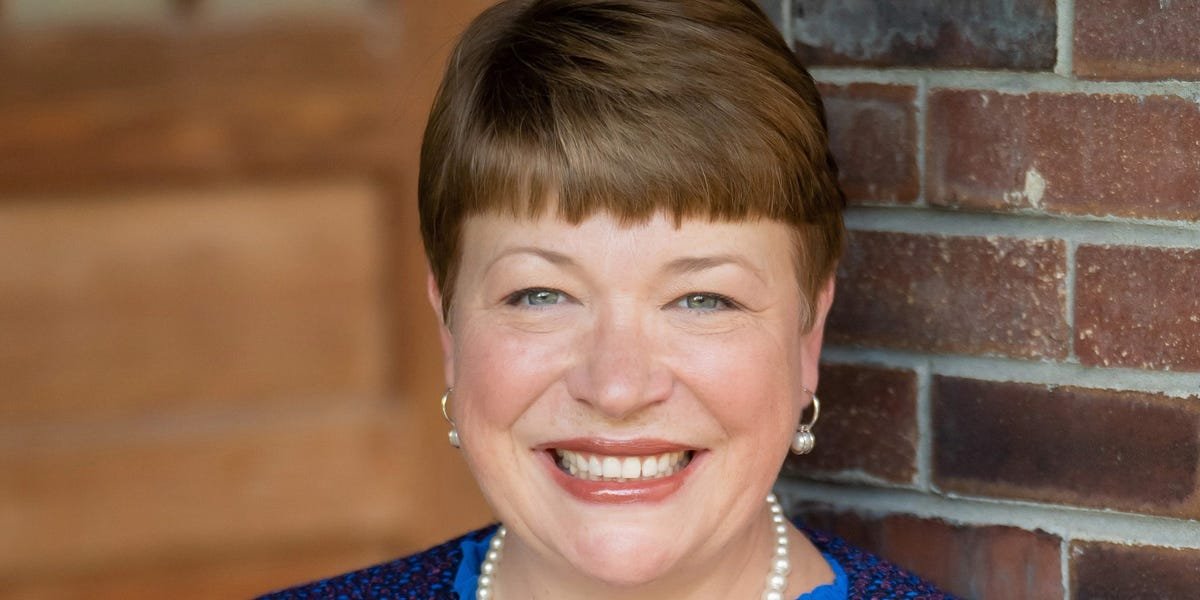
Heather Hunt-Ruddy, who leads Wells Fargo’s 25-state central US wealth division, had her own run-in with the importance of financial planning when she received a cancer diagnosis two years ago. She, her husband, and her three children met to talk about what would happen if she died, something she wished her dad had done.
This essay has been edited for length and clarity.
I lost my dad in 2017 after 15 years of congestive heart failure. I’m pretty sure he knew the end was coming, but there was no funeral planning. I spent the three days after he died planning a funeral and buying a plot.
I remember being angry that he hadn’t prepared me, and that I had never asked about it. I didn’t want him to think I was ready. He didn’t have any money, so that turned out to be pretty easy at the end of the day, but not having that conversation led to increased pain at the end.
I worked an event earlier this year where the average client in the room had $500 million. I met an 82-year-old who didn’t think their 57-year-old son was ready. I thought: when are they going to get ready? As I asked more questions, it seemed like the problem was that the client didn’t want to face that conversation about death and would or could not accept that their adult son was prepared.
People really need to talk about it, as I learned two years ago.
In 2024, I was diagnosed with stage four metastatic breast cancer, which means there’s no cure, only treatment. I get very sick, very fast.
My doctor said, “I don’t know if you’re going to survive this, so you need to get your affairs in order.”
Like so many other busy people, I had been putting it off because I was busy in my career and raising my children. I always assumed there would be more time. The last time I did anything with my estate plan was more than 20 years ago. My husband and I were getting on a plane and thought, “Who would take care of our kids if the plane went down?”
‘Money and eggs’
I have financial skills, but I worked with our financial advisors because I know I’m emotional about my money. We completed the estate plan and worked with our advisor and estate planning attorney to establish the trusts.
We also figured out the prenup my husband would have to sign if he got remarried, and what to do with our lake house that the kids love, what happens if somebody divorces, or has a mental health issue or drug addiction.
Figuring that out was powerful, but what really mattered was the meeting I had with my three adult children in their late 20s and early 30s. I called them over for brunch. I wanted to call it “death and eggs” but my husband said it wasn’t allowed, so “I called it money and eggs.”
Heather Hunt-Reddy
I called my daughter and said, “Sweetheart, we’re going to have this conversation. I want to walk you through what happens if mom passes away.”
She didn’t want to, but I told her, “I don’t care. I have cancer, so you don’t get to vote.”
It is a conversation about money, but what it’s really about is what I expected from them when I was gone.
This is what I told them: You don’t get to fall apart because you lost your mom young. We worked really hard, your dad and I, to build this life for you, and we want you to live it to the fullest. We want you to be happy. We want you to embrace joy.
You can celebrate me, and you can be sad for three months, but after that you’ll suck it up and get it together.
During the meeting, there were no arguments or questions about my wishes. My kids were in the thick of worrying about losing their mom, and it was simply snap the salute with very few questions.
I’d rather families not have to go through cancer before they have this conversation.
Why these conversations matter
There are many reasons people avoid these challenging conversations, and we work with psychologists to learn about how to have them.
One way to do so is to talk about legacy. Often, this means appealing to the patriarch’s ego — it’s usually a patriarch when we’re talking about the great wealth transfer. Their ego and desire to protect their family can help convince them to have those conversations.
If you don’t, you can leave your family in chaos. It’s not the legacy that anybody who’s worked their whole life to raise children and build a business wants to leave.
There’s also a huge value in financial advisors stepping up and assisting in those family conversations. We find that in family meetings, parents and siblings behave better when a neutral third party is present.
While chemo slowed down the disease’s progress, I am still undergoing treatment.
My kids are getting married, and now their spouses are part of the conversation too. We’re openly discussing how the trusts are set up and what would happen if they were to divorce. We expect more questions, especially since my three children will now be co-executors of the estate.
We even discussed the agreements that they will all have to make about our lake house, which they will all share.
I feel so much peace that we’ve done this.
