
Stay informed with free updates
Simply sign up to the Agriculture myFT Digest — delivered directly to your inbox.
The writer is CEO of FareShare, the food charity. This article is part of the FT’s Financial Literacy and Inclusion Campaign joint seasonal appeal with Magic Breakfast
We talk a lot about food at this time of year — turkey or mince pies — but it’s food security that is leading the news.
We know that a shocking 10mn people in the UK face food insecurity, meaning they do not have consistent access to affordable, nutritious food. Then, last month, the government warned that the climate crisis posed a serious risk to the UK’s food security. Meanwhile, farmers drove tractors through Westminster in protest, arguing a weakened farming sector threatens the UK’s ability to produce its own food.
Through FareShare’s network of 8,300 charities, 34 regional centres, and 26,000 volunteers, our food reaches a million people each year. These include children’s breakfast clubs, older people’s lunch groups and grassroots organisations tackling isolation and hardship. But we still struggle to access enough food to meet demand.
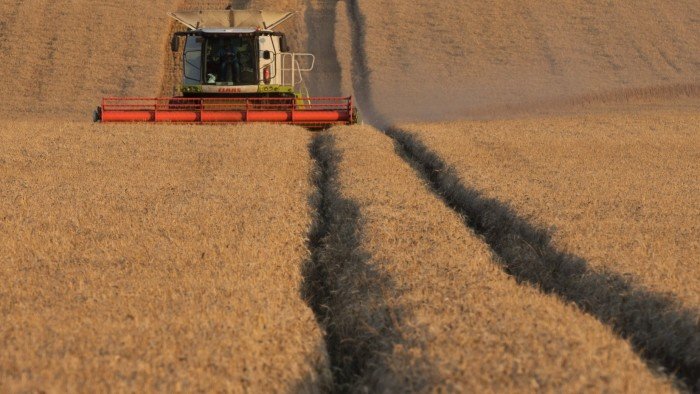
This is despite the fact that the UK wastes 12.8mn tonnes of surplus food annually, accounting for 6-7 per cent of our greenhouse gas emissions. A quarter of this, 3mn tonnes, is wasted even before it leaves the farm, yet less than 20 per cent of farmers distribute excess food to charities.
Following years of campaigning by FareShare and The Felix Project, it is promising that the government recently announced £15mn for farm-level surplus redistribution — an acknowledgment of the importance of food at this time of year. And it demonstrates that surplus food is not only a problem, but an opportunity.
Redistributing food has a profound social impact. Last year, we provided 135mn meals to 8,357 charities such as Wigan Youth Zone, which offers meals to children alongside enriching activities that include basketball and drama classes. An upcoming University of Hertfordshire report shows that for every £1 spent through surplus redistribution via FareShare, the UK gains £13 in social return on investment. But to deliver increased impact, we need to redistribute more food.
People assume the big challenge is retail. But retail only accounts for 2.34 per cent of food waste and retailers are driving this figure down. They are right to do so — businesses must prevent surplus from occurring, then redistribute when surplus is unavoidable — but it means redistributors must look further up the supply chain to hospitality (8.59 per cent), manufacturing (11.72 per cent) and farming (25 per cent) to access more surplus.
We don’t normally take lessons from the US on food but, in this case, there is a lot to learn. They have created a policy environment that supports surplus redistribution, and we should do the same.
The US has tax deduction policies to incentivise food donation — this means businesses are compensated for the cost of redistribution, while the total amount they can offset is capped to guard against abuses. Tax incentives are a political minefield — but we hope in 2025 to show the significant impact that small changes could have.
There are more policy levers available to the government: implement mandatory food waste reporting; issue guidance so businesses understand their responsibilities and legal protections when donating surplus; designate food redistribution as a “public good” under Environmental Land Management schemes to incentivise action through farming policy; and develop a technology platform to co-ordinate surplus food redistribution. Additionally, the UK must create a plan to end reliance on charitable food aid and tackle the root causes of poverty.
We’re cautiously optimistic. The government’s new Food, Circular Economy, and Child Poverty strategies signal progress. Steve Reed, the secretary of state at Defra, has expressed frustration at the UK’s failure to get the right food to the right people.
And reducing food waste is also central to tackling the climate crisis — after all, it accounts for approximately five times the emissions of the aviation sector. If food waste were a country, it would be the third-largest emitter behind the US and China. This has prompted international commitments to halve food waste. At recent COP summits, pledges were made on food and related emissions. But this must lead to further domestic action.
Tackling food waste can unite businesses, charities, farmers, politicians and the public. It bridges rural and urban divides and strengthens communities through social impact. Through improving our food system, we can address hunger, reduce emissions and build a stronger, healthier, fairer society.
