
Unlock the Editor’s Digest for free
Roula Khalaf, Editor of the FT, selects her favourite stories in this weekly newsletter.
The other week I made the disturbing discovery that Google Maps thinks the London apartment building I have lived in for the last 19 years is located at an address I have never heard of.
If you put this other address into Google Maps, up pops a photo of our building, which may explain why our mail has a tendency to go astray.
But when I went online to tell Google about the problem, I discovered something worse. Before I had a chance to start typing out my complaint, a question appeared on the screen: “How satisfied are you with your Help experience?”
Considering I had not had a chance to experience my Help experience at that juncture, it is fair to say I was dissatisfied.
This was a low point in what has lately come to feel like an explosion of demands for customer feedback.
“How did we do?” asks Royal Mail each time it delivers a package.
I have new respect for its efforts now that I know about the Google Maps situation. But I will never fill out one of its surveys, nor the others that invariably arrive the same day from whichever company made whatever it delivered.
Likewise, when WhatsApp instantly sends me a message asking me to rate it after I haplessly download it on to my computer via the Microsoft Store, I will not.
The same goes for the physiotherapists, phone companies, bookshops and airlines that bombard me with this stuff.
Experts say I am not imagining that company pleas for feedback have mushroomed. “Digital surveys are increasing because there are many more tools available now,” says marketing consultant, Roisin Kirby, an associate lecturer in marketing at the UK’s Nottingham Business School.
Nor is it a surprise to hear that even feedback industry bosses think things are out of control.
“The feedback experience is just horrible,” says David Solana, co-founder of a customer experience management platform called Opinator.
He says a deluge of impersonal, time-eating, poorly designed surveys means that he meets potential clients with customer response rates that rarely exceed 20 per cent and are sometimes below 2 per cent.
On top of survey fatigue, the responses that businesses do receive can be heavily skewed, because the one time when people are eager to give feedback is when things have gone wrong.
Even more dispiritingly, not every company is equipped to analyse the data they collect in a way that ends up delivering useful information.
Solana’s platform claims it can improve things, in part by making feedback surveys brief and more like playing a game than filling in a questionnaire. The surveys are also designed to do something most do not: offer potential respondents some sort of benefit in return for their time. These benefits can be small. A car company might give you, say, a Spotify playlist of road trip songs once you tell them what you think.
Moves like this may not sway an anti-feedback extremist like me, but they are a reminder that the very few exceptions I make to my non-responding rule occur when there is something in it for me.
I rate Uber drivers when asked, in the hope that one turns up next time I need a lift.
When my colleagues at the IT help desk at work ask me to rate their performance after they help me sort out a dodgy laptop, I tend to reply.
This is because the survey is brief and makes the point that any feedback, good or bad, helps to improve a service I am very likely to use in future. In other words, it’s in my interest to respond.
I am not at all averse to any business trying to understand what its customers want so it can do things better. This is hardly new or contentious.
The difference is that so many of today’s inhuman, digital efforts are so obviously misguided.
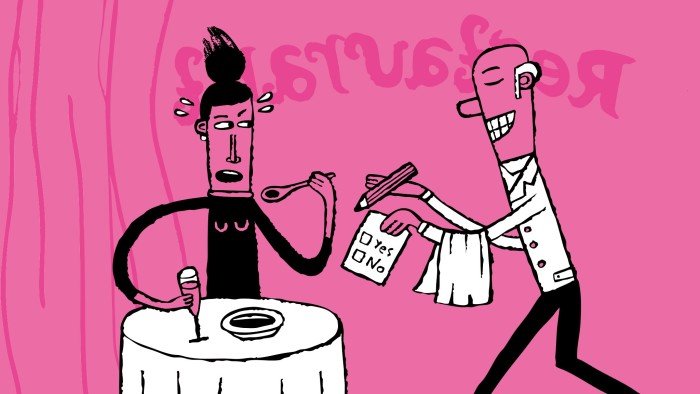
Imagine what would happen if you went into a coffee shop on the way to work where the owner handed over your cappuccino and said: “What do you think of the coffee? Would you recommend our shop? What do you think we could improve? Your feedback is important.”
No one would do this in real life. It makes no sense to do it online either.
