
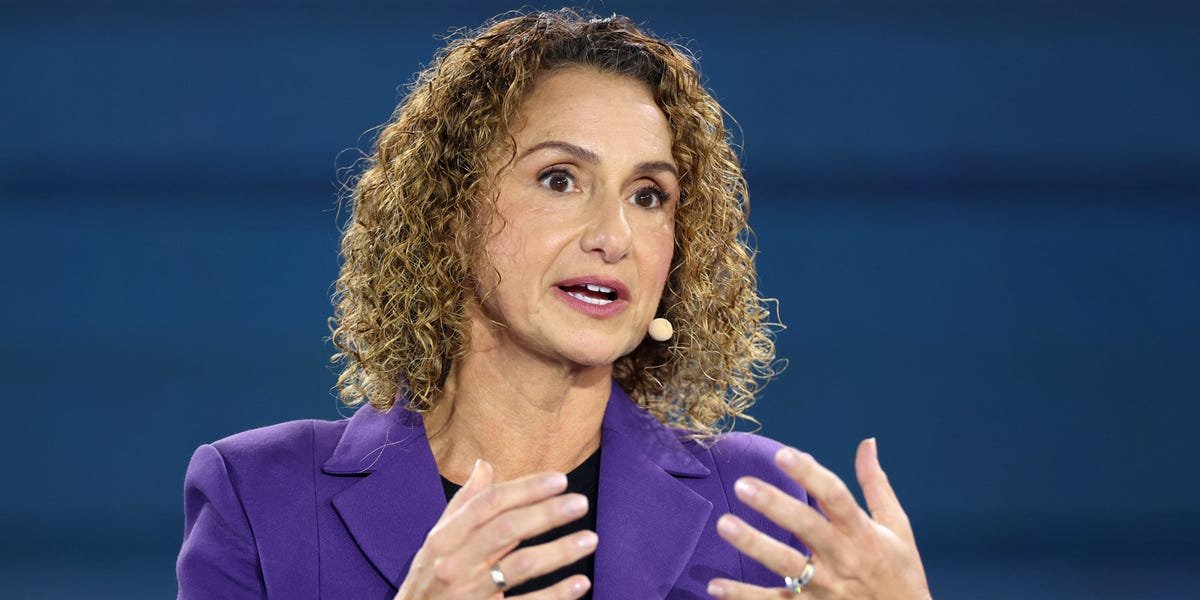
Pay attention, prospective applicants: The graduate candidates Google DeepMind wants to hire are not defined by their degree alone.
At a media lunch in September, Lila Ibrahim, Google DeepMind’s chief AI readiness officer, said that the firm is increasingly looking for candidates who can show a record of learning beyond the classroom.
Whether it’s researchers, engineers, or other roles, degrees still matter, she said, but there’s been a shift toward placing greater weight on the extra credentials and experience on a candidate’s résumé.
“One credential will tell me what you’ve learned, but multiple credentials tell me that you have a learning mindset,” said Ibrahim.
Today’s graduates often showcase more detail about what they have studied outside a formal learning environment on their résumés, alongside their job and education history, she said.
“I look at some of the new college grad résumés and CVs right now, and I’m like, ‘Oh wow, this is so different from what I did in my generation.'”
That additional detail matters to recruiters at Google DeepMind because it can reveal whether a candidate is curious and “preset to a life of lifelong learning,” she said.
Ibrahim said she believes another benefit of diverse learning experiences is that people can become better at asking questions — a capability she sees as valuable in an AI-powered workplace, but one she said isn’t taught well in schools.
“You realize that a lot of people in school haven’t necessarily been taught how to ask questions, how to ask good questions, and how to really question why.”
These human skills matter even if someone is technically skilled with AI, she added. “Getting answers is super cheap these days, but actually knowing how to ask really good questions is getting harder and harder.”
Ibrahim summed up DeepMind’s criteria for applicants as: “Curiosity, courage to take on something completely new that is unpredictable, and the ability to work in a dynamic environment and to be able to collaborate with people.”
Humanities or STEM?
Ibrahim was formerly Google DeepMind’s chief operating officer, a role she had held since 2018. At the beginning of 2026, she became chief AI readiness officer, a role she said she created to help address a widening gap between the technology being built and society’s readiness to receive it.
Google DeepMind’s founder, Demis Hassabis, has been among the frontier AI executives warning that society has a narrow window to prepare for the next stage of the technology.
Chris Jung/NurPhoto via Getty Images
Hassabis has said that STEM and computer science studies remain important, but the AI world also requires the humanities, such as philosophy, economics, and ethics.
“I think we really need them in the world we’re about to enter,” he said during an interview at a London business conference in July.
What Google DeepMind looks for is interdisciplinary people who can collaborate well with others, said Ibrahim.
Having “the neuroscientist, alongside the ethicist, alongside the biologist,” has massively helped with some of DeepMind’s technical breakthroughs, she said. The lab has hired numerous philosophers, she said, adding that “you need to pair them with operators to turn those ideas into action.”
So far, it hasn’t been a challenge to find those skills in the UK, said Ibrahim. “Compared to my time in Silicon Valley over 30 years, what I have seen is more diverse talent because there is a strong appreciation toward philosophy and political science, and some of these other skills.”
As AI has seeped into the everyday workplace, fears of AI-related job loss have somewhat abated. Rather than taking jobs, AI is changing them, and the pressure is now on workers and HR departments to develop the right combination of “human” and AI skills.
A recent study of more than 300 million registered learners on Coursera and Udemy found that companies’ AI deployment is outpacing the skills people need to use it effectively.
While nearly 75% of organizations have deployed or are piloting the technology, only 18% reported that most of their workforce participated in AI upskilling or reskilling over the last year.
