
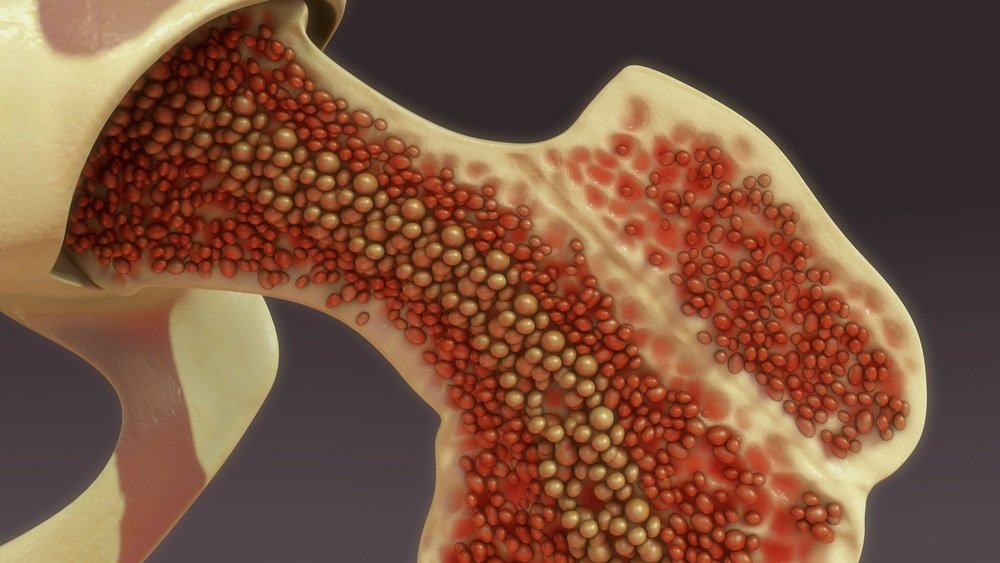
Many years ago, shortly after joining the Marines, I signed up for a bone marrow donor registry. I largely forgot having done so as the years passed until one day in June 2020, when I got a call from my father. He had gotten a call from the registry. (When I had first registered, I didn’t have a cell phone of my own so I just put down my old home phone number as my contact information.) It turned out that I was an ideal match for someone suffering from leukemia and in need of a bone marrow transplant. My father passed the information he collected on to me, and I contacted the registry.
My only conception of how bone marrow transplantation worked came from what I recalled from medical shows – usually involving a gargantuan needle driven into the bone to extract marrow. It turned out this called for a different method. A nurse would come out to my house daily for several days leading up to the donation, to administer filgrastim injections. This, in turn, would cause my body to overproduce bone marrow stem cells that would flood into my bloodstream. I was also advised that common side effects of filgrastim injections were significant muscle, joint, and bone pain, along with headaches, weakness, and nausea. After a week of these injections, I would spend several hours hooked up to what was essentially a dialysis machine that would filter these cells out of my bloodstream and make them available to the person in need.
That all sounded like a lot to go through. Adding to the complications was that this was June of 2020 – still in the early days of the Covid-19 pandemic. I was already cautious about the disease because I was concerned that my past as a heavy smoker might have made me more vulnerable to a respiratory illness. Taking additional risks seemed, well, risky. An even further complication was that my wife and I had just welcomed our firstborn into the world in mid-May of 2020, only a couple of weeks earlier. As any parent can attest, we hadn’t slept more than a couple of hours in a stretch since then. Spending a week experiencing the side effects of these injections, while also keeping up with my job and attending to a newborn, seemed very daunting.
In the end, I decided I’d go ahead and do it. I was already feeling pretty ragged and I’d end up having a rough time leading up to the donation, plus the unpleasantness entailed by the donation process. But I wasn’t dying – and someone else was, and I could help save them. I’m glad I did. But at the time, I was right on the line with my decision. If I had been a little more cautious about Covid and possible complications, a little more exhausted from the newborn phase, a little more worried about the painful side effects of the injections – I could very well have ended up on the other side of the line.
This stage of being right at the line, right at the tipping point of moving from one option to an alternative, is what economists have in mind when we talk about “the margin.” When making that decision, I was the marginal donor – the person who was just over the cusp of being willing to go through with it. The costs were all the complications described above, the benefits were the fulfillment of a general desire to help someone in need. For me, at that time, the benefits just narrowly outweighed the costs. But suppose it hadn’t. Suppose my general desire to help people was a bit lower, or I had weighted any or all of those costs a bit more heavily at the time. In that case, I would have just barely been on the other side of the line. Almost willing to donate, but not quite. In that kind of case, you know what would have made a difference and tipped the balance toward donation? The prospect of being paid.
If my willingness to donate had only just barely fallen short, then only a small payment offered would have been enough to push me over the line towards donation. If my reservations were stronger, it would have taken a bigger payment. And so on.
In the United States, being paid to donate an organ is against the law. Everyone else involved in the procedure – the hospital and medical staff, for example – can be paid for their part in, say, a kidney transplant, but if the person actually losing a kidney receives any compensation for their part in the process, then a crime has been committed. As a result, kidneys can only be given by donors willing to do it for free. The number of such people is not zero – Scott Alexander is one such person – but the number is demonstrably much, much lower than the number of kidneys needed by sick people. This is why there is a huge backlog of people waiting for a donor kidney, with thousands of them dying each year before a donor can be found.
The number of people out there with Scott-Alexander-levels of altruism isn’t enough. But what about people who are right at the edge of the line? People who are almost, but not quite, altruistic enough to donate a kidney for free. For these people, only a small payment offered would be needed to move them over the line, from not quite willing to donate to willing to donate. And as those people cross the line, there will be a new batch of people who are just barely on the side of this new line. People whose altruism combined with a small payment is almost but not quite enough to make them willing to donate. If after a small payment is offered there are still more people needing kidneys than there are willing donors, the price can go up and bring this next group of people just over the line. This process could keep going until the price is high enough that the last needed person crosses the line of “not quite willing” to “just barely willing” – that is to say, the final price for donor kidneys will ultimately be set at the margin.
According to this website, as of September 2024 there were about ninety thousand people waiting for a kidney transplant in the United States. About a dozen of them will die waiting any given day. The previous year had seen a total of about 27,000 kidney transplants occur. That’s a shortfall of over 60,000 kidneys. The question is, how high would the price have to be to move 60,000 people from being just barely unwilling to donate, to being willing? It might be lower than you suspect. Even if most people wouldn’t consider donating a kidney for less than a million dollars, prices aren’t set by what most people want. Prices are set at the margin. Because of this, the payment would only need to be high enough to motivate the 60,000 people already most inclined to donate, starting with the people who are only just barely unwilling to donate for free. It wouldn’t surprise me if the payment needed to fill the gap turned out to be fairly small.
Many people dislike the idea of paid organ donation. Debra Satz raises a number of objections to the idea in her book Why Some Things Should Not Be For Sale: The Moral Limits of Markets. It’s a perfectly fine book. But none of its arguments have anywhere near enough force to overcome the simple fact that today, a dozen people will die waiting for a kidney. Another dozen tomorrow, and the day after that, and on Christmas, and every other day until we get more kidneys. Against that, all of Satz’s worries about “repugnant transactions” are but a tempest in a teacup.
