
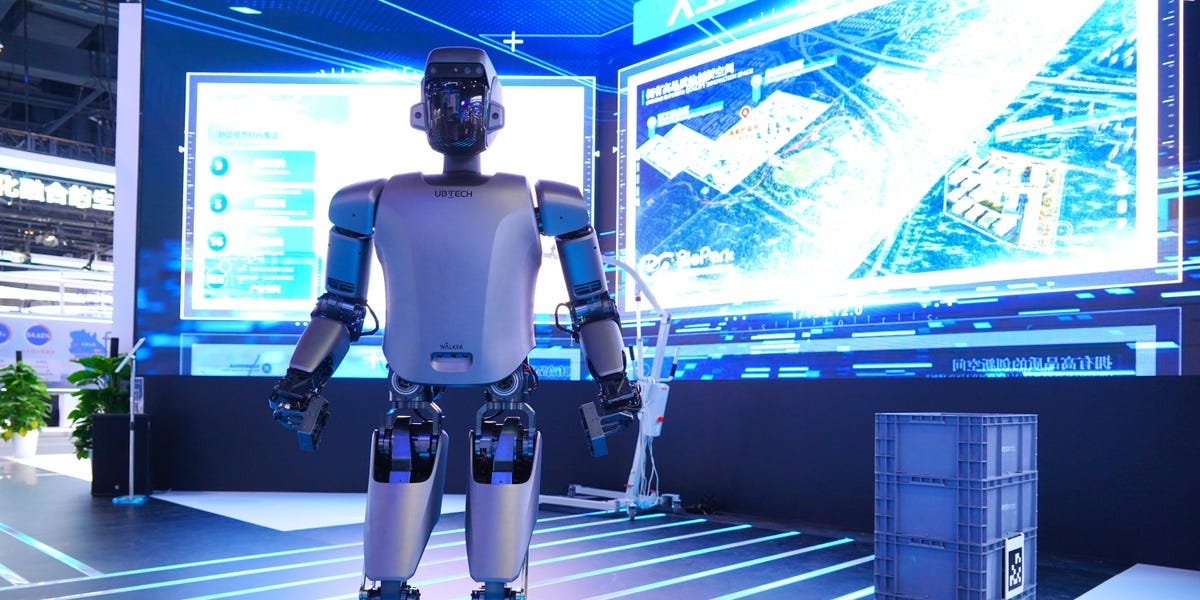
The AI talent war is spreading to robotics.
Chinese humanoid robotics startup UBTech announced this month that it was seeking a new Chief Scientist with a maximum salary of 124 million yuan ($18 million), per a translated job listing.
The top-end pay sits some way below the most eye-watering earnings offered during the scramble for AI talent, with Meta and OpenAI previously accusing each other of trying to poach star talent with paydays of up to $100 million.
But it marks a departure for China’s fast-growing AI and robotics industries, which have until now appeared to avoid the vast payouts that have shaken up Silicon Valley — signaling that China is becoming more aggressive in attracting top-end talent.
UBTech was founded in 2012 and has grown into one of China’s most prominent humanoid robot companies.
The Shenzhen-based startup’s main product is the 5-foot-9 Walker S2 humanoid robot, which, like Tesla’s Optimus robot, is designed to operate autonomously and work in factories. UBTech said earlier this year it struck a deal with Airbus to test its Walker S2 humanoids on factory production lines.
In a job listing posted this month, UBTech said the salary range for the position of “Chief Scientist of Embodied Intelligence” would span from 15 million to 124 million yuan ($2.2 million to $18 million).
The executive will be responsible for accelerating UBTech’s humanoid robotics push into manufacturing, services, and “family companionship,” per the translated job listing.
Chinese firms appear to be ahead in deploying humanoid robots, with nearly 90% of global shipments last year coming from Chinese companies, according to data from research firm Omdia.
Locally built robots also played a major role in China’s Spring Festival, a major public showcase of the country’s most cutting-edge tech, with humanoids from Unitree performing kung-fu and acrobatics.
Elon Musk said in a January earnings call that the biggest competition for Tesla’s Optimus robot will come from China — although he said he expects Optimus, which begins mass production this year, to outperform any robot under development in China.
