
Unlock the Editor’s Digest for free
Roula Khalaf, Editor of the FT, selects her favourite stories in this weekly newsletter.
The writer, author of ‘How to Be a Better Leader’, is a visiting professor at Bayes Business School at City, University of London
“That is a useful ball in . . . Pascal Soriot is unmarked at the far post . . . great header! One nil to AstraZeneca.”
Fantasy Football never went this far. But last week Lord Michael Spencer, founder of the brokerage ICAP, suggested chief executives should be aligned with Premier League footballers in terms of what they are paid.
“We don’t mind paying our footballers, top-rate footballers, extraordinary amounts of money,” Spencer said. But when similar figures are proposed for UK-based CEOs “everyone jumps up and down saying this is an outrage.”
The context for his remarks is a concern that top pay in the FTSE 100 lags behind the US, leading to a loss of talented leaders from corporate UK. Median pay for CEOs in the S&P 500 stood at $16mn last year. The equivalent figure in the FTSE 100 was £4.1mn — albeit many US companies are much larger.
Those who lead public companies have big jobs with big responsibilities. But Spencer errs when he tries to make a connection between the performance of top sports stars and the work done by corporate executives. There is no like-for-like comparison.
Football fans can see very clearly how well their team is playing, and who is making what contribution to success or failure. With CEOs, it is much less clear. Of course leadership matters. But in a large, complex organisation, hundreds and even thousands of people make a crucial contribution. The disproportionately vast reward for one person at the top has more in common with the realm of fairy tales than hard-headed performance management. It also flies in the face of more than three decades of debate over corporate governance and how best to lead and manage businesses.
In the post mortems carried out after corporate scandals of recent years, blame has often been found to lie with over-mighty or dictatorial CEOs, who were not sufficiently checked or balanced by other senior colleagues. The antidote? Collective leadership and shared responsibility, not a continuation of the myth of the heroic soloist boss. “Leadership is a team sport,” as Manfred Kets de Vries, a distinguished professor at INSEAD, reminded me at the annual Drucker Forum in Vienna last month.
In truth, CEOs have little in common with sports (or movie) stars. For one thing, corporate results are affected by a range of factors, some beyond anyone’s control. If you find yourself in a “hot” sector, or selling a commodity whose price has shot up, congratulations. Share price-linked pay will shoot up as well.
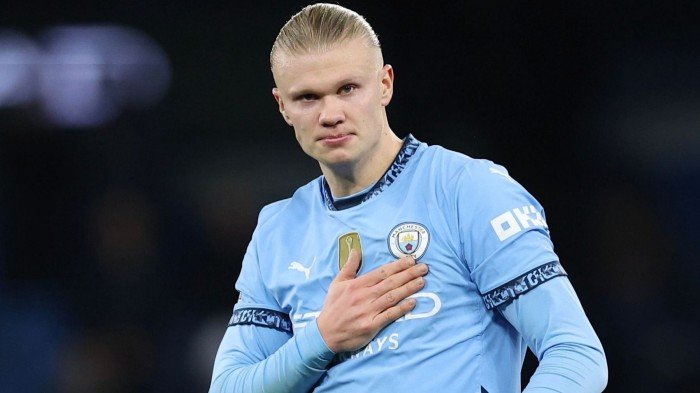
Luke Hildyard, director of the High Pay Centre, a think-tank that studies these matters, summed it up when he noted that four of the five largest pay increases awarded to FTSE 100 CEOs last year were made by companies in the oil and gas or arms manufacturing industries, which benefited from Russia’s invasion of Ukraine. “It’s not serious to suggest the performance of these companies was driven by the leadership of the CEOs in the same way that Manchester City’s success was contingent on Erling Haaland’s 52 goals,” he observed.
The differences go deeper. Football supporters follow the successes of individual players and are invested in the ups and downs of teams, “because often they feel it is their club,” says John Curran, an organisational development consultant, professor and season-ticket holder at Premier League football club Crystal Palace.
CEOs, on the other hand, are “not rewarded with the same status”, he observes, as “they are not front of mind of the employee”. Or customers or clients, for that matter. While some top “celebrity” CEOs have become more visible — and accessible — to stakeholders, most are fairly anonymous. As Curran puts it: “They lurk in the distant space of detached power — the boardroom — and away from reality.”
There is another flaw in Spencer’s argument. FTSE 100 CEOs are already doing better than Premier League footballers in terms of pay. The average annual salary of Premier League players is about £2.1mn, according to Financial Times research, around half what the average FTSE 100 boss receives.
Given that, shareholders may do well to adopt an accountability measure from the world of football. If they feel a CEO is not earning their rewards, they could repeat the chant that echoes around terraces when a superstar signing fails to match the hype. “What a waste of money!”
