

Canada is moving quickly to finalize long-awaited rules for stablecoins ahead of its federal budget announcement on November 4, as policymakers rush to keep pace with the United States and prevent a loss of financial sovereignty amid rising use of U.S. dollar-backed tokens.
According to Bloomberg, government officials have spent weeks holding closed-door consultations with regulators and industry stakeholders to develop a regulatory framework for stablecoins.
The rules are expected to be outlined in the upcoming budget to be presented by Finance Minister François-Philippe Champagne.
Officials familiar with the discussions said the government is now working toward addressing stablecoin oversight directly in the budget documents.
The move comes amid growing concern from policymakers, market participants, and economists that Canada is falling behind other major economies, particularly the United States, in establishing clear rules for the stablecoin industry.
Ottawa Urged to Act on Stablecoin Rules or Risk Losing Capital to U.S.
Stablecoins, cryptocurrencies pegged to traditional currencies like the U.S. dollar, have grown into a central part of the global digital payments ecosystem.
They are often issued by private companies such as Tether and Circle and backed by assets like U.S. Treasury bills to maintain price stability.
The United States recently passed the GENIUS Act, granting regulators the authority to supervise stablecoin issuers, set reserve standards, and enforce anti–money laundering rules.
The new law classified compliant stablecoins as payment instruments, giving the U.S. a clear framework that the industry has widely embraced.
In contrast, Canada still lacks dedicated legislation. Regulators have said stablecoins could fall under existing securities or derivatives laws, but industry experts argue they should be treated as payment instruments instead.
John Ruffolo, vice chair of the Council of Canadian Innovators, has urged Ottawa to act swiftly, warning that inaction could push capital south of the border.
Without a clear framework, he said, Canadian investors and savers may increasingly turn to U.S. stablecoins to transfer funds internationally, effectively enriching American institutions and shifting financial data and liquidity outside the country.
Data from Desjardins supports that concern. Foreign exchange strategist Mirza Shaheryar Baig noted that roughly 99% of global stablecoin value is pegged to the U.S. dollar.
Since the GENIUS Act requires issuers to hold primarily U.S. Treasuries, he said, foreign adoption is fueling new and sustained demand for U.S. debt.
Baig warned that widespread use of U.S. dollar stablecoins in Canada could weaken the country’s monetary sovereignty and reduce the Bank of Canada’s control over its money supply.
The central bank itself has echoed the urgency. Ron Morrow, the Bank of Canada’s executive director of payments, supervision, and oversight, said in September that Canada must “weigh the merits of federal stablecoin regulation, similar to what other countries have done.”
Morrow warned that for stablecoins to function as real money, they must be “as safe and stable as the balance in your bank account.”
The Office of the Superintendent of Financial Institutions (OSFI) has also expressed concern over the lack of regulatory clarity, calling for consistent national rules.
Can New Rules Keep Canada Competitive in the Digital Payments Era?
The absence of legislation has already begun to show economic consequences. A Desjardins report in October cautioned that Canada risks falling behind the U.S. and Europe, both of which have implemented stablecoin frameworks.
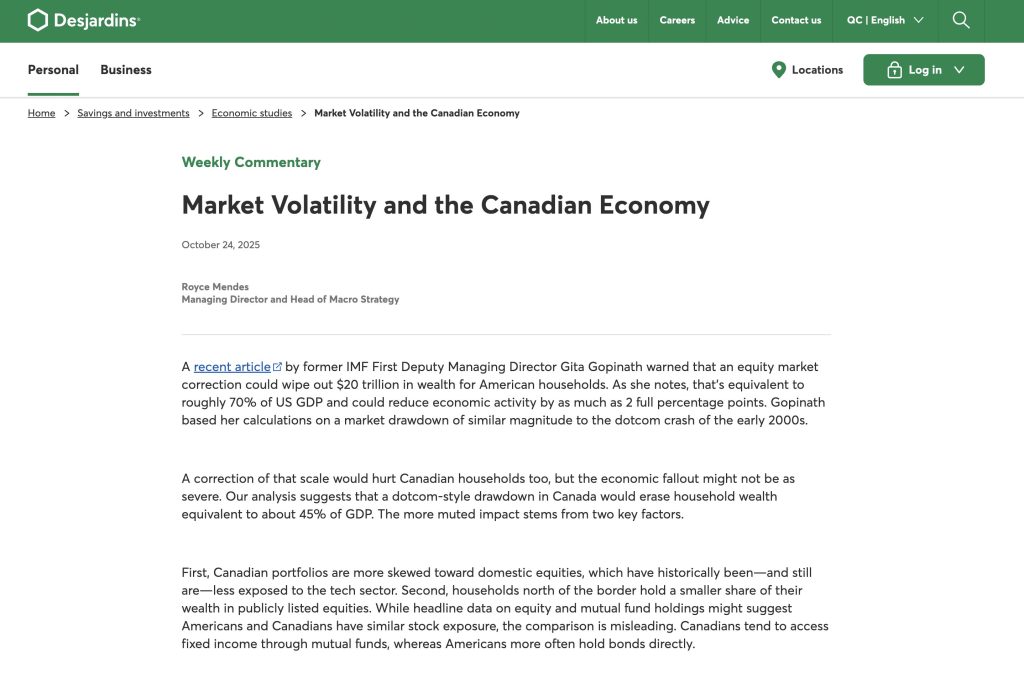
The report also linked Shopify’s recent move to accept payments in USDC, a dollar-pegged stablecoin, to the growing attractiveness of U.S. digital payment systems.
While a few domestic projects, such as QCAD and CADC, have introduced Canadian dollar–backed stablecoins, their adoption remains limited due to uncertainty over compliance and licensing requirements.
Tetra Trust, a regulated Canadian custodian backed by National Bank and Shopify, plans to launch its own CAD-backed stablecoin in 2026, but experts say progress will remain slow until federal rules are established.
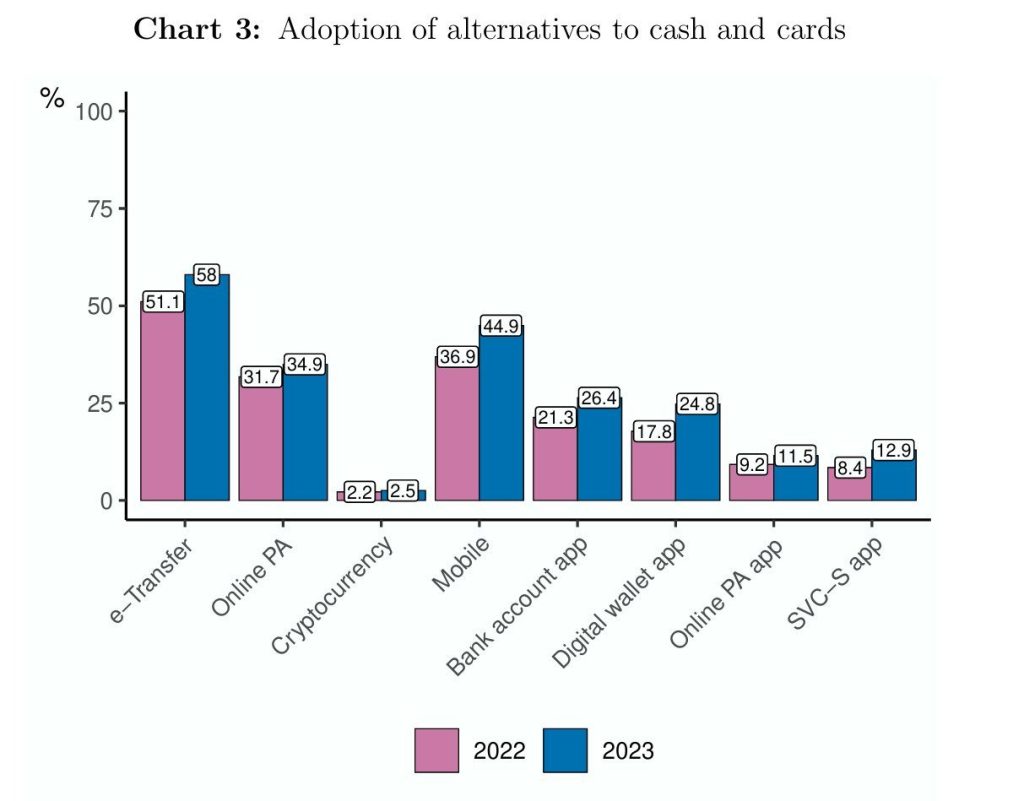
Canada’s crypto adoption rate remains moderate compared to global trends. According to the Bank of Canada’s most recent “Methods-of-Payment” report, only around 3% of Canadians used Bitcoin for transactions in 2023, while cash accounted for 20% of all purchases.
E-transfers remain the country’s most popular payment option, used by nearly 60% of respondents.
Despite this, Canada remains an early hub for crypto infrastructure, hosting over 3,000 Bitcoin ATMs, the second-largest number in the world.
Institutional interest in digital assets has also grown. A 2024 KPMG survey found that 39% of Canadian institutional investors had some exposure to crypto, up from 31% in 2021.
Many industry participants view regulatory clarity as key to maintaining that momentum.
Coinbase, one of the world’s largest exchanges, has warned that without reform, Canada risks losing its competitive edge.
@coinbase warns Canada risks losing its global economic edge without crypto reforms, urging innovation-friendly regulations to harness the potential of digital assets and maintain competitiveness.#canada #cryptohttps://t.co/xy66i2EN0L
— Cryptonews.com (@cryptonews) March 27, 2025
The federal government’s fragmented regulatory structure, split between federal agencies, the Bank of Canada, OSFI, and 13 provincial securities commissions, has slowed policymaking.
Advocates hope the upcoming budget will unify these efforts and provide a coherent framework for stablecoins similar to the U.S. approach.
The issue also carries political weight. With an election on the horizon, the Liberal government faces pressure to demonstrate progress on financial innovation.
Prime Minister-designate Mark Carney, a former Bank of England and Bank of Canada governor, has previously expressed skepticism about cryptocurrencies, though he has acknowledged in his book Value(s) that central bank–issued digital currencies could represent “the most likely future of money.”
The post Canada Races to Finalize Stablecoin Rules Before Budget Reveal – Why? appeared first on Cryptonews.
