
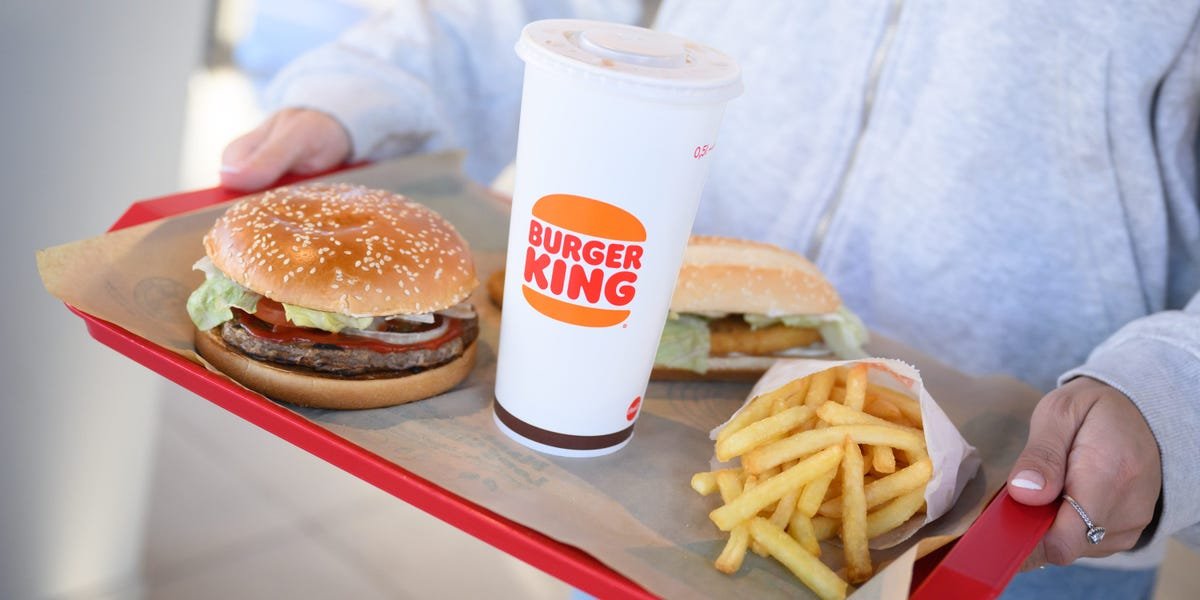
Burger King is tweaking its Whopper — and the changes don’t just freshen a decades-old recipe; they also reposition its flagship product as part of the fast-food industry’s broader premiumization push amid years of value wars.
The chain is betting that highly visible upgrades — including what a press release described as “a more premium, better tasting bun,” and packaging designed to prevent the dreaded squish — can compete against its fellow quick-service restaurants as diners increasingly demand both quality and value.
The changes mark the first meaningful refresh of the Whopper in nearly a decade and came as a response to a campaign that allowed customers to call or text Burger King US and Canada president Tom Curtis directly.
Curtis heard those calls and told Business Insider the company received nearly 20,000 voicemails and texts, with the Whopper “consistently one of the top topics,” underscoring how central it remains to the brand’s identity.
A battle between value and quality
The fast-food industry has been locked in an intense value war that has intensified since the summer of 2024 as inflation and economic pressures pushed consumers to seek the lowest-priced options. However, as chains lean into discounts, they also face a ceiling: consistently cutting prices can erode margins and dull brand appeal.
In response, competitors have begun pushing premium upgrades to core menu items.
McDonald’s has tweaked its burgers — with changes like cooking patties in smaller batches, glaze-like sauces, and richer buns — as part of its broader menu refresh and McValue strategy. Taco Bell’s Luxe Cravings boxes and premium limited-time offerings signal a similar attempt to mix higher-end cues with value structures. Wendy’s has spiced up its lineup with elevated sandwiches, such as the Mushroom Bacon Burger, and premium nugget varieties amid its ongoing value promotions.
Burger King’s Whopper upgrades fall right in line with the trend. Curtis framed the move as refinement, not reinvention.
“Guests today expect higher-quality execution without losing the familiarity of their favorites,” Curtis told Business Insider. “These changes are about elevating the experience and maintaining the core attributes that make the Whopper a category leader. It’s a reflection of rising consumer expectations across the industry.”
Reinventing a classic is risky
“Anytime a brand changes its most iconic product, there is risk,” Kelly O’Keefe, founding partner at Brand Federation, told Business Insider, pointing to New Coke as a cautionary tale: “consumers were furious, and the new product was killed faster than a new Cracker Barrel logo.”
Still, he said, ignoring evolving expectations can be just as dangerous.
“In the burger category, premium players like Five Guys and Shake Shack are thriving, and Burger King is playing catch-up,” O’Keefe said. “If they don’t stray too far from what their customers love about a Whopper, I think this could be very successful.”
Asit Sharma, an analyst at The Motley Fool, said his immediate reaction to the Whopper changes was: “What took you so long?!”
He pointed to McDonald’s 2023 efforts to refresh the Big Mac — including steps to improve texture, sauce quality, and buns — as evidence that even the biggest chains see premiumization as table stakes.
Sharma also suggested that Burger King’s narrative about listening to fans likely intersects with franchisee pressure, noting that, by parent Restaurant Brand International’s admission, the development process took years. Curtis didn’t dispute franchisee involvement, saying franchisees “were an important part of this process,” and adding that their operational input helped ensure the changes could be executed consistently.
Analysts say that premiumization, when done right, can help brands protect traffic and pricing power even as consumers remain value-focused. Sharma described the dynamic as a potential “glass half-empty” defensive move — one that prevents customers from moving to higher-end competitors — or a “glass half-full” opportunity to draw in diners who are trading down but still demand quality.
“Substituting a few ingredients for the trappings of a more premium burger (including cardboard packaging) is a way to entice more affluent customers who may be trading down in a tough economy,” Sharma said.
Mike Perry, founder of the creative agency Tavern, which has worked on rebranding efforts with companies including Burger King, described the clamshell-style box as “the most innovative thing they’ve done” because it signals care and structure that customers remember from earlier eras of fast food.
For Burger King, Curtis said the company is “more excited than ever” to act on what it heard through its feedback initiative, adding that the Whopper is the first of what the brand anticipates will be many “thoughtful updates” to the menu over time.
If the bet works, Burger King could demonstrate a path forward for legacy fast-food brands trying to thread a needle: keep the value-minded core, win back lapsed customers who’ve traded up, and do it all without breaking the emotional contract customers have with an icon.
