
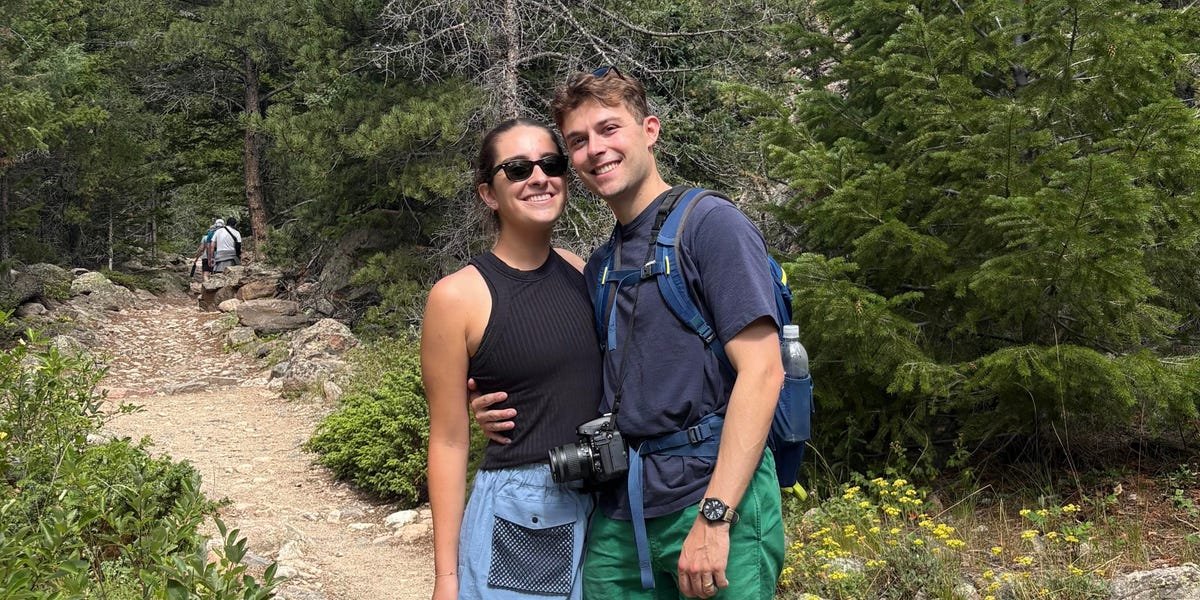
I never thought I’d live outside the UK, where I’d lived my whole life, until I met my future wife at the University of Cambridge.
We were both pursuing master’s degrees, and were introduced during orientation day. We got along instantly and started dating in November 2019. A few months later, in 2020, the COVID pandemic hit, and we had to evacuate the university for our hometowns: me to Wales and her to Philadelphia.
Long distance became our grueling reality for the next four years, while she was in NYC, and I was in London. We facetimed regularly, sometimes multiple times a day, but only saw each other a few times a year. In 2022, she moved from NYC to Chicago to pursue a PhD at Northwestern University. We got married two years later, and I was granted a pathway to stay in the US as a green card holder, exchanging much of my UK life for a new adventure in Chicago.
It was exciting at first, but when the newness tapered off after about 6 months, I realized I was living in a place with no established friend group or professional network. Faced with the quiet uncertainty of starting over, I realized I needed to make new friends and communities to feel more settled.
During that journey, three things helped me feel like I belonged in the US.
1) I found a sport I loved, and my teammates became a vital support system
When I got to the US, my wife’s friends were incredibly welcoming, so it was easy to lean into them at first. But thanks to my thick accent, I was always referred to as “British guy,” which, though amusing, didn’t really give me a feeling of belonging.
To build my own identity, I needed to find other communities, and my first instinct was to look to sports. I’d played team sports since I was 5, and found it a helpful way to build camaraderie and make friends.
I used Google and recommendations from friends to find sports leagues near me in Chicago. I tried volleyball, kickball, and pickleball, but instantly fell in love with softball and joined a local team. While learning a new sport was challenging, my teammates helped me through the transition. Soon enough, I was a slow-pitch slugger.
Having a fixed game on the calendar every Sunday gave me structure. And on the sports field, I wasn’t “the British guy” trying to fit in. I was just a teammate trying to win as we sweated, competed, and celebrated together. My teammates provided a vital support system that made transitioning to life in the US feel seamless and welcoming.
2) I pushed myself at work and proved that I didn’t need to compromise my ambition
While many aspects of the US were entirely new for me, like the grocery stores, street signs, and, in my opinion, driving on the wrong side of the road, my career was thankfully a familiar and stable anchor.
In the UK, I worked remotely as a senior SEO and content manager for a North American medical school admissions consulting company. I could work from anywhere, and living in the US allowed me to be in the same time zone and culture as the majority of my team.
I’m grateful to have bypassed the stress of a stateside job hunt. Because I wanted to root myself in the North American SEO industry and build a strong professional identity, I pushed myself to take on more responsibility. I got promoted to a director-level SEO role within a year, and this achievement made me feel confident that while my wife was focusing on her PhD, I was doing everything I could to advance my own career. It was proof that building a life in a new country didn’t mean compromising my ambition.
3) I found opportunities to stay connected to my British roots
I’ve grown to love my life in America, but sometimes I find myself missing the UK and craving a proper cuppa (British slang for tea).
In January 2026, I went to a networking event hosted by the British American Business Council (BABC), an organization that connects transatlantic business professionals.
At the event, I made several LinkedIn connections and learned how other Brits adjusted when they moved to the US. It was refreshing to laugh and vent about the exhausting paperwork and culture shocks of relocating.
Only after the event ended did I realize that it was more than just a networking opportunity. I’d stumbled on a micro-community of Brits who’d gone through the same trans-continental struggles I had, and they were more than willing to share their experiences, while also offering support and a patient ear.
I’ve attended several events by the BABC, and it’s a community I now cherish, not only enabling me to meet peers in my field, but to share a few pints of London Pride ale and not have to explain the rules of cricket for at least one evening.
Moving countries doesn’t have to mean losing your identity
Now that I feel somewhat settled in the US, I’ve proven to myself that building a shared future abroad with your loved one doesn’t have to mean losing your own identity or becoming the “trailing spouse.”
I’ve found my confidence, but it required putting myself out there and seeking out opportunities and communities. Along the way, I’ve learned that when you have an open mind and step outside your comfort zone, people will be willing to accept you and help you grow, even if you have to convince them that chips go with fish, not dip.
