
Smartphone and PC makers are facing supply-chain pressures from the new kid on the block: AI companies.
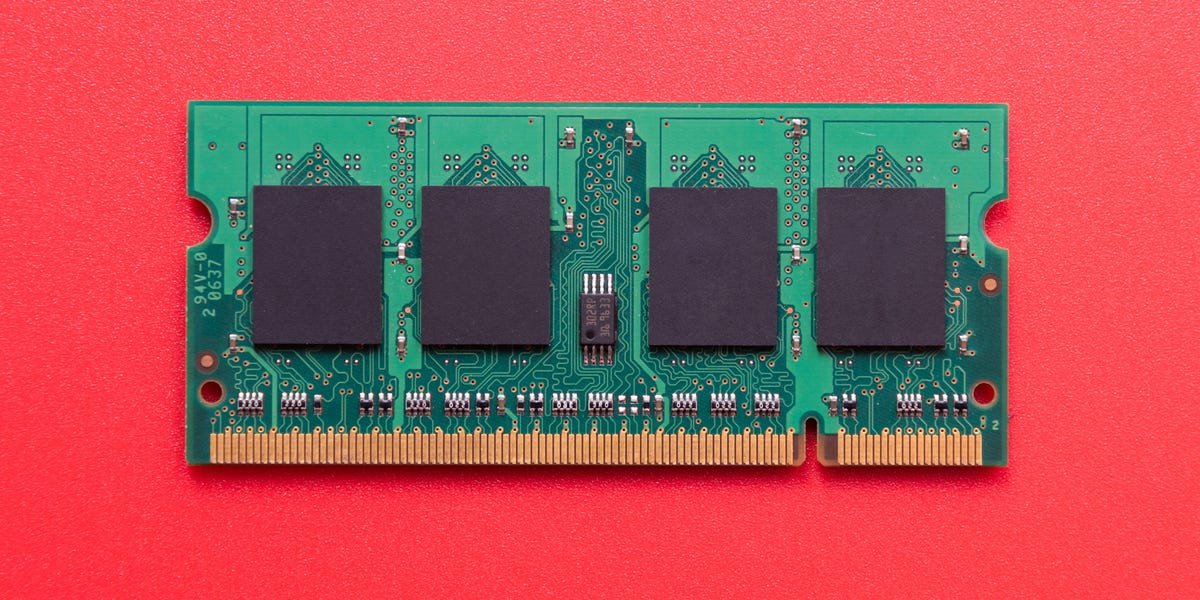
Memory chips are crucial for the production of consumer devices (if you’ve ever bought a laptop, you’ve probably selected how much DRAM, or dynamic random access memory, it has). However, AI companies also require chips to power their large language models — which also use memory, often in much larger quantities than those needed for individual devices.
That’s contributing to a widespread memory shortage, one that analysts predict will create headwinds and pricing pressure for the smartphone and PC markets.
In December, research firm IDC predicted that supply growth of the two most important memory chips for devices, DRAM and NAND, would be below historical norms in 2026.
“The memory market is at an unprecedented inflexion point, with demand materially outpacing supply,” IDC analyst wrote. “For an industry that has long been characterized by boom-and-bust cycles, this time is different. The rapid expansion of AI infrastructure and workloads is exerting significant pressure on the memory ecosystem.
“For consumers and enterprises alike, this signals the end of an era of cheap, abundant memory and storage, at least in the medium term,” they added.
Why are we in a memory shortage?
Narumon Bowonkitwanchai/Getty Images
Samsung, SK Hynix, and Micron dominate the production of the memory chips used in consumer devices. Those three firms also produce high-bandwidth memory (HBM) chips, which are crucial for building large language models.
And while the smartphone and PC market has provided those chipmakers with steady business, it’s no secret that the AI market is full of big spenders. OpenAI has committed roughly $1.4 trillion to data center projects over the next eight years. Meta projected that its 2025 spending on AI infrastructure would reach $70 billion to $72 billion on its third-quarter earnings call. Google is expected to incur capital expenditures of between $91 billion and $93 billion for the year.
The sheer scale of AI companies may also give them an edge. Securing compute for an LLM requires significantly more chips than personal devices, the IDC report said, making companies like Microsoft and Meta “hyperscalers.” In short, AI companies will place bigger orders.
This has all led to an environment where the big three memory companies are selling more of their DRAM and NAND chips to AI makers or pivoting to producing HBM chips. That means tighter supply for the device makers, which can translate into increased consumer prices.
How will the shortage affect smartphones and PCs?
IDC predicts that the shortage will pummel the device market.
Consider the global smartphone market. In its November 2025 forecast, IDC predicted that the market would contract 0.9% in 2026. In the December update, it forecast a “moderate scenario” (a 2.9% contraction) and a “pessimistic scenario” (a 5.2% contraction) for the new year.
For the global PC market, IDC in November initially predicted a 2.4% contraction for 2026. In December, it projected a “moderate” contraction of 4.9%, with a “pessimistic” contraction of as much as 8.9%.
Memory chip prices were already high. For a mid-range device, IDC wrote, memory can represent 15-20% of the total cost. As prices rise and supply tightens, it also means your phone or laptop will likely get more expensive unless companies decide to eat the cost increase. IDC predicted a rise in smartphone and laptop prices of up to 8% each in the most pessimistic scenario.
Those price hikes are already happening. Earlier this month, Business Insider reported that Dell was planning a price hike in response to the shortage. The increases ranged from $55 to $765 for top-of-the-range memory.
“Global memory and storage supply are tightening fast,” Dell warned its go-to-market team members in an email viewed by Business Insider.
On Wednesday, Taiwanese device company ASUS announced a price hike, citing cost pressures on DRAM. Earlier in December, PC company Framework increased the prices of its DDR5 memory modules, citing a “period of extreme memory shortages and price volatility.”
High-end giants like Apple and Samsung are likely to be better off, IDC predicted, because they have hedged with cash reserves and long-term supply agreements.
Who’s benefiting? The chipmakers, of course. Micron pulled out record earnings earlier this month, signaling strong demand ahead.
