
Stay informed with free updates
Simply sign up to the Artificial intelligence myFT Digest — delivered directly to your inbox.
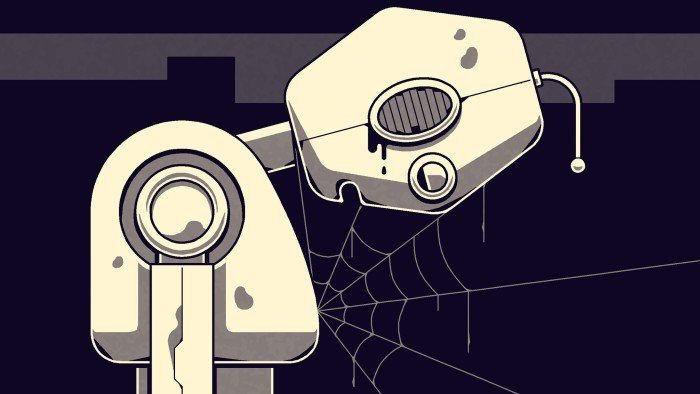
Pepper the humanoid robot was born in 2014. It enjoyed a brief wave of hype, including a visit to the Financial Times to meet the editor. “This is a robot that behaves autonomously, powered by love,” declared Masayoshi Son, the head of its main backer, SoftBank. Alibaba and Foxconn also invested hundreds of millions in the effort to make robotics a ubiquitous part of daily life. Yet it was not to be. You still find the occasional Pepper in a public library in Japan, unplugged, its head bowed, like a four-foot tall Pinocchio that dreamt of becoming a real boy but never did. Production halted in 2021 and only 27,000 units were ever made.
Yet the vision of humanoid robots — of machines so like ourselves they can perform all the work we do not want to — is too alluring to abandon for long. The recent, dramatic advances in artificial intelligence have spurred a new wave of enthusiasm for robotics. “The next wave of AI is physical AI. AI that understands the laws of physics, AI that can work among us,” said Jensen Huang, chief executive of chip designer Nvidia, earlier this year. Nvidia has ridden the boom in training AI models to become the world’s second-largest company by market capitalisation.
Billions of dollars in venture capital are pouring into robotics start-ups. They aim to apply the same kind of model training techniques that let computers forecast how a protein will fold or generate startling realistic text. They aim, first, to let robots understand what they see in the physical world, and second, to interact with it naturally, solving the huge programming task embodied in as simple an action as picking up and manipulating an object.
Such is the dream. The latest round of investors and entrepreneurs, however, are likely to end up just as disappointed as those who backed Pepper. That is not because AI is not useful. Rather, it is because the obstacles to making an economically viable robot that can cook dinner and clean the toilets are a matter of hardware, not just software, and AI does not in itself address, let alone resolve them.
These physical challenges are many and difficult. For example, a human arm or leg is moved by muscles, whereas a robotic limb must be actuated by motors. Each axis of motion through which the limb must move requires more motors. All of this is doable, as the robotic arms in factories demonstrate, but the high-performance motors, gears and transmissions involved create bulk, cost, power requirements and multiple components that can and will break down.
After creating the desired motion, there is the challenge of sensing and feedback. If you pick up a piece of fruit, for example, then the human nerves in your hand will tell you how soft it feels and how hard you can afford to squeeze it. You can taste whether food is cooked and smell whether it is burning. None of those senses is easy to provide for a robot, and to the extent they are possible, they add more cost. Machine vision and AI may compensate, by observing whether the fruit is squashed or the food in the pan has gone the right colour, but they are an imperfect substitute.
Then there is the issue of power. Any autonomous machine needs its own energy source. The robot arms in factories are plugged into the mains. They cannot move around. A humanoid robot is most likely to use a battery, but then there are trade-offs with bulk, power, strength, flexibility, operating time, usable life and cost. These are just some of the problems. Many clever people are working to solve them and they are making progress. But the point is that these are physical challenges, long-standing and difficult. Even a revolution in AI does not make them go away.
What, then, does AI make possible in the physical world? Rather than imagine how the technology will allow new machines, it is more practical to imagine how existing machines will change once AI is applied to them.
The obvious example is self-driving vehicles. In this case, the machine does not need to change at all: a car’s movement through the physical world and its power source will work as they always have, while the sensing involved in driving a car is almost entirely visual. With the new vogue for AI, the hype cycle for autonomous vehicles has died down. It should actually be the opposite: self-driving is a vast market and it is the real-world challenge AI can most easily tackle, a point that anybody tempted to invest in other applications to robotics should ponder.
It also makes sense to think about how the robots that already exist — from industrial robotic arms to robot vacuum cleaners — will evolve. AI-powered machine vision will subtly increase the range of tasks a robotic arm can perform and make it safer for them to work alongside humans. Lightweight, single-purpose devices such as robot vacuum cleaners will gradually become more useful. In Chinese hotels, for example, it is already quite common to have a robot bring deliveries to your room. That kind of limited and controlled autonomy is the most easily delivered.
In this way, AI will slowly advance us closer to androids. As for a robot like Pepper that can clean the toilet — sadly it is far easier to make one that writes bad poetry, and that is unlikely to change any time soon.
robin.harding@ft.com
