
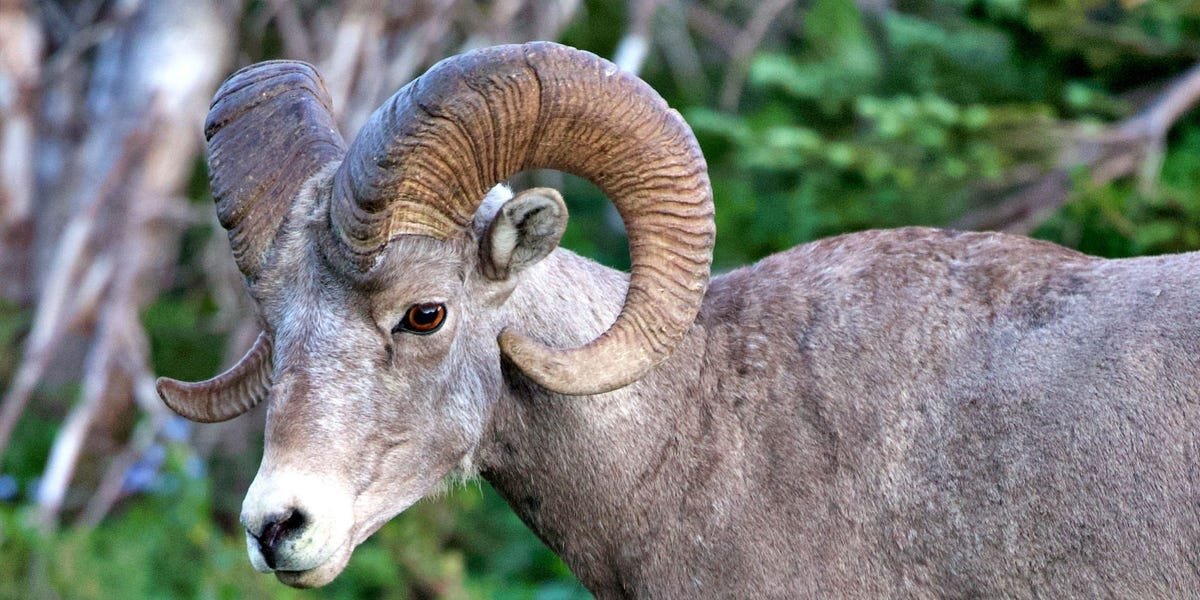
An 80-year-old Montana rancher, Arthur “Jack” Schubarth, had a lucrative business going until authorities got wind of it.
For the last five years, or so, Schubarth has been selling sheep for tens of thousands of dollars.
There’s nothing illegal about selling sheep for exorbitant prices — unless those animals are Marco Polo argali sheep, or in Schubarth’s case, hybrids of Marco Polo argali sheep.
Marco Polo argali sheep are native to central Asia and are considered threatened under the US Endangered Species Act. Montana law prohibits importing, possessing, and selling them.
On Tuesday, Schubarth pleaded guilty to charges in a scheme that involved all three.
His sentencing is scheduled for July and he faces up to five years in prison and a fine of up to $250,000 for each of the two felony counts against him.
The US has wildlife protection laws
It all started in 2013 when an unnamed party illegally imported Marco Polo argali sheep parts to the US from Kyrgyzstan, according to court documents.
Shortly thereafter, Schubarth allegedly got his hands on some of those sheep parts and, in 2015, paid a deposit of $4,200 to produce cloned sheep embryos from the dead argali’s remains.
In May 2017, a pure argali sheep was born from one of those cloned embryos. Schubarth named him Montana Mountain King.
Mountain King would be Schubarth’s golden goose in a lucrative business scheme to create larger, more attractive sheep for (mostly) Texan hunting farms, according to court documents.
In 2018, Schubarth harvested Mountain King’s sperm, which he used to artificially inseminate bighorn ewes (female sheep) on his farm to create hybrid offspring.
Over the next several years, Schubarth, with several unnamed parties, illegally transported dozens of ewes and their hybrid offspring across state lines.
In the process, they are accused of forging vet inspection certificates and lying that the sheep were a legally permitted species, according to court documents.
Sheep worth tens of thousands of dollars
Marco Polo, a subspecies of argali sheep, is “an almost mythical animal” prized by trophy hunters for its large spiral horns, naturalist George Schaller told NPR in 2006.
Schubarth’s hybrids were a mix of the Marco Polo and other bighorn sheep. Their large size and giant horns would fetch higher prices on the game farms than other species. In 2020, Schubarth sold 24 hybrids for $46,200, according to the Department of Justice’s statement.
Cloning the dead sheep isn’t where Schubarth broke the law since there’s no regulation on animal cloning in the US, Joyce Tischler, a professor at Lewis & Clark Law School’s Center for Animal Law Studies, told Business Insider.
It was all of that illegal transporting across state lines (and the lying and forging of official documents).
On March 12, Schubarth pleaded guilty to conspiracy and trafficking in violation of the Lacey Act, according to the DOJ’s statement. The act bans the trade of wildlife that was obtained illegally.
The retail value of the transported wildlife was between $250,000 and $550,000, according to court documents.
“What I see as the danger is that if this becomes popular, then other people are going to want to illegally import argali sheep to make money off of them,” Joyce Tischler, a professor at Lewis & Clark Law School’s Center for Animal Law Studies, told Business Insider.
How to clone a sheep
Though none of the Department of Justice’s charges relate to the cloning of illegally imported sheep parts, the process remains controversial in some countries.
In 2015, the European Union banned the cloning of farm animals, citing animal welfare concerns. One of the biggest concerns was that cloning mammals has a low success rate. It’s unclear what Schubarth’s success rate was, though court documents only mention a single cloned animal — Montana Mountain King.
Matthew Polak/Sygma/Sygma via Getty Images
Some improvements have been made since Dolly the sheep, the world’s first mammal clone, was born in 1996. However, it’s still an involved process that requires veterinary expertise and a surgical procedure for sheep.
The most difficult part is inserting the cloned embryos into a live ewe to carry it to term, Alison Van Eenennaam, a biotechnologist with the University of California, Davis who wasn’t involved in the case, told Business Insider.
An expert will make an incision, implant the embryo in the uterus, and sew the ewe up again. “It’s a real scene,” Van Eenennaam said. “It’s not that trivial to do.”
The sheep would have to be at the right stage of its reproductive cycle to maintain the pregnancy, Van Eenennaam said.
Once Schubarth had the male clone, Mountain King, it was an easier process from there to build a family of hybrids. He could simply use King’s semen to artificially inseminate ewes, no surgical implanting necessary.
Cloning isn’t the real concern here
The plea agreement requires Schubarth to quarantine any clones and offspring. The US Fish and Wildlife Service may also decide to neuter the animals, according to court documents.
Gregory Kaebnick, a senior research scholar with The Hastings Center who studies bioethics, isn’t worried that the cloned sheep may impact wild species or alter ecosystems since they seemed to have been bread for hunting. But he said that it could be a concern in the future.
“Some of this technology is coming down to what’s sometimes called the DIY bio level or the garage bio level,” he said. “People are sort of trying to hack genomes in their basements.”
Rula Rouhana/Reuters
It’s not completely unreasonable to start thinking about how this could one day impact wild genomes, Kaebnick said.
Van Eenennaam agreed that the genetic component of this case isn’t particularly worrying. Livestock cloning still has a relatively low success rate.
However, she noted that bringing in tissue from any non-native species could be a biosecurity risk if they’re carrying disease.
“It’s kind of your worst nightmare,” she said, “that material is being moved around without the proper clearances just because of the potential threat to the agricultural industry.”
Schubarth’s lawyers didn’t respond to Business Insider’s request for comment.
