
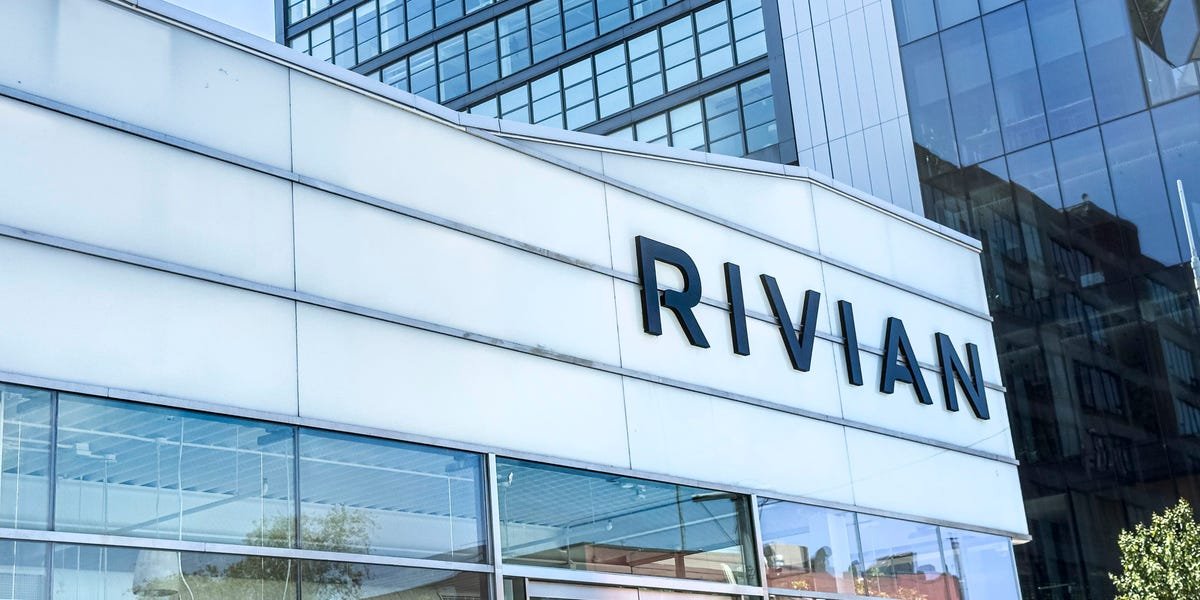
As EV sales slow down, EV makers have a growing incentive to make their cars easier to buy.
Rivian, Lucid Motors, Scout Motors, and other EV makers say they still face a barrier across much of the US: state dealership-franchise laws that restrict where and how they can sell directly to consumers.
These laws, largely written decades ago, govern the relationship between traditional automakers and their franchised dealers.
“Franchise laws protect consumers as well as dealers — that’s why they’ve been part of the fabric of America for many years,” Amy Wright, a spokeswoman for the National Automobile Dealers Association, told Business Insider. “When dealers compete, prices go down, and customers win.”
EV makers, founded long after many of the franchise-dealership laws were enacted, say the rules are being used against companies that never had franchise dealers in the first place. Direct sales, they say, let them control pricing, educate first-time EV buyers, and avoid relying on third-party dealers to sell a new kind of vehicle.
In interviews with Business Insider, Rivian, Lucid, and Scout Motors said this state-by-state system can create a stifling and awkward retail experience: Customers could see a vehicle, service it, or discuss some features, but not test-drive the car, discuss the price, or complete the sale.
Rivian
Richard B. Levine/Reuters
Beau Whiteman, Rivian’s director of state public policy, said Ohio shows how “restrictive” some state laws can be. The company filed a lawsuit last year against the Ohio Bureau of Motor Vehicles, challenging the state’s restrictions on direct-to-consumer sales.
The 17-year-old EV maker can’t obtain a dealer license in Ohio, but it can operate service facilities to fulfill warranty obligations, he said.
At Rivian’s service centers, prospective customers can ask basic questions about the cars, but employees cannot discuss pricing, financing, purchasing, or offer a test drive, Whiteman said.
“If you’re an Ohio resident and want to drive one of our cars, we cannot offer that to you,” he said.
To buy a Rivian, Ohio customers must complete the purchase online. In some cases, Whiteman said Rivian will process an Ohio purchase in Illinois, where it is licensed to do business. The customer may have to pay for a temporary Illinois tag and complete power-of-attorney forms before Rivian submits paperwork to the Ohio DMV.
“You can just see how it’s complicated and convoluted and inefficient,” he said.
The Ohio Automobile Dealers Association disputed Rivian’s characterization, saying Ohio law allows Rivian vehicles to be sold through an independent dealer of the company’s choice.
“There’s nothing ‘convoluted’ or ‘complicated’ about the process,” the association said.
Lucid Motors
Josh Lefkowitz/Getty Images
Daniel Witt, head of public policy at Lucid Motors, said the state restrictions can create “awkward” customer interactions and legal risks for employees.
Retail workers need to know which questions they can answer, which topics are off-limits, and when a normal sales conversation can create legal exposure, he said. This can also be tough for customers because they’re often unaware of the state restrictions.
“You’re dealing with retail employees. They’re not legal experts, but they have all these red lines that they have to consider,” he said, adding that the workers are put on the “front lines for compliance.”
In some states like Michigan, where Tesla has fought and won the ability to sell directly to customers, Witt said Lucid can partly benefit. The settlement Tesla reached with the state allows other EV makers to discuss prices, offer test drives, and provide warranty service, but they cannot complete the final sale or title the vehicle.
Witt said this can create financial burdens for buyers due to taxes and registration costs that may have to be handled separately from the vehicle purchase.
Scout Motors
Josh Lefkowitz/Getty Images
Scout Motors, a company that shut down in 1980 and was relaunched as a Volkswagen Group subsidiary in 2022, has yet to deliver a car to customers, but the company says dealership laws are already shaping its business.
Cody Thacker, Scout’s vice president of commercial operations, said the company has spent years exploring different business models before choosing direct sales. Since then, Scout has had to plan its sales and service footprint in accordance with state laws.
South Carolina provides a stark example.
Scout said it invested more than $2 billion into its production campus in Blythewood and that the center will create more than 4,000 permanent jobs. What it can’t do is sell directly to customers. Thacker called it “tragic.”
“We are in this position where we have to tell the people who build Scout vehicles that they have to drive to Tennessee to buy the product that they make,” he said.
A spokesperson for the South Carolina Automobile Dealers Association did not respond to a request for comment.
Thacker said that, while the current laws are not exactly existential for EV companies, the rules should help, not stifle, US startups’ ability to grow and then compete effectively in a global market.
“The United States market and the auto industry specifically does not exist in a vacuum, and this is a point in time where the winners and losers for the next hundred years are being selected,” he said.
