
Taxpayers, of both the individual and corporate kind, live in hope of boring Budgets. Chancellor Rachel Reeves’ first last month leaned towards jaw dropping, as it clouted companies for £25bn of tax rises.
That’s the money expected to be generated from a jump in the rate of national insurance contributions (NICs) charged on employees’ wages and applied from a much lower starting point, with the threshold now set at £5,000. Employers are also being asked to shoulder steep hikes for younger workers earning the national living wage from next April.
Retailers are a very varied bunch, but face a lot of the same challenges. One of the most difficult in recent years has been recruitment, with employers struggling to attract and retain workers, a problem that’s been experienced in other sectors too, such as hospitality and construction.
Many businesses now feel they are leaping from the frying pan into the fire: just as the labour shortage finally begins to ease, and the government sets about implementing its pledge to help get sick people back into the workforce, payroll costs are being forced up again.
Broker Peel Hunt calculates that the combined national living wage and NIC increase will push up retailers’ wages bills by 10 per cent. The Budget is therefore likely to add millions to the bottom line for big employers such as Associated British Foods, grocers Sainsbury’s and Marks and Spencer and pub group JD Wetherspoon, a cost that may need to be recouped through measures such as price rises for customers.
BUY: BT (BT.)
The dominant plan at BT is to grow profits through lowering costs, writes Arthur Sants.
This means cutting thousands of employees and giving the remaining ones artificial intelligence tools to increase their workload, as well as selling its underperforming non-UK assets.
The business division is the big problem. It makes up 38 per cent of the total revenue, but in the half-year revenue dropped 6 per cent year on year to £3.9bn, while its adjusted cash profit (Ebitda) was down 7 per cent to £747mn.
As a result of the weaker non-UK trading, the board decided to revise down the full-year revenue guidance by 1 per cent to 2 per cent. However, it maintained its adjusted Ebitda, capital expenditure and normalised free cash flow guidance.
With the business division struggling, the main revenue driver came from Openreach, where price rises helped it grow average revenue per user by 6 per cent, which the company points out was “ahead of CPI price increases”. However, this only led to a 2 per cent increase in total revenue because it lost 377,000 lines, which is equivalent to a 2 per cent decline in the ‘broadband base’.
The problem with BT is that there always seems to be a new issue, just as the last has been fixed. During the pandemic, the problem was inflation pushing up the build-out costs of Openreach and undermining free cash flow. Now, these costs have peaked, with capex falling 2 per cent to £2.3bn. This contributed to normalised free cash flow rising 57 per cent to £715mn.
The concern now is that it is effectively a non-growing business. However, this is already reflected in the weak share price. It trades on a forward price/earnings (PE) ratio of 7.5 and has a dividend yield of 6 per cent. This half-year, it increased the dividend by 4 per cent. This is in line, with the board’s aim to grow the dividend each year, while “taking into consideration a number of factors including underlying medium-term earnings expectations”.
BT is not an exciting business, or even one that can really add customers. But it is cheap, and we still think there is more cash it can squeeze from its infrastructure.
HOLD: Associated British Foods (ABF)
Shareholders in Associated British Foods are to be handed a special dividend of 27p a share in addition to the final payout of 42.3p, as the retailer reported a surge in profitability and a notable recovery in the underlying margin for the year ended September 14, writes Mark Robinson.
The group booked almost £2bn in adjusted operating profits, representing a 38 per cent increase at constant currencies, and a surge in free cash flow from £269mn in 2023 to £1.36bn.
Revenue from retail sales increased by 6 per cent to £9.4bn, while segmental profits soared on the back of a 350 basis point increase in the adjusted operating margin to 11.7 per cent. Performance was encouraging across what the group describes as “key growth markets”, namely the US, France, Spain, Italy and central and eastern Europe.
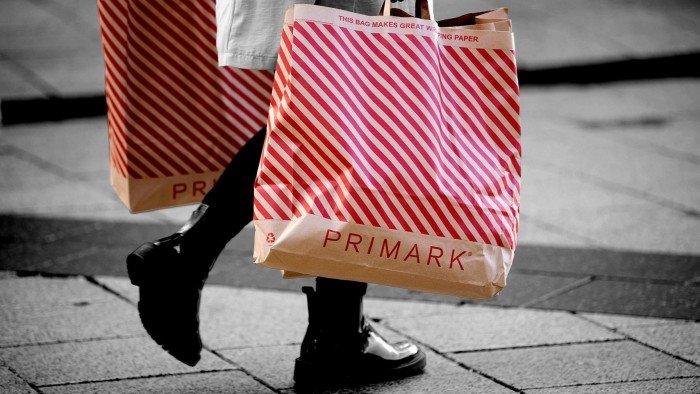
Indeed, Primark recently launched its first US marketing campaign in the New York metro area. Management is targeting a store rollout programme, which should contribute 4-5 per cent per annum to Primark’s total sales growth for “the foreseeable future”. Primark is targeting mid-single-digit percentage sales growth in 2024-25, with an adjusted operating margin in line with the 11.7 per cent achieved in 2023-24.
Conditions in the core UK and Irish retail markets (47 per cent of sales) were slightly more problematic as like-for-like sales were held in check by unfavourable weather conditions over the second half (ABF isn’t the first high-street retailer to highlight this issue). Despite the meteorological issues and consequent footfall constraints, Primark maintained its market share in the UK at 6.7 per cent, and management notes “strong like-for-like growth” for sales of the autumn and winter ranges.
Grocery sales increased broadly in line with inflation, but profitability again outstripped top-line growth as margins expanded. This was primarily due to a reduction in input costs, although ABF has boosted marketing budgets across the group, while implementing product, brand awareness and digital initiatives, all of which appear to have had a positive impact on unit profitability.
Elsewhere, the sugar unit delivered an 11 per cent increase in constant currency revenues, to £2.53bn, while adjusted operating profit came in at £199mn, up from £179mn last time around. Unfortunately, near-term prospects for this business unit have dimmed recently due to a reduction in European sugar pricing. Adjusted operating profit for sugar in the current year is now pitched at £50mn-£75mn.
The dividend boost will no doubt please shareholders, although ABF bosses have also pledged to extend the buyback programme, targeting an additional £500mn over the next 12 months. Nonetheless, the problems experienced by Primark in the second half and the sugar price slump have depressed the share price since September’s profit warning. Consequently, they now trade slightly below their long-term average at 12.7 times consensus earnings, but remain in downtrend according to a recent technical signal.
SELL: Asos (ASC)
Management at online fashion retailer Asos attempted to inject some hope into a bleak set of results, with the company reporting declining sales, steepening losses and a shrinking balance sheet, writes Michael Fahy.
Adjusted pre-tax losses increased from £70mn to £126mn on a 16 per cent slide in like-for-like sales, but adjustments were almost twice as large at £253mn. These comprised a further £93mn of stock write-offs and £144mn of property-related costs, including the mothballing of its Lichfield fulfilment centre.
Chief executive José Antonio Ramos Calamonte argued that Asos’s new commercial model was already proving successful, with new stock being shifted more quickly and at higher margins. He expects “a continuation of these trends” this year to underpin a 3 percentage point uplift in gross margin and a 60 per cent increase in adjusted cash profit to £150mn.
He also said Asos’s balance sheet strength has been “significantly increased” by the post-year-end sale of the Topshop and Topman brands to a vehicle owned by Danish billionaire Anders Holch Povlsen, which triggered a refinancing that has cut net debt by £130mn.
This came at a price, though. Although it bought back £176mn of the £500mn of convertible bonds falling due in April 2026 at a 15 per cent discount to par, and extended the maturity on £253mn of the instruments to 2028, it is now paying an 11 per cent coupon. It will also have to repay 120 per cent of the face value on maturity unless the shares hit a conversion price of £79.65, which looks highly improbable from current levels. On top of this, £73.6mn of these convertibles remain due for repayment in 2026.
With the company only expecting “broadly neutral” free cash flow in 2025 after £130mn of capex and £35mn of interest payments, the need for growth is clear.
Yet in a space where competitors like Shein and Temu are winning more market share, it’s not clear how quickly (or even if) Asos can achieve this. Chasing growth through promotions and discounts is part of the reason Asos is in its current mess, and “would not be in the long-term interests of the business”, Calamonte said.
Therefore, despite the company’s enterprise value slipping to under seven times forecast cash profit — almost half of both its own five-year average and peer valuations — its future still looks too uncertain for it to be deemed a bargain.
