
Unlock the Editor’s Digest for free
Roula Khalaf, Editor of the FT, selects her favourite stories in this weekly newsletter.
The US has introduced new export controls in an effort to curtail China’s ability to create an advanced semiconductor industry and to slow its development of artificial intelligence with military applications.
The restrictions on the export of critical semiconductor manufacturing tools will affect both US companies and foreign firms that use American technology in their chipmaking equipment. The US will also prevent the export of advanced high bandwidth memory (HBM), a crucial component in AI chips, to China.
US commerce secretary Gina Raimondo said the new controls, which follow two previous broad packages enacted in October 2022 and October 2023, were “groundbreaking and sweeping”.
“They’re the strongest controls ever enacted by the US to degrade the People’s Republic of China’s ability to make the most advanced chips that they’re using in their military modernisation,” she said
The commerce department on Monday added 140 Chinese groups to the “entity list” — a blacklist that requires US and other companies to apply for export licences which are expected to be virtually impossible to obtain.
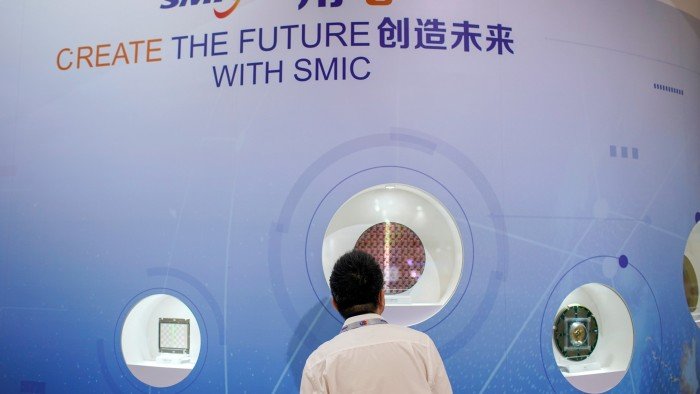
The targets included chip manufacturers — such as Semiconductor Manufacturing International Corporation and Huawei — in addition to Chinese companies that produce the equipment to manufacture chips.
Meghan Harris, an export control expert at Beacon Global Strategies, a consultancy, said hitting China’s chipmaking equipment industry would target an area the Biden administration had underestimated.
“Trying to impede China’s advanced semiconductor industry without addressing their accelerating domestic toolmaking capabilities is like trying to prevent a fisherman from catching bigger fish simply by denying him bigger fishing poles. He’ll get there in the end,” said Harris.
The rules restrict the export of 24 types of chipmaking tools that were not previously targeted. To make them more effective, the US will in many cases apply an extraterritorial measure called the foreign direct product rule [FDPR] that will hit non-US companies that have US chips in their tools, which is the overwhelming majority.
One person familiar with the rules said the US had carved out an FDPR exemption for Japan and some European allies, including the Netherlands, after they agreed to apply their own export restrictions. South Korea has not yet secured an exemption, but could later.
One US official said the FDPR would make it harder for US groups to circumvent existing controls by producing tools in other countries — such as Singapore and Malaysia — for export to China.
In a recent report, Gregory Allen, an AI expert at CSIS, said the main American toolmakers — Applied Materials, KLA and Lam Research — had “doubled down” on expanding their non-US manufacturing.
Some critics have privately asked why the administration did not put more Huawei chip production facilities on the entity list. Asked how many fabrication plants exist that are not on the list, a second US official would say only that the controls were focused on advanced chip production.
People familiar with the situation said there had been an intense debate inside the administration over how to tackle Huawei. One person said some of the Huawei plants were still not operational, so it was unclear if they would be for advanced chips. But some officials had pushed for tougher controls on the Shenzhen-based company.
In addition to compromises reached between different agencies, the US decided to take a less aggressive approach in some areas in order to get chip-related co-operation on restrictions from its allies.
Questions have also been raised about why the administration did not add CXMT, a Chinese producer of HBM, to the entity list. Some inside the administration had pushed for this, but one person said the other restrictions would have some impact on its ability to produce HBM.
Allen said there was a “bizarre contradiction” at the heart of the new controls. He said that, for example, the administration was significantly expanding the scope of FDPR to cover almost all chipmaking tools around the world, but on the other hand the controls would only cover some Huawei and SMIC shell companies but not others.
“What is the point of blocking sales of HBM and AI chips to China while continuing to allow sales of equipment to CXMT, which is one of the most likely HBM producers in China?” he said.
Some analysts have privately said the top US toolmakers had successfully lobbied to make sure that the new controls were not even tougher.
Shares in the three main companies were higher on Monday, outperforming the 0.3 per cent gain for the S&P 500 that had pushed Wall Street’s benchmark index back into record-high territory. Lam Research shares were up 6.2 per cent by lunchtime in New York, making it the second-best-performing stock in the S&P 500, while Applied Materials gained 5.3 per cent and KLA rose 3.3 per cent.
The Chinese embassy in the US slammed the move and said Beijing would respond with “resolute measures”. It said Beijing firmly opposed the US “overstretching the concept of national security, abusing export controls, and maliciously blocking and suppressing China”.
One industry analyst said the new rules were massively complex even for experts in the field. “This is a Christmas gift to compliance professionals and lawyers,” he said.
