
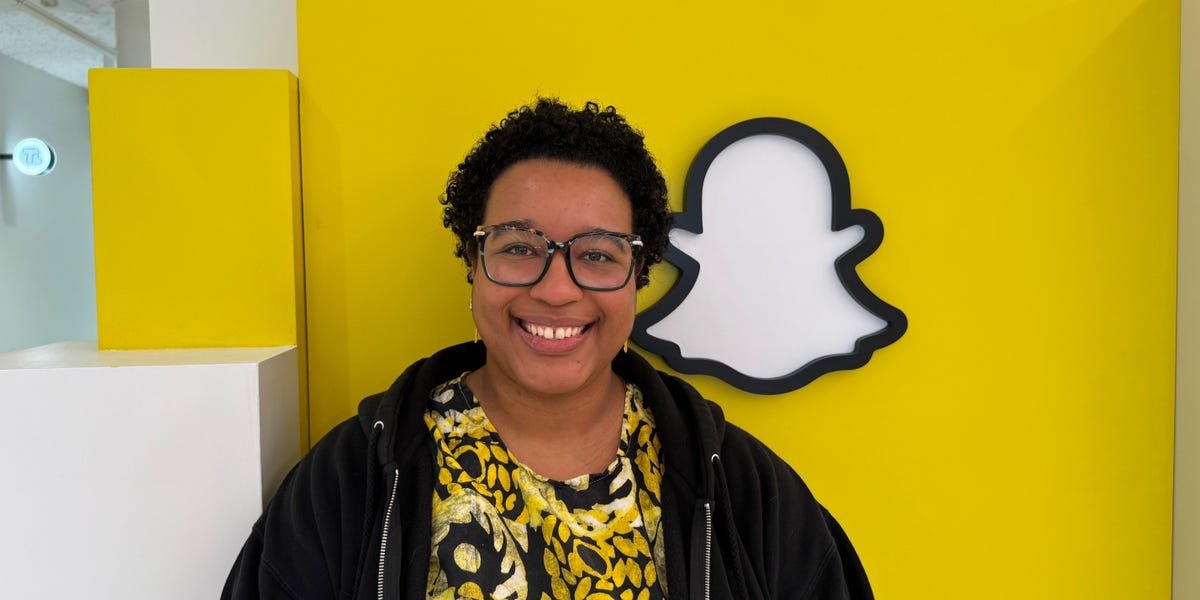
Imani Ritchards is an ideas person.
The director of product design at Snap, the company behind Snapchat, doesn’t care much about your degree or your accolades. Mere hours before our chat at Snap’s Santa Monica headquarters, Ritchards interviewed a designer. But they didn’t have a fancy design degree, they were a chemical engineering major.
What Ritchards does care about is creativity and how they use it. She looks for candidates with an “openness to take creative risks,” she tells me — and the portfolio to back it up.
The résumé of a product designer is rapidly changing. With the right suite of AI tools, anyone can build an app that looks fine. What takes an app’s UX from fine to great? That’s the question dozens of tech companies across the country are considering as they hire.
Ritchards shared with Business Insider her rules for design hiring these days. The first: having a design degree isn’t as helpful as it used to be.
“What’s really helpful about school is that it helps you learn the process,” she said. “But there are so many ways to learn the process and, especially with AI tools today, you can just get your friends together and make stuff.”
She cares more that candidates have built and tested something. Feedback is important here, she said, and ideally it comes from real users. “You can do that without a formal program,” Ritchards said.
As for the more technical skills, they can often be learned on the job.
“Let’s say someone is a great ideator, but maybe their visual design skills need some work,” Ritchards said. “We can train them up in those skills, but it’s so hard to train someone to have good ideas.”
AI isn’t just making people faster — it’s causing some companies to slim down. Some AI doomers have predicted the end of design as we know it, saying that one person and a series of agents is enough to build a successful app.
How does Ritchards think about this mindset? She doesn’t take much stock in predictions. “The industry is changing,” she said. “How things will evolve is not something anyone can really predict.”
It does affect how she interviews candidates, though. Ritchards is a fan of AI tools, but says that claiming “I’ve tried it” isn’t enough.
When someone comes in with a vibe-coded app, Ritchards asks questions like: “Why this? Why did you build this? What problem is it solving? Why are you excited about this?”
“Being able to utilize the best tools available to make your ideas real is amazing, but the foundational idea has to be substantive,” she said.
