
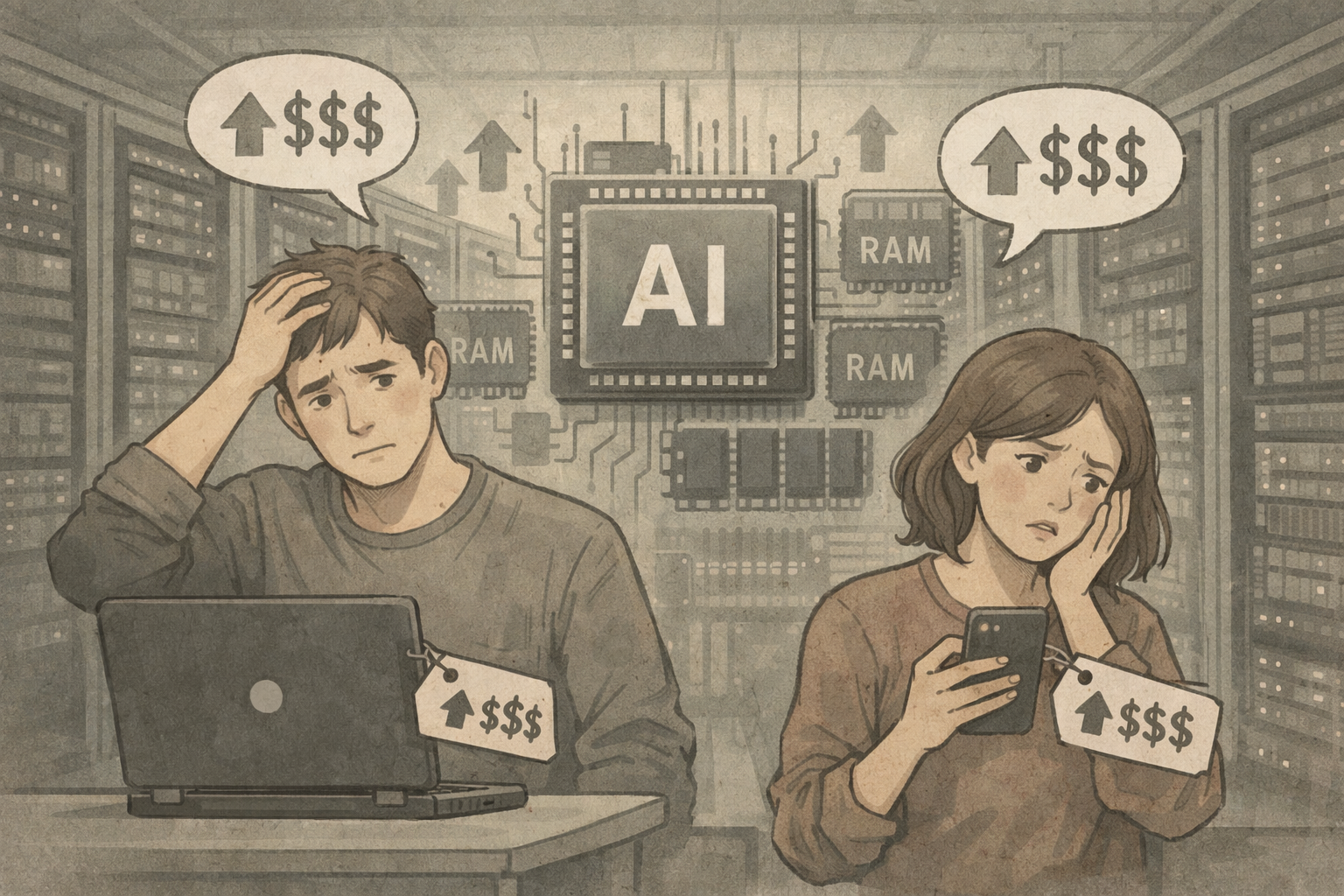
Consumers planning to buy a new PC or smartphone next year may face higher prices, and the reason is increasingly clear: soaring memory costs driven by artificial intelligence demand.
Micron Technology’s latest financial results offer a window into how the AI boom is reshaping the global memory market — with ripple effects across consumer electronics.
The US-based memory-chip maker posted record revenue and operating income for its fiscal first quarter, signalling increasing demand for memory devices, which are required for AI systems.
While Micron investors cheered its performance, the surging demand for memory chips is mounting cost pressures for device makers and, ultimately, consumers.
AI demand is absorbing memory supply
Micron reported fiscal first-quarter revenue of $13.6 billion, up 57% year over year, and projected sales of $18.7 billion for the current quarter ending in February.
That forecast exceeded Wall Street expectations by a wide margin, reflecting sharply rising prices for memory chips.
The surge is being driven by artificial intelligence systems, which require large amounts of specialised memory, particularly high-bandwidth memory.
As AI data centres scale rapidly, they are soaking up a growing share of global memory supply.
Micron executives acknowledged on the earnings call that demand is outstripping what the industry can provide.
The company said it is “more than sold out” of certain products and expects aggregate supply to remain “substantially short of demand for the foreseeable future.”
Micron earlier this month announced it was exiting its consumer memory business to focus on high-bandwidth memory chips, which are used in AI data centers.
This imbalance is already evident in market pricing.
According to Trendforce, the spot price of a commonly used dynamic random-access memory module has risen more than 60% over the past six months and is expected to approach $500 next quarter — nearly double the price a year earlier.
Limited ability to boost production quickly
In theory, higher prices should encourage manufacturers to expand capacity.
In practice, memory fabrication plants take years to build.
Micron plans to break ground on a new fab in upstate New York early next year, but production from that facility is not expected until 2030.
The company is ramping up spending elsewhere, planning a record $20 billion in capital expenditure this fiscal year, roughly double its average annual spending over the past five years.
Even so, Micron has cautioned that this level of investment will still fall short of meeting demand for AI-related memory.
With supply growth constrained, higher memory costs are becoming embedded across the electronics supply chain.
Every central processing unit — the core of PCs, smartphones, tablets, game consoles, and other devices — requires memory to function, making it difficult for manufacturers to avoid these pressures.
Consumers and device makers feel the squeeze
PC and smartphone makers are already warning investors about the impact.
Dell’s Chief Operating Officer, Jeff Clarke, said in the company’s earnings call last month, the company would try to minimise the effect of rising component costs but acknowledged that “the cost basis is going up across all products.”
Business Insider reported that Dell is looking to increase the prices of its commercial products.
HP has warned that higher memory prices could push operating profits toward the lower end of its guidance range.
Some of these costs are likely to be passed on to consumers.
Counterpoint Research recently cut its forecast for global smartphone shipments next year, now expecting a 2.1% decline instead of modest growth.
The timing is particularly challenging for premium smartphones with AI features, which require even more system memory.
The effects extend beyond phones and PCs.
Nintendo shares have fallen sharply amid concerns about memory costs for its next-generation Switch console.
Analysts estimate that an additional $40 per unit in memory expenses could significantly dent the company’s profits, raising the possibility of a higher retail price.
A structural shift, not a short-term spike
Micron’s results underline that this is not a temporary supply glitch.
The company estimates that the total addressable market for high-bandwidth memory could grow at a compound annual rate of 40% and reach $100 billion within three years.
For consumers, that means higher prices for electronics may persist as long as AI investment remains strong and supply struggles to catch up.
The post Smartphones and PCs are about to get expensive next year; here’s why appeared first on Invezz
