
Author
Ahmed Balaha

Author

Share

Senator Richard Blumenthal sent a formal letter to SEC Chairman Paul Atkins on Monday, demanding records and communications related to enforcement decisions involving Trump-linked crypto firms, including why the agency settled fraud charges against Tron founder Justin Sun for just $10 million after three years of litigation.
The letter, addressed to Atkins in his capacity as SEC chair, sets an April 13 deadline for the Senate Permanent Subcommittee on Investigations to receive the requested documents.
The timing is deliberate. Sun settled his case on March 5, 2026, eleven days before Margaret Ryan, director of the SEC’s Division of Enforcement, abruptly departed after only six months on the job. Blumenthal wants to know if those events are connected.
- Congressional Pressure: Senator Blumenthal demanded SEC records by April 13 on enforcement decisions involving Trump-linked crypto firms, including Justin Sun’s $10M settlement and Changpeng Zhao’s case.
- Enforcement Director Exit: Margaret Ryan left the SEC’s Division of Enforcement after just six months, raising questions about whether senior leadership blocked cases against specific crypto companies.
- Pay-to-Play Allegation: Sun is the largest $TRUMP memecoin holder with nearly 1.4 million coins – a position that entitled him to a private presidential dinner – and invested tens of millions in World Liberty Financial before his fraud charges were dropped.
- Regulatory Signal: The SEC has dropped major cases against Coinbase, Binance, and Ripple since Trump returned to office; Trump has also pardoned CZ and BitMEX founder Arthur Hayes.
- What to Watch: April 13 records deadline and any PSI hearing announcement are the next hard triggers for regulatory sentiment in crypto markets.
Discover: The best pre-launch token sales
What Blumenthal’s Letter Actually Accuses the SEC Of
The core allegation isn’t subtle: Blumenthal is asking whether financial proximity to Trump’s crypto ventures bought favorable regulatory treatment.
Sun purchased millions in TRUMP memecoin, becoming its largest holder at nearly 1.4 million coins, a threshold that entitled him to a private White House dinner – and subsequently invested tens of millions into World Liberty Financial (WLFI), the Trump family’s DeFi project, backing both its governance token and its USD1 stablecoin.
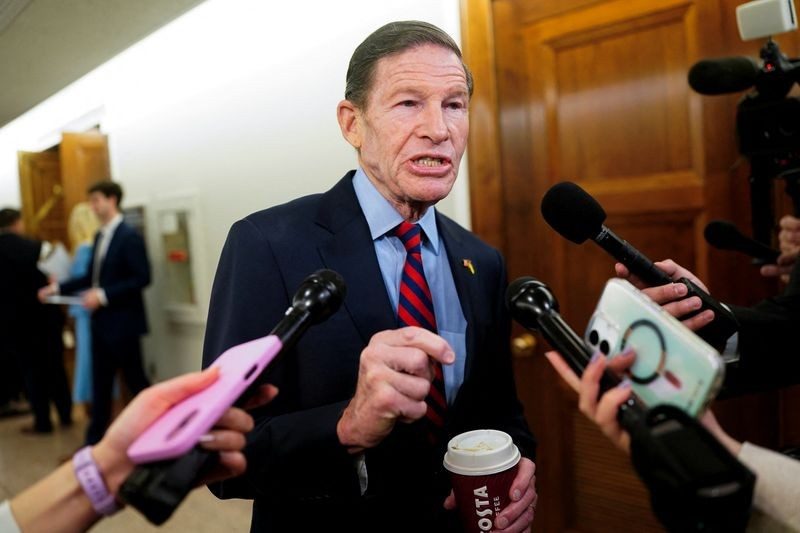
Facing active SEC fraud charges throughout this period, Sun’s legal exposure disappeared in a $10 million settlement. Blumenthal’s framing: “Facing federal prosecution, Mr. Sun began to buy into President Trump’s cryptocurrency ventures.”
That framing matters because it transforms a regulatory enforcement decision into a potential corruption narrative with a documented financial paper trail.
The Ryan departure adds operational weight to the inquiry. Reports cited by Blumenthal indicate that senior SEC leadership intervened to prohibit the Division of Enforcement from pursuing cases against certain crypto companies – a claim that, if documented, would represent a significant institutional breakdown.
Blumenthal is also seeking records of direct contacts between the SEC chairman’s office and members of the Trump and Witkoff families regarding cryptocurrency businesses.
The broader enforcement pattern is hard to dismiss as coincidental. The SEC dropped its lawsuit against Coinbase and ended its long-running dispute with Ripple over XRP, moved to dismiss against Binance and founder Changpeng Zhao in May 2025, and Trump subsequently pardoned both CZ and BitMEX founder Arthur Hayes. Each case had been initiated under the Biden administration.
Discover: The best crypto to diversify your portfolio with
