
Stay informed with free updates
Simply sign up to the Oil & Gas industry myFT Digest — delivered directly to your inbox.
The Middle East conflict would have “catastrophic consequences” for the oil market the longer it continued, as well as “drastic” effects on the global economy, Saudi Aramco’s chief executive said on Tuesday.
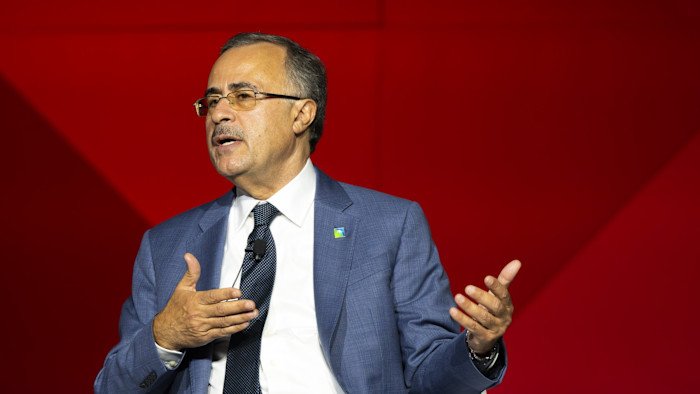
Amin Nasser’s warning is the first public comment from the world’s largest oil company on the ongoing conflict sparked by the US-Israel attacks on Iran earlier this month.
He said on a media call that Aramco would be able to export about 5mn barrels a day of crude from the western port of Yanbu within days as it responded to the “biggest crisis the region’s oil and gas industry has faced”.
The threat posed by Iran to shipping around the Strait of Hormuz has left Aramco’s other ports stranded, making this its only available export route.
Saudi Arabia usually exports a total of some 7mn barrels of oil a day.
Aramco is the world’s biggest oil producer and responsible for about a 10th of global supply, meaning any disruption to its operations is watched closely by oil markets.
Yanbu usually handles a fraction of Aramco’s exports but the company has told customers to load from its west coast because they are unable to sail into the Gulf, Nasser said.
The move will mean using the full 7mn barrel a day capacity of Aramco’s pipeline that runs from the oil-producing region in the east to Yanbu, he said.
Its west coast refineries use about 2mn barrels of crude a day, Nasser said. Aramco has not reduced any refining production aside from the Ras Tanura plant in the east that was struck on March 2.
Nasser did not say how much oil the company was producing but suggested that production of some crude oil grades had fallen.
“There’s a certain area where we have medium and heavy, which we are not utilising for the time being because we have adequate capacity to meet our requirements and meet what we need through the east-west pipeline,” he said. “We are meeting the majority of our customers’ requirements.”
Aramco’s spare capacity meant it could restore output “in a matter of days”, Nasser said, if it needed to shut down any of its facilities.
