
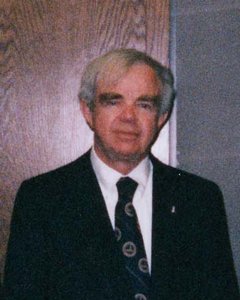
Yesterday, I posted over on my Substack on a long interview that my late Hoover Institution colleague Martin Anderson did about his time with Nixon. In it he revealed how quickly Nixon came to Marty’s position against the military draft in 1967, relatively shortly after meeting Marty.
There’s lots more that’s fascinating in that interview. Marty talks at length about Ronald Reagan, who was very different from Nixon. Here’s one on Reagan’s intelligence and knowledge.
I once described him as warmly ruthless. He had this appearance of being friendly and jovial and nice, never argued with anyone, never complained. But if you shook your head and thought about it a little bit, he always did it his way. It was like there was a steel bar right down the middle of him and everything you touched was soft and fuzzy except the steel bar in the middle. He always did it his way. No matter how many people talked to him, no matter what happened, he always did it his way. If you were in the way, you were gone, you were fired. He never took any pleasure out of it, just gone.
I think if you really want to look at Reagan, one of the things we show with this new book we have, is something that I knew from dealing with him. He was incredibly smart. I know this doesn’t sound reasonable, but he was incredibly smart. I’ve dealt with professors at Columbia and professors at Stanford, but he could look at something and understand it and grasp it and turn it around and work with it and play with it. He was incredibly quick. I’d say he had a brain that was comparable to—and I’d talk to Milton Friedman or Ed Teller and Arthur [Burns], all those guys, he could stay with them.
Now, he hid that. He just backed off. He never argued with staff. You could have ten different people tell him the same thing and he’d just listen. He never said to them, Look, you dumb bunny, ten years ago I wrote an article on this, a long article. He’d just say, That’s an interesting idea. So many of the policy issues that were proposed to Reagan over time, by different people, he listened, That’s very interesting. Then when he did it, even though it was something he’d decided many, many years previously he would do, all these people were delighted. He was doing what they had told him. He was happy with that, he didn’t care.
He used to say privately, There’s no limit to what a person can get done if you don’t care who gets the credit. And he was just very smart. The second thing is, there was this feeling that he was lazy, that he took naps. Well, I traveled with him for almost four years. He never took a nap. It was total nonsense. In fact, he worked all the time. We have uncovered evidence with this book in terms of the handwritten documents and so on, he was writing all the time. He was studying, he was writing, he was working all the time, in private. As soon as he came out in public, put on the public persona, he was friendly and jovial and talking.
For some reason, I’m finding myself thinking about Reagan today. I never voted for him. I couldn’t vote until 1986, shortly after becoming a U.S. citizen.
Although I enjoyed working for Martin Feldstein for two years, while he was the chairman of the Council of Economic Advisers and I was a senior economist, I thought Marty [Feldstein, not Anderson] was one of the many intellectuals who sold Reagan short. A story here is relevant.
Marty and I were working on a proposal, along with people in the Office of Management and Budget, the U.S. Treasury, the Department of Health and Human Services, and a policy shop in the White House, to make employer contributions to employees’ health insurance above about $1,500 a year taxable income. That doesn’t sound like a lot, but $1,500 in 1983, adjusted for inflation, would be over $4,700 today. The idea, which many health economists and many economists in general shared, was that employers and employees would face the right marginal incentives so that there would little or no bias in favor of health insurance over taxable wages and salaries. ($1,500 a year was below the median employer contribution and, if the $1,500 were not indexed for inflation, over time the bias would become smaller and smaller.) But Marty wanted to go further and insist that for employers to be able to deduct from their taxable income their contributions to employees’ health insurance, they would have to buy insurance that had at least a 10% coinsurance rate and a minimum deductible. (I’ve forgotten the amount of the deductible.) I argued with him. I said that the proposal without those requirements gave employers the right incentives and that he was saying that somehow he knew better than them. He didn’t have a good argument but insisted that I represent his position accurately at interagency meetings. I did. When I was about to say something Marty thought but I didn’t, I would say, “The chairman believes that …”
Interestingly and amusingly, health economists around the country heard what Marty was advocating and would write me asking me to talk him out of it. (In the late 1960s to early 1970s, Marty had been arguably the premier health economist in the world, before he went on to other issues such as Social Security and corporate taxation.) So I would go to Marty and say things like, “Joe Newhouse said to say hi and also asked me to tell you that he thinks dictating terms of employer-provided health insurance is a bad idea. Marty would acknowledge the “hi” part. About the third time I did this, in response to the third letter from a health economist, Marty said, “Ok, David, I get it. Cut it out.” So I did.
Anyway, back to the story. There was a Cabinet Council meeting at which Marty presented the proposal. In the normal course of things, he would have brought me and I would have been one of those people you see in the pictures sitting with my back against the wall and not at the table. He didn’t invite me, and I found out about the meeting only after it was over. I found out from a colleague in another White House shop, and this colleague had been asked to the meeting by his boss.
I think Marty had figured me out. I was the kind of person who, if I saw something I disagreed with, would speak up. The idea that Reagan and a whole lot of Cabinet secretaries were there did not intimidate me at all. So I think Marty feared, somewhat reasonably, that I would speak up. If I had known beforehand about this meeting and known that Marty wasn’t going to take me there, I would have said, “Ok, I get it. You can say the earth is flat, and I won’t say a thing.” Oh, well.
I keep getting sidetracked, so here goes the part about Marty and Reagan. Once I heard, after the meeting, from the colleague in another White House shop, I went to Marty to ask how it went. He said, “It went well. Even the President understood.” Even then, having followed Reagan’s thinking for about 6 or 7 years, I thought Marty Feldstein underestimated Ronald Reagan.
