
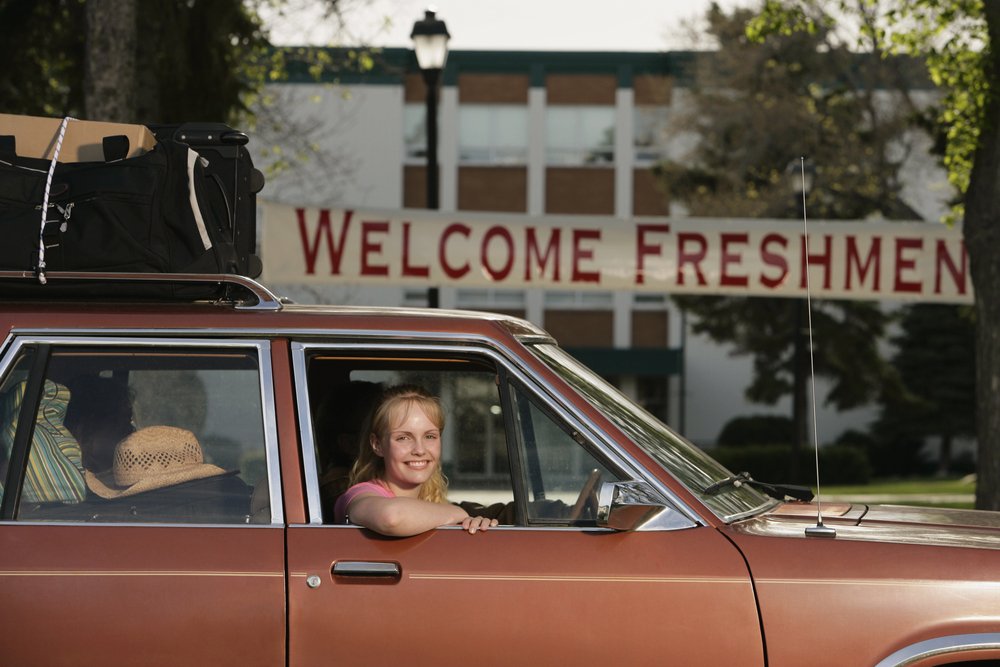

- Can the four-year degree be saved? Not for most learners, I would argue. Once less expensive alternative pathways become clearer and surer, a full-on degree will seem impractical… But why does the degree have to be the only product that colleges sell? And why can’t the American Dream be achieved by other college products, other constructs of career preparation and adultification?
- —Kathleen deLaski, Who Needs College Anymore? (page 166)
For many years, America’s leaders adopted the goal that college should be for everyone. Kathleen deLaski says that it is time to provide a different path for young people to follow to find their place in the workforce.
DeLaski has spent decades in the field of alternative approaches to workforce development. Her focus is almost entirely on how young people can prepare for jobs. The larger question of how college might lead to a “life well lived” is largely outside the scope of her book.
DeLaski sees traditional college as unsuited to large segments of the population:
- I predict that the silos between workforce training, college, and corporate training will essentially merge into one edu-training sector, but the umbrella may itself be called “college” and the degree may be one of many offerings in the array of learning and training products. (page 5)
She notes that the halo around higher education has been tarnished in the past decade, particularly by the rise of student debt and the disruption of the pandemic.
- In 2020, at the height of the pandemic, a Strada Education Network study found that a surprising 62 percent of Americans preferred shorter-term skills training and nondegree credentials to degree programs. (page 24)
She sees workers of the future as identified not by a single degree, but by a set of skills that she refers to as a “skills wallet.”
- A new age is dawning: the “skills-first” age. And, I will argue, it is already beginning to challenge our college degree culture….
- The skills-first movement will push us into the future. As employers hire more of their professional workforces without requiring degrees—and I believe they will eventually, out of necessity—the education landscape will change dramatically. (pages 15-17)
Employers are becoming clearer about the particular skills that they want, even as the desired skills may change.
- This decade has brought and will bring the biggest, most sudden, and broadest shift in skills demand ever. LinkedIn reports that specific skills on job postings changed by 25 percent between 2015 and 2022…. And this was before it was estimated that 40 percent of all work hours could require new or different tasks and skills over the coming decade because of AI. (pages 33-34)
In this environment of rapid change, one needs more than just narrow skills.
- I tell students to build some verifiable “started hard skills,” maybe with industry certifications, but also find ways to demonstrate “starter durable skills” in creative thinking, analytical thinking, collaboration, communication, curiosity, resilience, or motivation. (page 54)
Calling these “durable skills” rather than character traits struck me as awkward terminology, a problem that plagues the book. In this case, the issue is more than just semantic. One claim that college administrators might make is that students build these character traits in the process of obtaining the traditional college degree, and that the alternatives that deLaski advocates will fail to do so as effectively.
For alternatives, deLaski lists five types of models:
- Making skills visible; Validating “job-ready” skills; Experience sampling; Micro-pathways; and Embracing the weave.
Her terms are far from self-explanatory. Making skills visible means that an educational institution must identify the skills that employers desire and be able to connect course outcomes to obtaining those skills. Validating those skills means passing a particular examination, such as a test on computer network management or some other industry-recognized exam. Experience sampling means combining classroom learning with real-world work experience. Micro-pathways are shorter-term educational experiences that do not require committing to two years or more of college before joining or returning to the work force. The “weave” is a longer-term commitment to move back and forth between classroom and work.
Fortunately, deLaski does not rely on theory to articulate these models. Her book is dominated by descriptions of people and programs that illustrate how they work in practice.
Still, we have the paradox embodied in what deLaski calls “competing narratives.”
- Narrative 1: College isn’t worth it, and it’s become unaffordable and too risky.
- Narrative 2: 72% of “good jobs” require college. (page 134)
The second narrative can be used to justify “college for everyone.” But the fact that close to half of all students who start college fail to graduate supports the first narrative.
“Suppose that we grant that college today is suitable for the most capable, affluent students. Among the rest, who should attend?”
Suppose that we grant that college today is suitable for the most capable, affluent students. Among the rest, who should attend? She suggests narrowing the focus to four groups:
- Class transporters; Legitimacy label seekers; Degree and license workers; Longing-to-belongers. (page 146)
Once again, her terminology seems opaque. Class transporters are people who come from outside of the upper middle class who might benefit from the cultural learning that can be acquired at college. Legitimacy label seekers are those who believe that at some point in their lives they will encounter employers who want to see a college degree. Degree and license workers are people who need an advanced degree to get into their desired profession. And longing-to-belongers are young people who want to be part of a college community, with shared experiences and lifelong friendships.
For more on these topics, see
With the exception of the degree and license workers, these are intangible reasons for attending college. The alternative models for obtaining skills do not address these intangible benefits. But I would say that there may be an opportunity for new enterprises to provide the cultural learning or community. And society itself may lose its prejudices against people who skip the college path.
A question that lingers is whether higher education will adapt or be replaced. I came away from this book thinking that without the lavish government support that colleges and universities currently enjoy, replacement would be the more likely scenario.
