

The president and his GOP cronies want to tamper with government statistics and use deceptive budget gimmicks to lie about the impact of their massive tax and budget cuts.
The one-sentence “termination” e-mail arrived in Erica Groshen’s inbox at 8:32 am last Tuesday.
Groshen, a former commissioner of the US Bureau of Labor Statistics, had spent more than four years as a member of a little-known but highly respected federal advisory board that helped the US government produce accurate and reliable economic data. That was until Tuesday, when the Federal Economic Statistics Advisory Committee (FESAC) was summarily dismissed, another casualty of President Trump’s assault on the federal government—and the concept of public policy expertise itself.
“I was so disappointed,” Groshen told The Nation. “It’s so important to have these high-level advisory committees because statistical agencies have to be continuously improving, which means getting expert advice and information from outside of government. Eliminating an advisory committee like this suggests an intent to make the government less transparent.”
Transparency—or the lack thereof—may just be the least of it.
The Trump administration and Republican lawmakers are preparing to manipulate the federal budget and doctor US government data in order to mislead the American public about the true cost of their proposed $4 trillion tax cut, the draconian budget reductions needed to pay for it, and the ruinous impact these policies will have on the US economy, which is already veering dangerously in the direction of a recession.
David Wilcox, a senior fellow at the Peterson Institute for International Economics who served until last week as FESAC’s chairman, said in an interview that disbanding the advisory committee—an all-volunteer panel of experts from the private sector and academia—will deprive the public of an independent, nonpartisan brain trust whose goal was to help the government improve statistical accuracy in response to new technologies and ever-changing economic conditions.
Current Issue
Last week’s FESAC purge was particularly alarming because it came just days after Commerce Secretary Howard Lutnick, a Wall Street plutocrat and Trump campaign bundler, announced plans to alter an important measure of US economic growth—Gross Domestic Product, or GDP—by stripping out all government spending. GDP combines consumer purchases, business investments, net exports, and yes, government spending, to measure the total monetary value of goods and services produced in the United States.
There are many valid criticisms of GDP as a measure of economic health, including that it doesn’t account for unpaid work, the shadow market, income inequality, or climate change, among other shortcomings, but it is nevertheless closely watched by economists, governments, corporations, investors, and households worldwide.
By excluding government spending from the official GDP estimates issued by the Bureau of Economic Analysis, the Trump administration could downplay the economic damage of firing hundreds of thousands of federal workers and slashing billions from the federal budget. In other words, they could gaslight the public into believing that the economy is doing better than it actually is, which could come in handy if economic conditions continue to deteriorate.
“This administration wants to write its own narrative,” said Stephanie Kelton, a professor of economics and public policy at Stony Brook University. “If laying off tens or hundreds of thousands of federal workers is going to drag down macroeconomic indicators in ways that are unhelpful to them, they’re apparently quite willing to just rewrite definitions so they can inculcate themselves to the extent possible from the fallout.”
Wilcox, the former FESAC chairman who also serves as director of US economic research at Bloomberg Economics, warned that any misrepresentation of federal data by the Trump administration could undermine confidence in US government statistics “if it begins to normalize the idea that political figures can define the presentation, and manipulate the construction, of economic data to serve partisan purposes.”
“There is a reason why we’ve entrusted economic measurement to folks who live in agencies that are one step removed from the political process,” said Wilcox. “The transparency, the integrity, the independence of these data is itself a national asset. If that national asset is damaged by calling into question the independence of the data, that’s an action that’s very hard to reverse, because trust can be destroyed in a flash, but it takes a long time to rebuild.”
Manipulating government data isn’t the only way the Trump administration is preparing to hoodwink the public. The president and his GOP allies are plotting a massive budgetary gimmick designed to conceal the fundamental contradiction at the heart of their fiscal plans: the Trump/GOP budget numbers don’t add up—and they know it. Funding Trump’s proposed $4 trillion tax cut requires GOP lawmakers to drastically curtail essential services relied upon by their constituents and risk fury back home, or blow a massive hole in the deficit and expose the GOP’s bogus pieties about “fiscal discipline.”
The Republican response to this political predicament is to simply invent new budget numbers. In 2017, Trump and his GOP allies claimed that their $2 trillion tax cut would pay for itself by boosting economic growth and federal tax revenue. That didn’t happen. The record clearly shows that the 2017 tax cut, which was skewed toward rich people and corporations, didn’t come even close to paying for itself, according to the nonpartisan Center on Budget and Policy Priorities.
That’s why Republicans are preparing an even more audacious gambit this time around: claiming that Trump’s new tax cut doesn’t need to pay for itself because, well, it won’t cost anything at all. Yes, you read that right: $4 trillion in tax cuts, for free. Using an untested, only-in-DC budget gimmick referred to as the “current-policy baseline,” Republicans are now suggesting that because Trump’s proposed 2025 tax cuts would merely extend his 2017 tax cuts, they aren’t “new” tax cuts and therefore they shouldn’t be counted against the deficit.
Bobby Kogan, senior director for Federal Budget Policy at the Center for American Progress, said that Republicans who claim that the national debt is an existential crisis are now actively misleading the public about how much their own tax policies will cost. “They’re asking for special treatment that no other program in the budget receives,” said Kogan, who recently wrote a detailed report about the GOP’s latest budget machinations. “They want to pretend that trillions in costs don’t exist, all to help them politically.”
Popular
“swipe left below to view more authors”Swipe →
Budget gimmicks, creative accounting, and “magical thinking” are time-honored traditions in Washington, DC, going back decades. Barack Obama came into office vowing to ban some of George W. Bush’s most infamous federal budget tricks, only to later be accused—with some justification—of employing the same tactics he once decried. Since then, the budget shenanigans have only gotten worse, said Kogan, a former top staffer for Senate Budget Committee Democrats, and they’re getting even more extreme in Trump’s second term.
The fundamental problem facing Trump and Republicans is that if their legislative holy grail—$4 trillion in new tax cuts mostly for rich people and corporations—is fairly accounted for, it would explode the US budget deficit. That’s why the Trump administration is not only slashing government spending but also looking for ways to obscure the true cost of its economic plans at a time when the US economy—not to mention the stock market—is already flashing warning signs of a recession. US consumers are already feeling the financial impact of Trump’s economic policies, from his disastrous tariffs to the devastating DOGE layoffs and budget cuts. So too are the many investors and business owners who voted for Trump’s “new golden age”—only to now find a hungry leopard staring them in the face.
As Chico Marx (not Groucho) famously said, “Who are you gonna believe, me or your own eyes?”
Donald Trump’s cruel and chaotic second term is just getting started. In his first month back in office, Trump and his lackey Elon Musk (or is it the other way around?) have proven that nothing is safe from sacrifice at the altar of unchecked power and riches.
Only robust independent journalism can cut through the noise and offer clear-eyed reporting and analysis based on principle and conscience. That’s what The Nation has done for 160 years and that’s what we’re doing now.
Our independent journalism doesn’t allow injustice to go unnoticed or unchallenged—nor will we abandon hope for a better world. Our writers, editors, and fact-checkers are working relentlessly to keep you informed and empowered when so much of the media fails to do so out of credulity, fear, or fealty.
The Nation has seen unprecedented times before. We draw strength and guidance from our history of principled progressive journalism in times of crisis, and we are committed to continuing this legacy today.
We’re aiming to raise $25,000 during our Spring Fundraising Campaign to ensure that we have the resources to expose the oligarchs and profiteers attempting to loot our republic. Stand for bold independent journalism and donate to support The Nation today.
Onward,
Katrina vanden Heuvel
Editorial Director and Publisher, The Nation
More from The Nation

Opposition to the status quo must not be monopolized by the right-wing extremist visions of parties like Alternative für Deutschland.
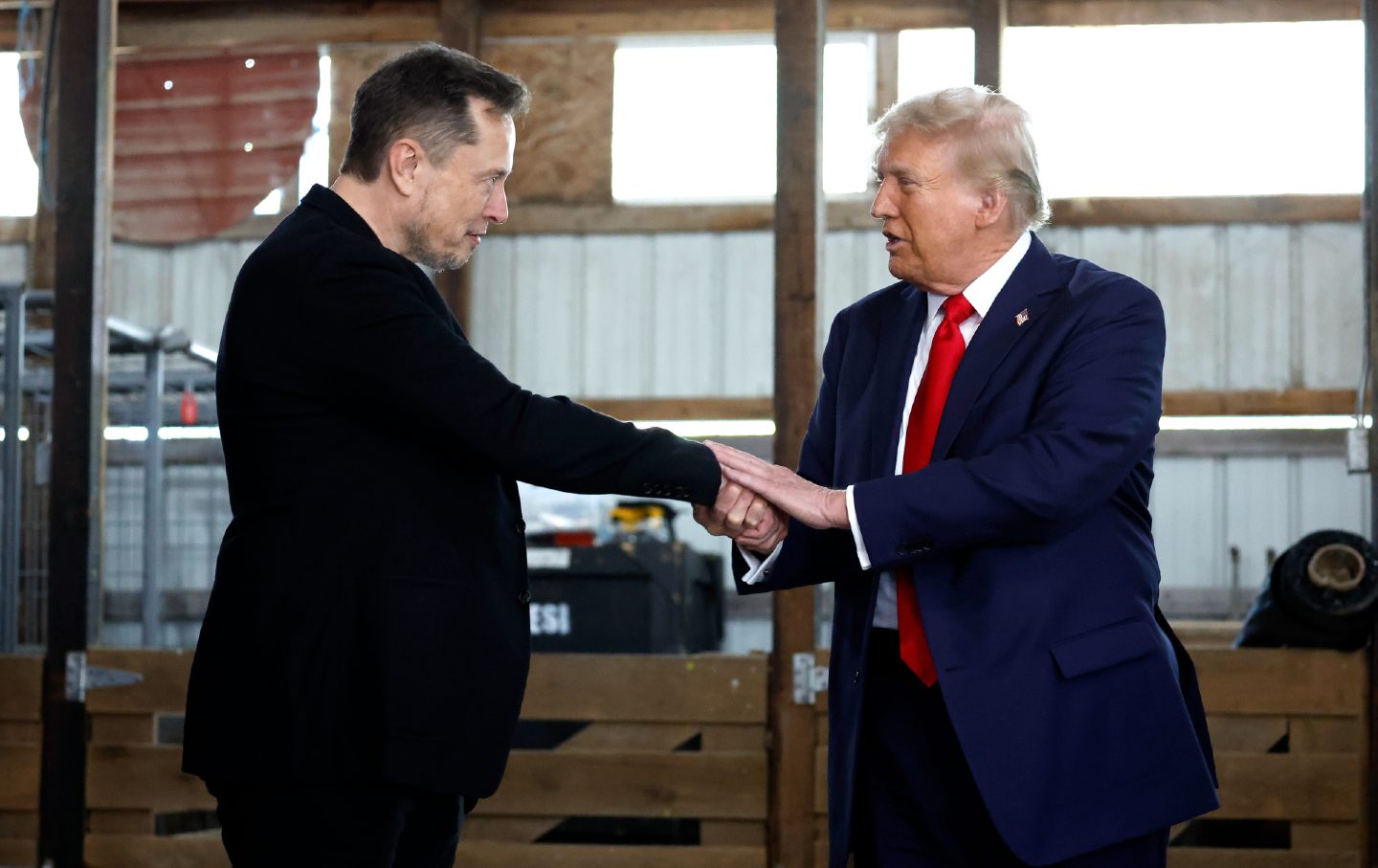
Greenland and its resources are merely the latest potential casualty of Trump’s quest for global domination and his fear of China’s economic power.
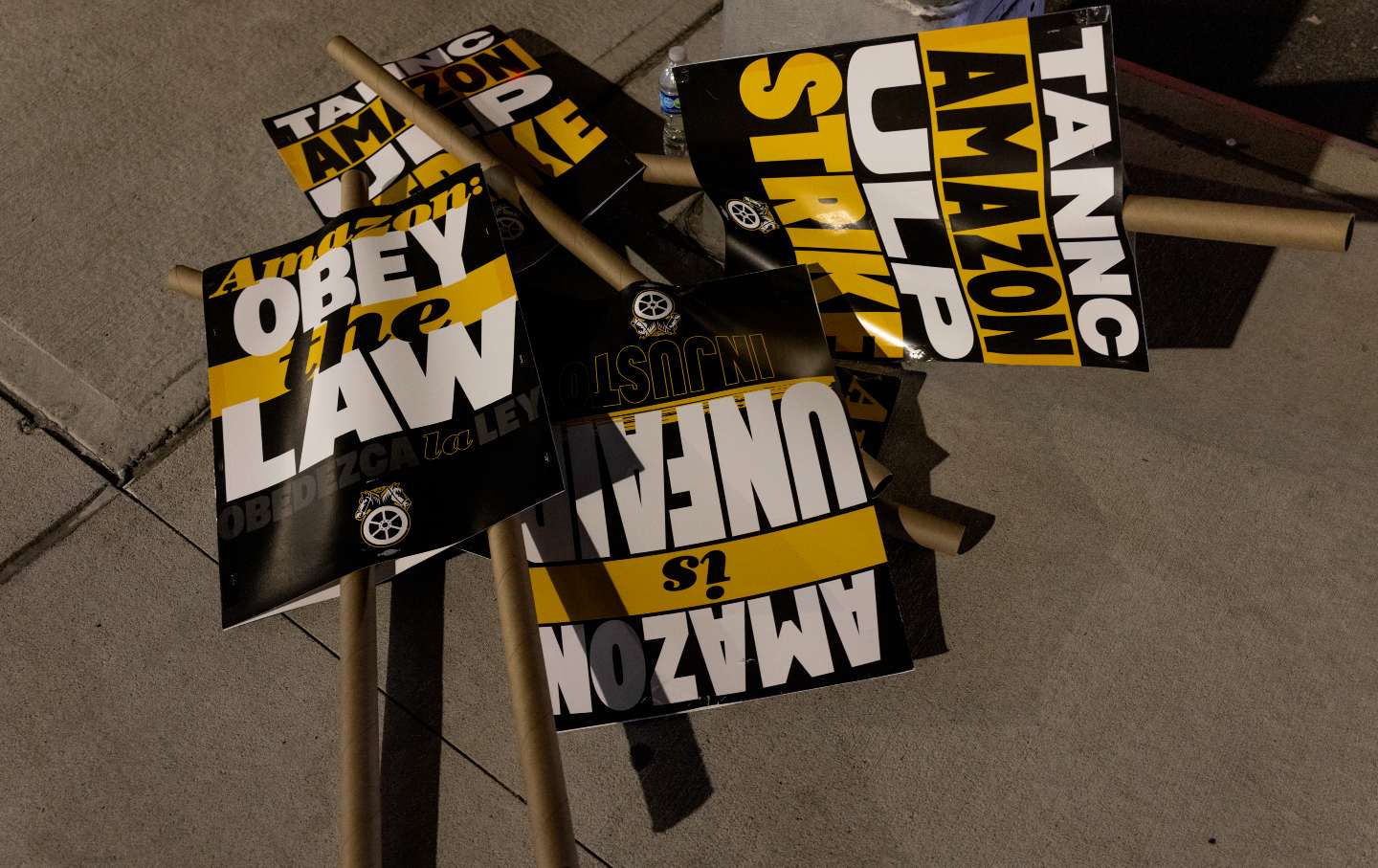
Amazon Teamsters’ December strike was the biggest in the company’s history. What does their future look like under Trump 2.0?

An assortment of new firms, born in Silicon Valley or incorporating its disruptive ethos, have begun to challenge the older ones for access to lucrative Pentagon awards.
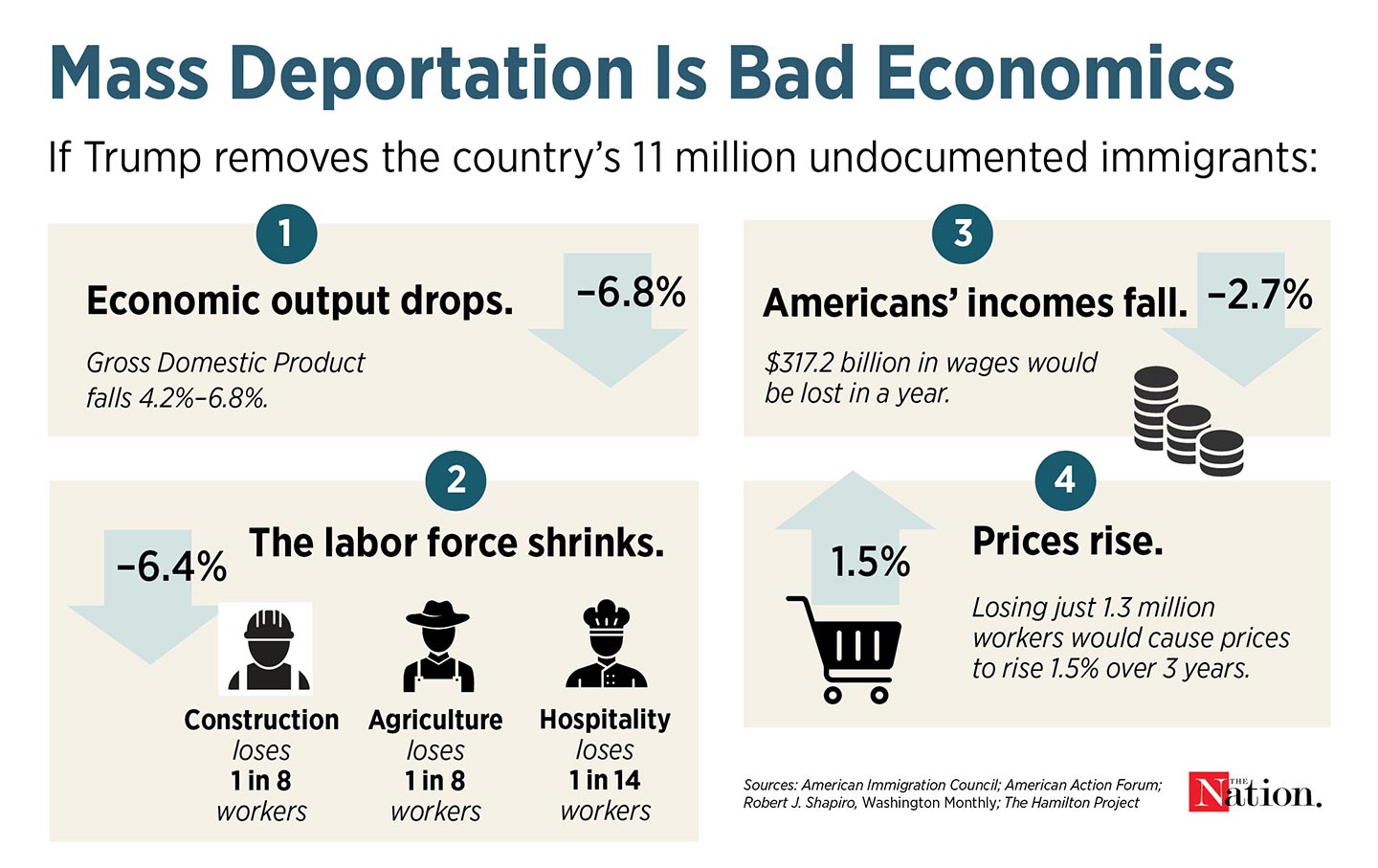
Immigrants don’t steal citizens’ jobs and wages. They grow the economy for all.
Republicans have long wanted to kill the CFPB. With Musk and Russell Vought, they may finally have their chance.
