
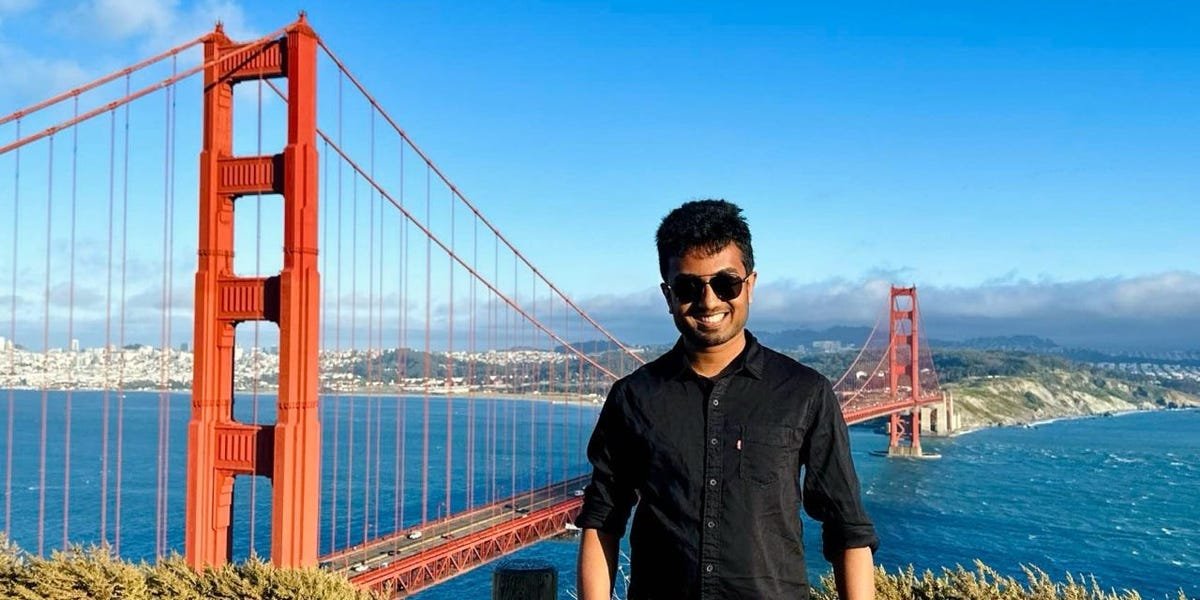
This as-told-to essay is based on a conversation with Tanush Sharanarthi, a 26-year-old software engineer based in the Bay Area. It has been edited for length and clarity.
I work at IBM as a software engineer.
I joined three years ago and have been applying for an H-1B visa ever since. The process was rough for me because I wasn’t picked all three times.
The H-1B lottery system isn’t merit-based. Each year, there’s one lottery where applicants are put into a pool, and around 85,000 people are picked randomly. Twenty thousand spots are also reserved for people with a master’s degree, but even though I had a master’s, the odds were still low.
It felt like I was playing the slots at Las Vegas. You win a few times, but you lose most of the time, and you don’t have any control over it.
After the first H-1B miss, I started looking into the O-1 visa, which I heard about from my colleagues. The O-1 visa is reserved for individuals with “extraordinary” capabilities.
There are eight categories for eligibility, and you need to satisfy at least three of them. When I went through it, I realized I already satisfied at least two of the criteria: I had published work on artificial intelligence, I used to judge hackathons, and I used to review papers for other conference journals. I had about six years of contributions to my field in AI under my belt.
These were things I was already doing, but they lined up well with the O-1.
Staying in the US
I’m originally from Bangalore, India. I worked as a software engineer at Kimberly-Clark Corporation before I came to the US to pursue my master’s degree in information systems and artificial intelligence at Johns Hopkins University.
When you come for a master’s, you’re on an F-1 visa.
Related stories

Business Insider tells the innovative stories you want to know
Business Insider tells the innovative stories you want to know
After that, I was able to stay in the US through an OPT, or optional practical training, which granted me temporary work authorization in the US for three years.
Those three years were spent at IBM, and they lined up with my three H-1B chances.
Missing out on an H-1B was definitely disappointing.
It just felt like I was having a bad day at the casino, not winning anything. However, the feeling of disappointment was amplified in this case.
I didn’t want to let it get to me. I felt like I was learning and contributing a lot here. That’s why the O-1 visa seemed like a very good option for people who want to contribute long-term in the US.
Getting the O-1
I wasn’t doing work solely for a visa. My focus has always been on my field, AI and software engineering.
Along the way, I’ve worked on research papers, contributed to open-source projects, reviewed papers, and judged hackathons.
These were things I was already doing, but they lined up well with the O-1 requirements.
I applied for the O-1 visa late in August.
I would go to the website where I could track the status of the application every night. I kept reading the same thing: “Processing. Processing. Processing.”
I didn’t know when that would change. All I knew was that it would happen within 15 business days since I applied for the premium processing service.
Around the 12th business day, I opened my laptop around 5:30 p.m. I clicked on the status and saw it magically changed. My application was approved.
I felt a bit of mixed emotions. I was so relieved that I was finally approved. It took a lot of hard work, but it felt nice.
Like I said, it felt like I was playing slots in Vegas. Only this time I won.
Advice to other O-1 seekers
The O-1 visa is called the Einstein visa for a reason. It takes time and effort.
For me, it took six years of work — from my time at Kimberly-Clark, to my master’s degree, and then my job at IBM.
If you’re focused on your field and passionate about it, you’ll naturally start to meet the criteria.
Networking is also important. I wouldn’t have known about the O-1 visa unless I met the right people. Being in Silicon Valley helped, since I was able to learn from others in AI and software engineering.
My advice is not to do it just for the visa. Be passionate about your field and contribute to it. The rest follows.
