
Although Paris still gets fed, our economy is facing turbulence. There’s presumably more than one reason for this. One reason I want to highlight here is the failure of many economists to recognise the importance of systems thinking—and act accordingly.
So, what do I mean by systems thinking? Essentially, it means analysing a complete system, where “system” refers to an institutional framework and the individual actions taking place within it. This analysis can then be extended to compare different systems, although I should add that the institutional framework usually receives most attention. The paradigmatic example of systems thinking is the analysis and comparison of the planned economy and the market economy. This was one of the central tasks that occupied economists in the first half of the 20th century. It manifested in the socialist calculation debate, in which different economists arrived at different conclusions about the viability of the different systems they compared.
The opposite of systems thinking is analysing specific issues as isolated phenomena. The objective here isn’t to set out how an overall system works. Rather, the aim is to analyse the different issues considered pressing in order to determine the optimal solution for each respective problem. A good example of such an approach would be analysing the housing crisis and developing an appropriate policy response to it. Such an isolated analysis may diagnose a lack of sufficient housing and identify heavy zoning laws and persistent rent control as the reasons for this. Recommendations may range from amending zoning laws to abolishing price regulations and increasing subsidised housing. However, the complete analysis is confined to the specific issue at hand and its solution, considered in isolation.
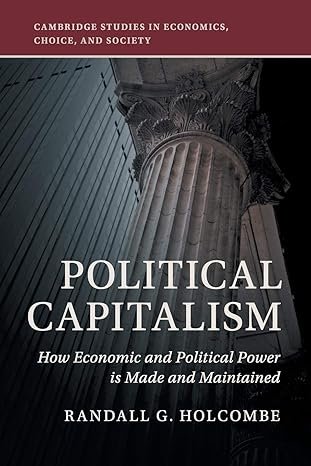
Today, argues Randall Holcombe, “economists do not focus on economic systems in the twenty-first century as they did in the twentieth.” Put simply, economists tend not to engage in systems thinking, but centre on analysing issues within market-based systems, where they mainly develop recommendations on how to solve specific issues. They take the (hampered) market system as it is and analyse how a specific aspect of it works (or fails to work) and how it can be improved, primarily through government interventions, be it changing it, implementing a new one, or lifting an old one.
However, this is dangerous, and the chief danger is that economists don’t see the forest for the trees. There are two closely linked aspects to this danger. Firstly, there is a risk that, through their recommendations, economists will accidentally produce a different system that, overall, yields negative outcomes from their perspective. By this, I mean that the economic system may change its nature in a fundamental manner as result of governmental action. The system may then turn into one that is far removed from what the economist would recommend. However, as their focus hasn’t been on systems thinking, they overlook the overall danger of system change.
Secondly, and closely related, the economist may only have a poor understanding of the system that she takes for granted, the stability of which is impacted by her recommendations. This in light of the fact that she does not engage in this kind of systems thinking. There is a huge, monumental difference between rejecting someone’s approach to public policy and rejecting public policy per se. However, a systems analysis may reveal that it is part and parcel of the system that most economists support that public policy will not be undertaken in a manner that they approve of. In other words, what kind of public policy a system will have is a systemic issue. However, to see this, an analysis of the system as a whole, rather than of isolated measures within it, may be necessary. In other words, economists may be unaware that their recommendations could be responsible for the economic foolishness they now deplore. This, in essence, is a variation of Michael Munger’s repeated advice not to make a sword so powerful you’d fear it in your enemy’s hands.
So, what economists need to ask is the question of what it means that it is generally possible to intervene, or do public policy. Economists need to think about the bigger picture again. So, let’s return to systems thinking and the comparative analysis of different systems. The aforementioned Holcombe and his book on Political Capitalism is a splendid place to start!
Max Molden is a PhD student at the University of Hamburg. He has worked with European Students for Liberty and Prometheus – Das Freiheitsinstitut. He regularly publishes at Der Freydenker.
