
I will be traveling for the next 19 days and so will be posting less frequently.
Cincinnati’s Beer-Loving Germans Endured Anti-Immigrant and Anti-Alcohol Resistance
by Elizabeth Nolan Brown, Reason, August/September, 2025.
Excerpts:
Cincinnati’s population ballooned throughout the 19th century, from 2,540 residents in 1810 to 115,435 in 1850, when it ranked as the sixth-largest American city. By 1900, it had 325,902 residents, according to the U.S. Census Bureau.
Much of this growth came from immigration. In 1850, nearly half of Cincinnati’s population was foreign-born. The bulk of Cincinnati’s immigrants came from Ireland or Germany—especially Germany. By 1890, German immigrants or people whose parents were both German immigrants made up 57 percent of Cincinnati’s population, according to “The ‘Zinzinnati’ in Cincinnati,” a paper in the October 1964 Bulletin of the Cincinnati Historical Society.
Cincinnati Germans tended to settle together, building German-language schools and churches, launching German-language newspapers, and starting social and philanthropic clubs for German Americans. Among the many businesses they launched were beer gardens and most of the area’s biggest breweries. These included Christian Moerlein, founded in 1853 by a Bavarian immigrant, and the Hudepohl Brewing Company, founded in 1885 by the son of Bavarian immigrants. Both brands might still be familiar to beer drinkers today.
And:
Cincinnati’s latest influx of immigration has come from Africa, particularly Mauritania. German immigrants are old news now, and so is banning alcohol. But we’re in an age of renewed unease about immigrants—especially those that speak their native tongues here or don’t seem especially keen to “assimilate”—and renewed efforts to persuade Americans of the danger of drink.
In both regards, Cincinnati’s German immigrant experience is instructive. It suggests that immediate assimilation isn’t necessary to eventual assimilation, and that retaining pride in one’s own language and customs isn’t a barrier to building businesses and other institutions that enrich the wider community. It’s also a reminder of the ways alcohol and establishments that serve it can bring people together and foster a sense of local identity and solidarity. In today’s atomized, globalized, and oh-so-mediated times, that seems especially important—and, in its own way, healthy. Prost!
And sadly:
Meanwhile, “local distillers were producing 1,145 barrels of whisky daily.” (At one point, “practically every storekeeper in the city kept a barrel [of whiskey] on hand for customers, who got a free drink while shopping,” the book claims. But “state and municipal licensing and regulations did away with free drinks.”)
DRH note: This piece is full of interesting facts and gives some perspective on how immigrants integrated, but not totally, in the 19th century.
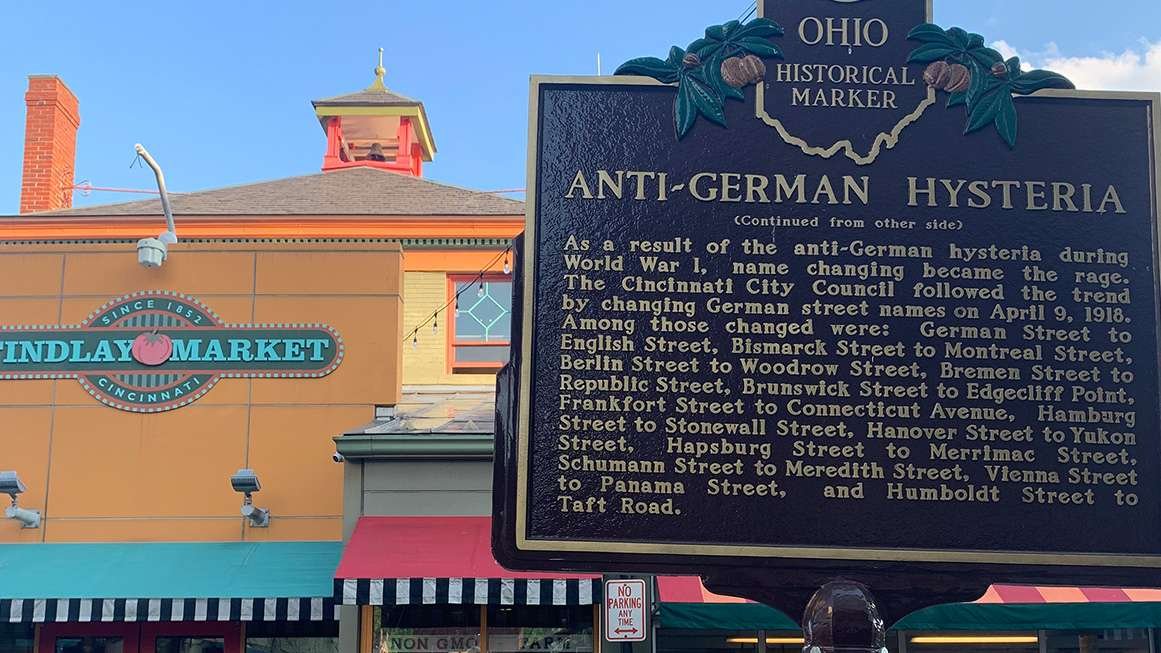
The related picture shows how Germanophobia during World War I led to some major changes in name of streets. In Canada, which was in World War I from 1914 to 1918, there was a major change of a city name: Berlin, Ontario became Kitchener, Ontario..
Ben Powell on Why Immigration Improves Economic Freedom and Institutions
Nathan Goodman interviews Ben Powell, Mercatus Center, June 25, 2025.
In the first 6 minutes or so, Ben Powell does a beautiful job of sequencing: starting with the most important issues and working to less important issues. The rest is excellent also.
Have You Heard the Good News?
by Clifford S. Asness and Michael R. Strain, The Free Press, July 1, 2025.
Excerpts:
Wages for typical American workers have never been higher. According to our calculations, after adjusting for inflation, the wages of nonsupervisory workers—roughly the bottom 80 percent of workers by pay, including manufacturing workers and service-sector workers who are not managers—have grown by around 60 percent over the past two generations. Over the past three decades, inflation-adjusted wages for typical workers have grown by 44 percent.
And:
According to the Congressional Budget Office (CBO), families in the 51st to 90th percentiles of the wealth distribution had an average wealth of $1.3 million in 2022, the most recent year data are available. That’s up from around $500,000 in 1990, after adjusting for inflation.
DRH note: The big negative, of course, is the price of housing. But even with that, the overall standard of living is improving.
Taxing Remittances is a Big Risk for Very Little Reward
by Yvonne Su, Los Angeles Times, June 30, 2025.
Excerpt:
A proposal to tax remittances sent by individuals without Social Security numbers has passed the House and is now before the Senate. At 3.5%, the levy was initially expected to raise $26 billion over the next decade.
Changes made by the Senate on Saturday greatly narrowed the scope, so the tax would be 1%, and the yield only $10 billion over the next decade. However, the goals have remained the same: deter undocumented migration and recoup funds from those working outside legal status who send money to their families back home.
It might seem like easy money to tax migrants, but that doesn’t make it smart policy. The proposed tax risks undermining both financial transparency and national security. The policy would push billions of dollars into unregulated channels such as cryptocurrency exchanges, make law enforcement’s job harder and ultimately hurt the very communities the United States seeks to stabilize abroad for geopolitical reasons.
Permission to use picture of Cincinnati granted by Elizabeth Nolan Brown, Reason Magazine.
