
Unlock the Editor’s Digest for free
Roula Khalaf, Editor of the FT, selects her favourite stories in this weekly newsletter.
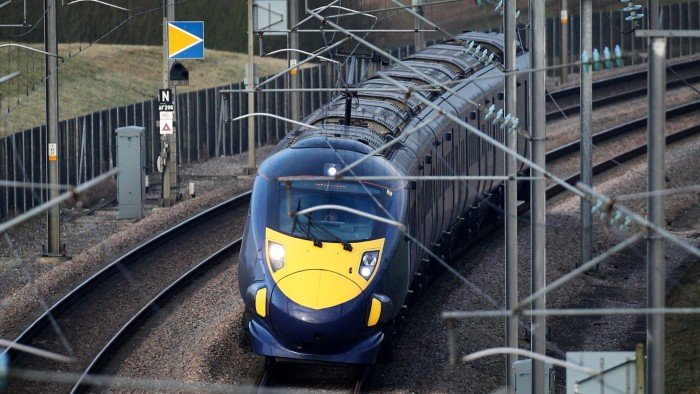
Sixteen years after Britain’s first high-speed rail service was launched, an official government review into the economic impact of HS1 on the south-east has concluded the £7.3bn scheme provided “poor value for money”.
The report, which was sat on by ministers for two years, comes at an awkward time for the government as it struggles to prevent further cost overruns and delays on the much larger HS2 scheme from London to Birmingham.
HS1, which links London St Pancras International station with the Channel Tunnel and Kent, was opened in 2007 after receiving the go-ahead in 1991. It was sold at the time as a regeneration plan for the south-east, promising faster journey times and increased rail capacity.
“The starting point for a value for money assessment is that HS1 provides poor value for money,” said the government-commissioned report by Steer Consulting, an advisory group set up by Jim Steer.
Steer is an advocate for high-speed rail who helped spur the launch of the current HS2 railway project more than a decade ago.
The study said that international passenger numbers using HS1 were lower than forecast at the time the project was approved, and that it had failed to deliver the economic benefits to the region that were promised.
Although HS1 boosted population growth in Ashford and Canterbury, this was “largely associated with increased commuting to London”, said the report, which was released by the government in June.
The result was that “local economic indicators, such as GVA [gross value added] per capita, have not increased significantly compared with peer locations, which have not benefited from HS1”, it added.
The government is struggling with how to proceed with the new HS2 railway, which was originally intended to connect London with Europe and Scotland but has since been scaled back to run between the capital and Birmingham.
The cost has soared to at least £80bn, while there is still no plan for how to get trains into Euston station in central London despite demolition work starting on the site nearly a decade ago.
Transport secretary Heidi Alexander admitted last month that the project would be delayed by several more years. The government also revealed that HS2 may initially have to run at slower speeds than expected to prevent further delay to its opening.
Andrew Gilligan, a former Conservative transport adviser and head of transport at Policy Exchange think-tank, said: “This study, based on more than a decade of real-world evidence, disproves the overhyped claims about the economic benefits of high-speed rail.”
He added that HS1 was still “a much better project than HS2, costing two-thirds less per mile in real terms”.
HS2 cost taxpayers £7.7bn in 2024, 57 per cent more than was spent on local public transport across the entire country last year, according to official figures. The line is now not expected to open until the mid- to late-2030s.
HS1 was sold in November 2010 to a consortium of private investors on a concession from the UK government to run the line for 30 years for £2.1bn. It is now owned by investors including HICL Infrastructure and Equitix.
Renamed London St Pancras Highspeed, it has recently offered financial incentives to operators to run services between London and mainland Europe. It aims to boost demand after its own study found that it could increase international passenger numbers from 1,800 an hour to nearly 5,000.
London St Pancras Highspeed said it had “announced an ambitious growth incentive scheme . . . which incentivises an increase in services, passengers and new destinations, and encourages greater use of existing stations domestically in the south-east”.
The Department for Transport said HS1 had successfully delivered on its objectives, more than doubling capacity for international rail services.
It added that the report had “methodological limitations”, such as not looking at regeneration impacts in London or wider, longer-term economic effects of the project.
