
Unlock the Editor’s Digest for free
Roula Khalaf, Editor of the FT, selects her favourite stories in this weekly newsletter.
National Grid has insisted its management teams were “not made aware” of problems at a London electricity substation years before a fire in March that led to the closure of Heathrow airport for 24 hours.
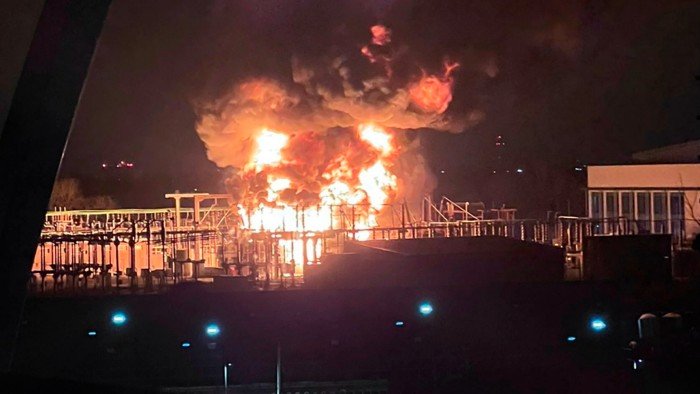
An official report into the fire published on Wednesday found that the blaze was caused by moisture in “bushing” equipment, through which current flows in and out of the transformer.
The report said that National Grid’s electricity transmission division had identified high moisture readings in oil at the substation as far back as 2018, but did not address the problem.
The readings indicated an “imminent fault”, which required the bushing to be replaced, but “mitigations appropriate to its severity were not actioned”, the report by the government’s National Energy System Operator said.
“The controls in place were not effective,” it added. “This review finds that there were other opportunities which, had they been pursued, could have caught the issue. Instead, the elevated moisture reading went unaddressed.”
National Grid told the Financial Times that the result of the oil sample was not acted upon “due to a step in the process being missed”.
“This missed step meant that the site and asset management teams were not made aware of the oil sample result, and so all decisions going forward were made without knowledge of the oil sample result and hence the defect,” the company added.
Britain’s energy regulator, Ofgem, has opened an investigation into National Grid Electricity Transmission’s compliance with its licence conditions.
“It has been established that the root cause of the fire was a preventable, technical fault,” Ofgem said in a statement.
Energy secretary Ed Miliband said that the review was “deeply concerning, because known risks were not addressed by the National Grid Electricity Transmission”.
The fire destroyed the substation, triggering power outages for about 70,000 customers in the region including Heathrow airport, Europe’s busiest airport.
The closure of Heathrow led to the cancellation of more than 1,300 flights and raised widespread questions about the resilience of critical national infrastructure.
Wednesday’s report into the blaze also found that a fire suppression system at the substation was not working at the time of the fire, although it was “unable to establish” whether it would have put out the fire had it been.
National Grid said an “independent technical review” found that “an operable fire suppression system would not have contained a fire of this severity”.
Heathrow, which has faced criticism for its decision to close for a full day following the blaze, said the incident “highlights clear shortcomings in National Grid’s asset management and outdated safety standards”.
National Grid added it had “a comprehensive asset inspection and maintenance programme in place”.
“We have taken further action since the fire. This includes an end-to-end review of our oil sampling process and results, further enhancement of fire risk assessments at all operational sites and retesting the resilience of substations that serve strategic infrastructure,” it added.
