
Unlock the Editor’s Digest for free
Roula Khalaf, Editor of the FT, selects her favourite stories in this weekly newsletter.
By the time I joined the FT in 2021, business cards had mostly fallen out of fashion. Colourful stacks of embossed cards sat on the desks of my colleagues, gathering dust. Here in San Francisco, the custom of exchanging printed contact details has long been replaced by the high-tech alternative of holding iPhones together to automatically swap numbers.
At tech events, I am often provided with a lanyard that has a QR code that lets other people find my LinkedIn profile. Or a device that enables conference-goers to tap lanyards in order to connect (also an annoying way to force you to use a conference’s app).
It’s not just the west coast. An Ipsos poll from February last year found fewer than one in four adults in the UK have ever given out a physical business card.
“It is definitely a generational thing . . . if someone does hand you a business card, there can be a negative connotation that they are outdated,” says Devora Zack, chief executive of Only Connect Consulting and author of Networking for People Who Hate Networking.
According to LinkedIn’s chief product officer Tomer Cohen, “business cards lost their relevance a long time ago”. Of course, LinkedIn has a stake in their demise. The Microsoft-owned corporate social network has made it easier to connect online, avoiding some of the awkwardness that comes with asking someone to give you their contact details when face to face.
In the future, Cohen claims, LinkedIn will make remote contact building even easier by using AI to look for profiles when users can only half-remember someone’s name or company.
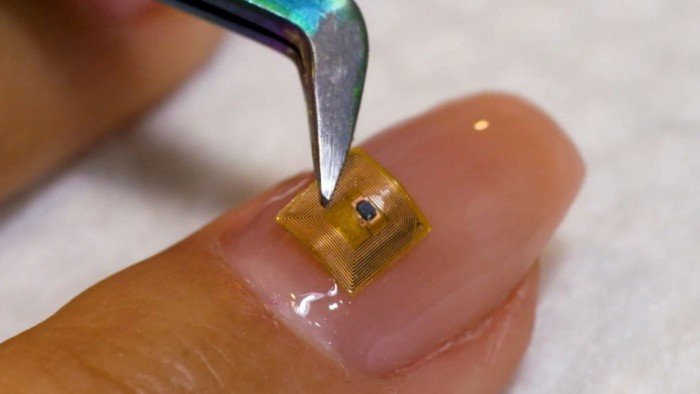
That sounds like a helpful feature. But what if there’s another ultra-quick way to exchange details the moment you meet someone? Chipped, a Los Angeles start-up, is selling sets of colourful microchip acrylic nails online and at events and has partnered with celebrities, including Paris Hilton. By embedding tiny microchips into manicures, users can create a pop-up link with contact information when they tap their nails against a phone.
“It all started because I was going to conferences and had this deep hatred for QR code cards. I was already doing my own acrylics, and all my girlfriends wanted them too,” Leah Winberg, Chipped’s founder, told me.
Winberg said her venture was a way to reclaim her “femininity”, which she felt disconnected from while working in tech. About 80 per cent of her revenues now come from corporate events where they apply the nails, which sell online for around $60.
She still thinks there is a place for business cards when it feels “personal — like a connection . . . but most business cards are handed out almost like a reflex, with no real thought.”
Keen to see how useful mani-chips were, I tried to hunt some down. There are specialised salons which offer the service, but sadly they have not reached San Francisco. Instead, I ordered a cheap online alternative and inputted my own details via a website. You can choose whether to share your phone number, email address or social network handles.
After programming my chips, I took them along to my local nail technician to apply. “She is not cute,” she said, inspecting the chunky metal square with tweezers. Application didn’t go smoothly. At first, the nail tech filed down their sharp corners, breaking one chip’s functionality. The surviving chip was left with rough edges.
Still, my manicure was a hit at the AI conference I attended in Vegas the following week. One female CEO admired the “cyborg chic” while the male attendees held up their phones as if this were already commonplace.
Unfortunately, the new nails encountered technical issues soon afterwards. They worked for a few taps and then the sharp edges peeled and popped off. More permanent versions of the technology already exist. Another person proudly showed me a lump on their hand where a chip had been implanted into their skin — though the company that did this has since gone bust, rendering it useless.
Trust the tech sector to take it too far. I’ll stick with the temporary version. But next time, I’ll order them ready-made.
cristina.criddle@ft.com
