
This article is an on-site version of our The State of Britain newsletter. Premium subscribers can sign up here to get the newsletter delivered every week. Standard subscribers can upgrade to Premium here, or explore all FT newsletters
Hello and welcome back to the State of Britain newsletter. I’m Sylvia Pfeifer, the FT’s industry correspondent, and today I’m going to write about the UK defence industry and its relationship with Europe.
The war in Ukraine and higher military spending by governments have boosted the order books of Britain’s defence companies, from industry champion BAE Systems to smaller participants such as explosives maker Chemring and Avon Protection. There could be more to come if the UK agrees a new defence and security pact with the EU next month.
A new agreement between London and Brussels is expected to be announced at a summit on May 19. Prime Minister Sir Keir Starmer and European Commission president Ursula von der Leyen discussed the elements of the pact at a meeting in London earlier today.
An agreement could pave the way for British companies to take part in EU procurement funds, including gaining access to a possible €150bn in EU-backed loans to fund weapons purchases under the bloc’s Security Action For Europe (SAFE) project. Industry executives believe a deal would enhance security for both sides.
Kevin Craven, chief executive of ADS, the UK’s industry trade group, says it is “critical for the UK’s security that we conclude a defence pact with the EU ASAP”.
Britain’s annual exports in defence amount to about £9.5bn, of which roughly a third — £3.2bn — go to the EU, according to ADS. Britain, adds Craven, “would benefit greatly in terms of increasing that number if it were able to take part in the [SAFE] fund”.
Moving on from Brexit
An agreement with the EU would mark a change in tone from less than a year ago when von der Leyen told an industry conference in Brussels that as part of the bloc’s first defence industrial strategy it was important to “spend more, spend better, spend European”.
The ambition was to boost the bloc’s resilience in part by reversing the trend of member states buying foreign-made equipment. Although US weapons were seen as the main target, it would also hit UK industry given Brexit.
The comments set alarm bells ringing among some UK executives at the time, who worried about being excluded from new defence programmes. While there was some sympathy for the industry, Brussels insiders pointed out to me then that it was at the UK’s insistence that the EU-UK defence and security relationship was excluded from the 2020 Brexit negotiations.
In the years since Britain’s departure, the UK industry has in effect already been shut out of certain activities, including the nearly €8bn European Defence Fund — third-country companies can only benefit from funding if they meet certain conditions and operate on EU soil.
So what has changed? Industry insiders point to a number of things, including the positive role played by Kaja Kallas as vice-president of the commission. Since taking power last July, the UK’s Labour government has also striven to rebuild bridges with European allies after post-Brexit strains.
But what has helped to accelerate the rapprochement has been the re-election of Donald Trump. The US president’s hardline approach to Ukraine and cold shoulder to the EU, arguing the bloc needs to pay for its own security, has only underlined the benefits of closer co-operation.
Germany and the UK are, after the US, the second- and third-biggest providers of military support to Ukraine, giving about €15bn and €14bn, respectively, since 2022, according to the Kiel Institute for the World Economy. The two countries are also Europe’s biggest spenders on defence.
Integrated industries
Defence industry executives have stressed that excluding the UK from European defence over the long term risks stifling existing industrial partnerships between Britain and EU industries. Airbus, Europe’s pan-European aerospace and defence champion, for example, builds the wings for its commercial aircraft in the UK. Guillaume Faury, Airbus chief executive, recently called for greater collaboration between the UK and Europe on their rival programmes to develop new fighter jets and combat air systems. Italy’s Leonardo also has large operations in the UK.
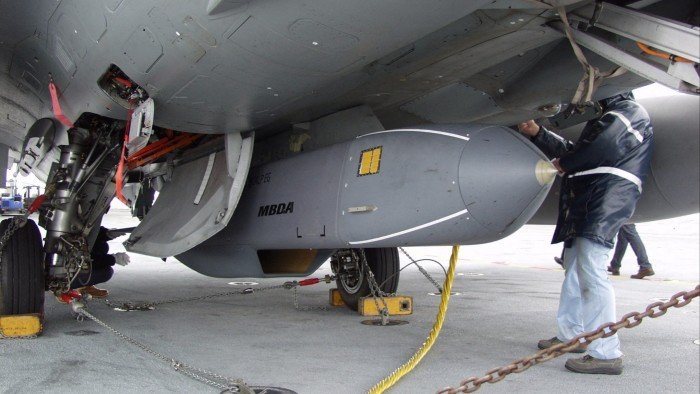
Britain’s BAE, meanwhile, generates more than 40 per cent of its annual sales from the US, but the company still has a large footprint in Europe — notably through its Swedish subsidiary. BAE is also a shareholder in MBDA, the pan-European missile champion, and a partner in the pan-European Eurofighter consortium. Éric Béranger, chief executive of MBDA, has previously said the UK should be regarded as being part of “the geographical Europe”.
At the same time, the EU should also benefit from closer UK industry involvement. Before Brexit, the UK accounted for about 20 per cent of all military capabilities within the EU, according to the International Institute for Strategic Studies.
British executives are hopeful a deal can be struck next month. They point out that plans for closer co-operation are already under way, including on drones as well as on the development of new complex weapons.
“I think the UK is an integral part of European defence,” says Airbus chair, René Obermann. If Brexit cannot be unwound, he adds, then “let Brexit be the label, but let it be European, please, because Europe misses the UK”.
“We lost the only liberal conscience in the UK, in Europe.”
Britain in numbers

This week’s chart is on Britain’s crude steel production in light of ministers working overtime over Easter to secure the future of British Steel after talks with its Chinese owner over taxpayer support to invest in greener technology collapsed. The company owns Britain’s last two blast furnaces. Closing them would have left the UK as the only G7 nation without the ability to make steel from raw materials.
Business secretary Jonathan Reynolds passed emergency legislation to seize control of the company and then personally made sure it had access to supplies of raw materials to keep its furnaces operating.
There are still big questions about the company’s future and whether ministers will find a private buyer, but all the drama of Reynolds’ intervention cannot mask the long-term decline of an industry in which Britain was, for a couple of centuries, the world leader.
New data shows that domestic crude steel production last year fell to just 4mn tonnes — the lowest total since the Great Depression of the 1930s.
The decline — from 5.4mn tonnes in 2023 — was primarily due to Tata Steel, which owns the Port Talbot steelworks in Wales, closing its two remaining blast furnaces in July and September. Production issues at British Steel — one of its furnaces was offline for some weeks — also played a part.
Britain’s crude production should recover — Tata plans to build a less carbon-intensive electric arc furnace at Port Talbot with an annual output of 3mn tonnes and a new owner at Scunthorpe may go in the same direction. But if this new source of “greener” domestic production is to have any hope of remaining remotely competitive against cheaper imports, ministers need to come up with a strategy. Failing that, Reynolds’ intervention risks being little more than a sticking plaster.
The State of Britain is edited by Gordon Smith. Premium subscribers can sign up here to have it delivered straight to their inbox every Thursday afternoon. Or you can take out a Premium subscription here. Read earlier editions of the newsletter here.
Recommended newsletters for you
Inside Politics — What you need to know in UK politics. Sign up here
Europe Express — Your essential guide to what matters in Europe today. Sign up here
