
Unlock the Editor’s Digest for free
Roula Khalaf, Editor of the FT, selects her favourite stories in this weekly newsletter.
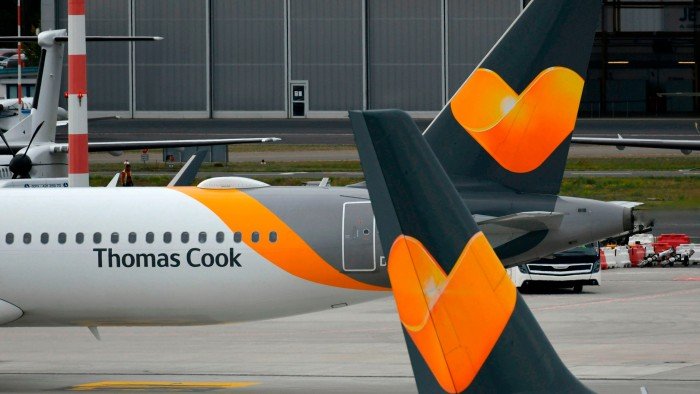
The UK accounting regulator has fined EY £4.9mn for “serious breaches of standards” in its audits of failed travel company Thomas Cook, wrapping up an almost six-year investigation.
The Financial Reporting Council said on Thursday it had reprimanded EY for its audits of Thomas Cook in the 2017 and 2018 financial years, including for failing to properly challenge the company’s management on its ability to continue as a going concern before signing off on the 2018 accounts.
Thomas Cook collapsed in 2019, leaving hundreds of thousands of travellers stranded abroad and most of its 21,000 employees jobless.
The FRC found that EY also failed to properly consider the independence of one of its partners who had previously managed the firm’s relationship with Thomas Cook.
The regulator said EY had breached independence standards by failing to properly evaluate the impact of allowing the restructuring partner to join the audit team working on the company’s accounts in 2018. The partner had a “long association” with Thomas Cook and a “close business relationship” with the company’s chief financial officer, and had previously managed EY’s relationship with the travel group.
That partner and their team, who were not named by the FRC, performed a “substantial” amount of work on signing off the travel group’s 2018 accounts as a going concern, meaning it had judged that the business could survive another 12 months.
EY’s models had initially shown severe impacts of a possible travel shock, but after discussions with the restructuring team and with Thomas Cook, the models were revised to reduce the negative effect on the company’s forecasted budget, the FRC said.
The restructuring partner had acted as EY’s relationship manager with Thomas Cook until 2016, and met the company’s then-chief financial officer, Bill Scott, for lunches and drinks throughout 2018, the FRC said. That partner also introduced Scott to an EY colleague seeking a new job, who was subsequently appointed as Thomas Cook’s head of analysis.
When asked to confirm EY’s independence, the restructuring partner ticked a box stating “no exceptions noted”, the FRC said. EY admitted that there was “no evidence” that it had considered the potential risk to its independence, and that the audit file had incorrectly recorded that its team was “comprised of individuals with no prior history of performing services for the client”.
The FRC did not find an “actual loss of objectivity” as a result of the relationship, however.
EY also failed to collect enough evidence to support its goodwill impairment model, a crucial part of its assessment of the company’s accounts, the FRC said. The firm had relied on Thomas Cook’s own forecasts for its UK tour division that put growth at more than six times the rate predicted by an independent forecast for the financial year 2018, it added.
The House of Commons business select committee in 2019, then chaired by Rachel Reeves, accused EY and previous auditor PwC of being “complicit” in Thomas Cook’s failure.
The FRC, which had considered an investigation into PwC in 2019, also fined the audit partner responsible for the audits, Richard Wilson, £105,000.
The FRC also ordered EY to pay £1.6mn to cover the costs of the investigation.
The fines for EY and Wilson were reduced from £6.5mn and £140,000, respectively, because they co-operated with the investigation but the 25 per cent discount was less than the maximum reduction of 35 per cent. In some cases, the regulator has applied additional reductions amounting to 50 per cent.
EY said: “We deeply regret that the 2017 and 2018 audits of Thomas Cook fell below the standards that we expect. We are committed to learning from these mistakes and have strengthened our procedures, training and guidance, as well as our global audit methodology, to address the issues identified . . . whilst reinforcing a culture of professional scepticism.”
